IGDA hub helps Nintendo applicants show clear role fit
IGDA’s skills hub gives Nintendo applicants a way to prove fit, not just talent. For a quality-first employer, the portfolio has to show process, polish, and how the work got finished.

What the IGDA hub changes for Nintendo applicants
The IGDA’s Entry-Level Skills Hub is useful because it cuts through the noise of job hunting and asks a more practical question: what does a hiring team need to see before it trusts you with real work? Built by Bird’s Eye View and Into Games, the hub lays out entry-level roles, the skills tied to each one, and examples from recent hires, which makes it a better benchmark than a generic wish list. For Nintendo applicants, that matters because the company’s hiring logic is clearly built around evidence, not aspiration.
The biggest takeaway is simple: a portfolio has to prove role fit. A recruiter, producer, or lead should be able to tell what you contributed, what tools you used, what tradeoffs you made, and how you solved problems under constraints. That is true whether you are aiming at design, art, engineering, QA, localization, or a business role. At Nintendo, where quality and consistency shape the brand across Mario, Donkey Kong, The Legend of Zelda, Metroid, Animal Crossing, Pikmin, and Splatoon, vague enthusiasm is not a substitute for clear proof of craft.
Why Nintendo’s hiring standards reward clarity
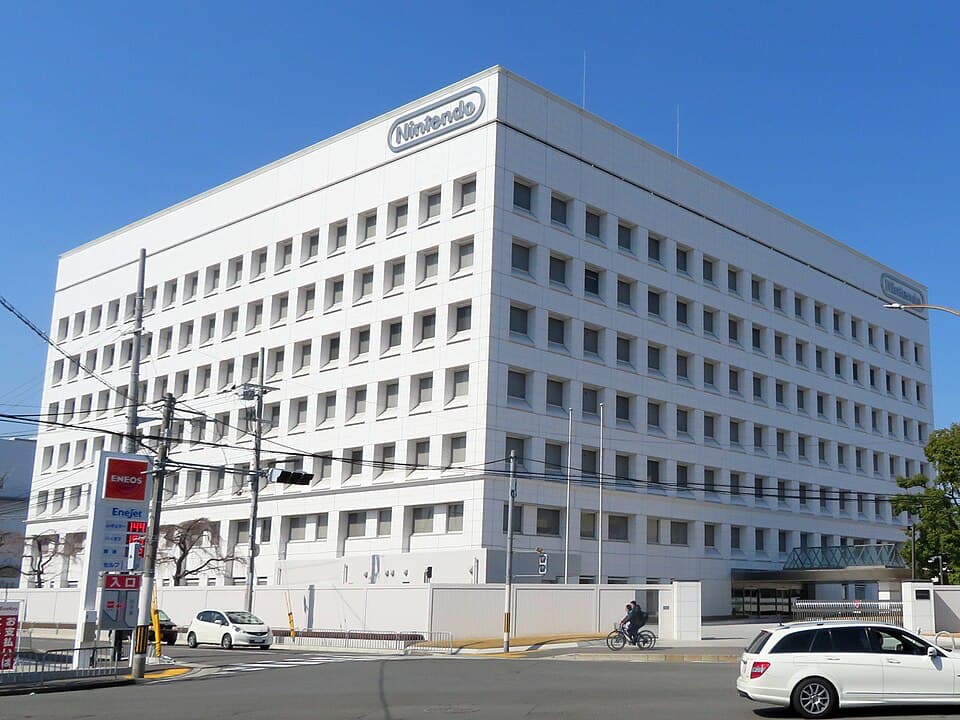
Nintendo of America is headquartered in Redmond, Washington, and its role is broader than many applicants realize. It works with Nintendo Co., Ltd. to bring games, hardware, and franchise collaborations across the Americas, which means teams are supporting both global brand priorities and regional execution. That scale matters, because an entry-level applicant is not just joining a small creative studio. The work sits inside a large, coordinated business with long product cycles, cross-team dependencies, and a high bar for consistency.
That context helps explain why the company values clarity, iteration, collaboration, and follow-through. Nintendo reported 8,572 global consolidated employees and 3,078 employees at Nintendo Co., Ltd. alone as of the end of September 2025, and its FY2025 annual report showed net sales of 1,164.9 billion yen and operating profit of 282.5 billion yen. Those numbers point to an organization that depends on process, not improvisation. If you want to look credible there, your application should show that you understand production realities, not just creative possibility.
What a strong portfolio should prove by discipline
The IGDA hub’s value is that it pushes candidates to think in terms of evidence. For Nintendo, the same portfolio can look very different depending on the role, but the test is consistent: can you demonstrate that you understand how game work gets shipped? A polished reel is not enough if it never explains your decisions. A long resume is not enough if it does not show how you work when time, scope, or tools are limited.
For design, your portfolio should show how you think about player experience, not just ideas. The strongest samples make your role obvious, your constraints visible, and your iteration process easy to follow. For art, the focus should be on implementation readiness as much as visual appeal. Nintendo teams want to see whether your work can live inside a production pipeline, not only whether it looks good in isolation.
For engineering, the bar is even more explicit. Nintendo’s Associate Engineer (NTD) posting calls it the entry-level position for Engineering, asks for 0 to 2 years of related work experience, and requires a basic understanding of engineering concepts, solid knowledge of C, C++ or C#, and onsite work in Redmond, Washington. The posting also emphasizes maintaining existing code, producing production-ready code to defined specifications with senior review, testing, debugging, triage, documentation, and collaboration across groups. That means an engineering portfolio should show maintainable code, debugging discipline, and comfort with a production process, not just technical ambition.
For QA, the lesson is similar. Good QA work is not just about finding bugs. It is about showing judgment, consistency, and a method for reproducing problems, documenting them clearly, and helping teams resolve them under pressure. A candidate who can demonstrate that kind of discipline will look more useful than someone who simply lists tools or says they are detail-oriented.
For localization, Nintendo’s current hiring list makes the expectations even clearer. Nintendo of America is currently posting roles including Manager, Localization - English Writing, Translator (Japanese), and Sr. Technical Localization Quality Specialist - Japanese. In that lane, a portfolio should prove language accuracy, editorial judgment, cultural awareness, and quality-control instincts. Writing samples, translation decisions, and examples of how you preserve meaning while keeping work production-ready are far more valuable than a visually polished presentation.
For business roles, the same rule applies. Case studies and project summaries should show outcomes, not just effort. A good summary explains what changed, what you owned, who you worked with, and how your work moved a project forward.
How Nintendo’s current openings shape the message
Nintendo Software Technology’s open roles, including Associate Game Designer, Concept Artist, Environment Artist, and Animator, underline how varied the company’s needs are. A candidate who uses the same portfolio strategy for all of them will miss the point. Each discipline needs its own proof, but every proof should answer the same underlying question: would this person be useful inside a real production team?
That is why the hub’s emphasis on recent hires is so important. It helps applicants benchmark themselves against actual entry-level expectations rather than against an idealized version of the industry. For Nintendo specifically, that means showing how you handle ambiguity, how you coordinate with other disciplines, and how you keep quality high without pretending the process does not exist. The company’s own hiring patterns suggest that cross-functional awareness is not optional. It is part of the job.
Why the timing matters now
Nintendo’s current hardware and software cycle makes this advice even more relevant. The company launched Nintendo Switch 2 globally on June 5, 2025, and said sell-through exceeded 3.5 million units worldwide in the first four days after launch, its highest-ever global sales level in the first four days for a dedicated video game platform. Nintendo also forecast 15.00 million Switch 2 hardware sales and 45.00 million software sales for the fiscal year ending March 31, 2026. When a platform shift is underway, hiring teams need people who can ramp quickly, adapt to changing priorities, and keep legacy work moving at the same time.
That message lines up with what Nintendo leadership has said about development culture. In November 2024, Shigeru Miyamoto said the company’s research and development expenses have been increasing each year and that Nintendo keeps refining products until it is confident consumers will be satisfied. In November 2025, Shuntaro Furukawa said development resources are shifting to focus on Nintendo Switch 2 while Nintendo continues developing Nintendo Switch software. For applicants, that is the clearest signal yet that iterative work, polish, and long-term thinking are more persuasive than a flashy one-off piece.
What to show if you want to look credible
The safest way to think about a Nintendo application is not “How do I stand out?” but “What would make a producer trust me?” The answer is usually some version of the same thing across departments: show the work, show the decisions, and show that you can operate inside constraints.
- For design, show player-facing intent, iteration, and how feedback changed the result.
- For art, show process, implementation, and readiness for production.
- For engineering, show maintainable code, debugging, documentation, and team collaboration.
- For QA, show disciplined testing, clear reports, and a method for follow-through.
- For localization, show accuracy, tone control, and quality judgment.
- For business roles, show outcomes, coordination, and measurable impact.
That is the real value of the IGDA hub for Nintendo candidates. It does not just help you assemble a portfolio. It helps you build one that speaks the language of a quality-first company, where the strongest signal is not polish alone, but proof that you can deliver work that fits the team, the product, and the standards behind the logo.
This article was produced by Prism’s automated news system from verified source data, official records, and press releases, then run through automated quality and moderation checks before publishing. The system is built and supervised by the people who set the standards it runs under. Read our full AI policy.
Did this article answer your question?