Nintendo Absorbs Switch 2 Card Costs to Keep Physical Games Viable
Nintendo appears to be absorbing higher Switch 2 cartridge costs so physical games do not disappear. That keeps shelf space, gifting, and collector appeal alive, but only if publishers still have viable options.
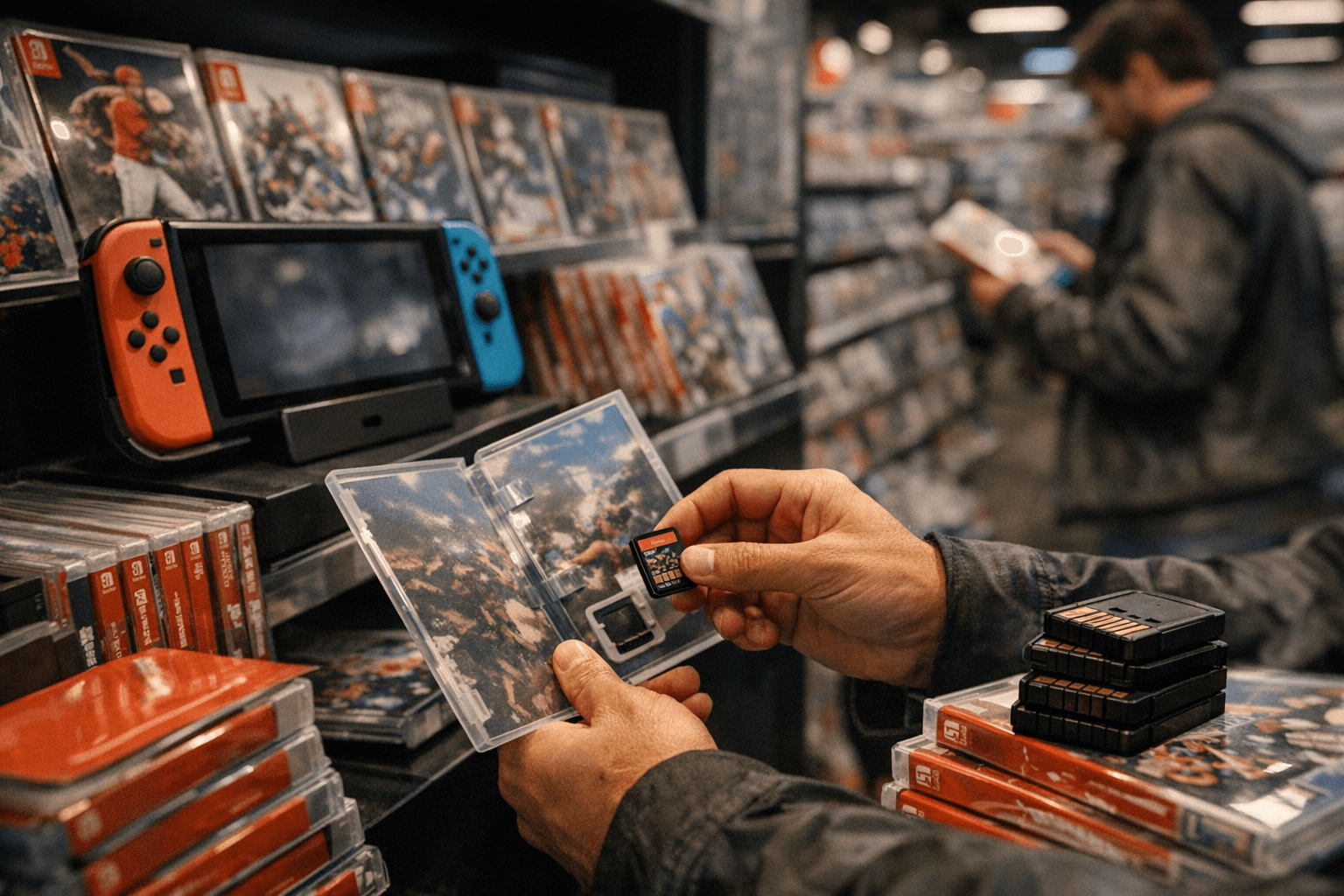
Nintendo is trying to keep physical Switch 2 games from pricing themselves out of existence. The surprise is not that game-key cards exist, but that Nintendo may be covering rising memory costs behind the scenes so publishers do not have to absorb the full hit. For players, that is the difference between a box that still feels like a real purchase and a format that quietly becomes a download code with extra steps.
What Nintendo is protecting
Nintendo’s strategy is about more than nostalgia. Physical games still matter for visibility in stores, holiday gifting, resale value, and the collector culture that keeps long-tail franchise demand alive after launch month fades. Doug Bowser said in May 2025 that physical games are still “a key part” of Nintendo’s business, and that game-key cards help third-party publishers bring “deeper and larger, more immersive content” to Switch 2. Those two ideas sit together uneasily, but they explain the company’s balancing act: preserve a physical presence while making sure publishers can ship ambitious games on the platform.
That matters inside Nintendo, too. A quality-first culture built around polished launches and franchise legacy has always depended on more than raw software distribution. Retail shelf space still acts like a public stage for Mario, Zelda, Pokémon, and the rest of the lineup, while physical releases keep older games circulating after the marketing push moves on. If the cartridge format becomes too expensive for third parties, Nintendo loses a layer of cultural reach that digital-only releases cannot fully replace.
How game-key cards actually work
Nintendo’s official Switch 2 support guidance makes the format clear. Switch 2 supports both regular game cards and game-key cards, but game-key cards do not contain the full game data. Instead, the card acts as a key that triggers a download to the system, and the game can be played offline after that first download as long as the game-key card remains inserted.
That detail matters because game-key cards are not the same as a simple download code in a box, even if critics often lump them together. They still create a physical object, they still require possession of the card to launch the game, and they still preserve some of the habits players associate with boxed software. At the same time, they also require enough free space on internal storage or on a microSD Express card, which shifts part of the burden from cartridge manufacturing to storage management.
For players, that means the ritual of buying a physical game has not vanished, but it has changed. You can still hand someone a boxed Switch 2 title, still put it on a shelf, and still lend or resell the card. What you cannot do is avoid the download pipeline or treat the card as a full archival copy of the software.
Why Nintendo may be subsidizing the format
The business logic is straightforward: if the full cartridge is too expensive, publishers will walk away from physical releases. Reports in 2025 said third-party developers were being pushed toward game-key cards or digital-only releases because the full 64GB Switch 2 cartridge was widely reported to be the only physical option for a time. That raised immediate concerns about preservation, resale, and offline access, and it made traditional boxed releases harder to justify for mid-sized and smaller publishers.
By absorbing some of the rising memory cost, Nintendo can keep the physical channel open without forcing every publisher to choose between a costly cartridge and no retail presence at all. That is a strategic subsidy, even if it is not being framed that way publicly. It protects the idea that a Switch game can still sit in a store, be wrapped and gifted, and remain visible in the culture around the platform.
If that support disappears, the effects would be felt fast. Third-party publishers would likely lean harder into game-key cards, code-in-a-box releases, or digital-only launches. Players who care about lending, resale, or offline access would have fewer real physical options, and developers shipping on Switch 2 would face a sharper tradeoff between premium retail editions and affordable distribution.
The backlash is not just about nostalgia
The frustration around game-key cards comes from a real fear that the box is being hollowed out. Preservation advocates see a product that looks physical but depends on a download and a functioning account, storage space, and future server access. That concern becomes sharper when a platform holder as important as Nintendo is involved, because its own publishing philosophy has long framed physical media as part of the product experience, not just a shipping method.
There is also a practical consumer angle here. A family buying a game as a gift may expect something that works immediately from the box. Instead, a game-key card can require a substantial download before first play, which means the person setting it up needs a network connection and enough free storage. That is a very different experience from sliding a cartridge into a console and getting to work.
The cartridges that show what is still possible
The Switch 2 lineup already shows that full physical releases are still viable when publishers decide they are worth the cost. Coverage compiled in 2025 identified full-cartridge third-party releases such as Cyberpunk 2077: Ultimate Edition and Rune Factory: Guardians of Azuma. Those examples matter because they prove the format is not dead, only selective.
They also reveal the split inside third-party planning. Some publishers are willing to pay for the certainty and goodwill that come with a full cartridge. Others are choosing game-key cards or code-in-a-box releases because the economics of a large physical cartridge are harder to defend. The result is a two-track physical market, where the same shelf can hold a premium fully contained cartridge beside a box that mostly serves as a download trigger.
The rumored smaller cards, and what happened next
Late 2025 reports suggested Nintendo might introduce smaller Switch 2 cartridge sizes such as 16GB and 32GB alongside the existing 64GB format, which would have given publishers more price points and potentially reduced the need for game-key cards. VGC reported those claims after earlier reporting that only 64GB cartridges were available to developers, but ININ later said there had been no official Nintendo confirmation and corrected itself.
That episode is important not because it settled the issue, but because it exposed the pressure point. If smaller cards do arrive, they would give Nintendo a cleaner way to preserve physical releases without forcing every third party into the most expensive option. If they do not, then the company’s willingness to offset card costs becomes even more central to the future of boxed games on Switch 2.
What this means for Nintendo’s broader culture
Nintendo’s long-term strength has always been its ability to make format choices feel like part of a larger creative philosophy. On Switch 2, the cartridge debate is really about what kind of platform Nintendo wants to be: one that treats physical media as a meaningful part of the business, or one that allows economics to quietly push the market toward digital-only habits.
For workers across development, QA, localization, release management, and business teams, that has concrete effects. It changes packaging plans, retail forecasting, storage requirements, publishing negotiations, and the way a launch is presented to players. If Nintendo keeps underwriting physical viability, it is buying time for a mixed market where shelf presence still matters. If it stops, the industry will move faster toward a world where the box survives more as branding than as a complete product.
Know something we missed? Have a correction or additional information?
Submit a Tip