Nintendo Australia maps June 2026 launches with dated release schedule
Nintendo Australia’s June slate gives teams a real working timetable, with Star Fox anchoring a month that now has clear pressure points for marketing, QA, localization, and retail.
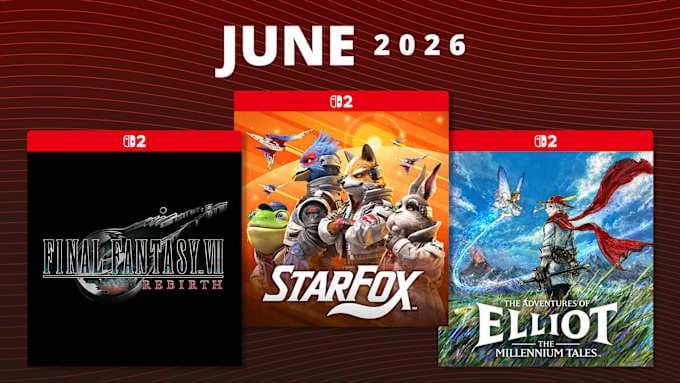
June becomes a working map, not just a consumer calendar
Nintendo Australia’s June upcoming-games page does more than list what players can buy. By publishing a dated slate on 2 June and opening with the line that June will bring Star Fox, Final Fantasy VII Rebirth, and more, it gives marketing, QA, localization, merchandising, and support teams a shared timetable to build around.

That matters inside a company like Nintendo, where release copy is part of the product experience and timing discipline is part of the brand. A page like this tells teams when pre-orders need to go live, when store placements have to be set, when support teams need readiness in place, and when localized assets need to land in market without stepping on one another.
The June cadence is packed from the start
The month begins with FINAL FANTASY VII REBIRTH on 3 June, followed by eFootball™ Kick-Off! on 4 June. Mid-month brings a tighter cluster: Unrailed 2: Back on Track and to a T both land on 11 June, then The Adventures of Elliot: The Millennium Tales arrives on 18 June and R-Type Tactics I • II Cosmos follows on 19 June.
Star Fox closes the month on 25 June, giving the release schedule a final high-profile beat. For planning purposes, that sequencing is the point. It lets Nintendo Australia space out social pushes, avoid crowding the same audience with too many messages at once, and line up retail and support work in a way that feels deliberate rather than rushed.
Why the list matters to the people building the launch
For development and publishing teams, a dated release slate is not a marketing nicety. It is a chain of dependencies. If a title is going live on 3 June, the pre-order page, store art, product copy, localization checks, and customer support pathways all need to be ready before the launch window opens.
That is especially visible in a month like June, which sits close to the summer attention peak in games. When Nintendo Australia turns a broad month into specific dates, it gives regional teams a cleaner way to sequence announcements, reduce overlap, and keep the cadence of information feeling stable. The payoff is operational as much as editorial: fewer last-minute scrambles, fewer crossed wires between regions, and a clearer runway for each title.
Star Fox is the anchor release
Star Fox is the most useful example of how the calendar turns into action. Nintendo Australia is already pre-selling the game in the store, and the product page says it is set for 25 June release. The game is described as a remake of the Nintendo 64 title Lylat Wars, and it is only on Nintendo Switch 2.
The support and QA implications are obvious. Star Fox supports 1 to 2 players locally and 1 to 8 players online, and it supports GameShare. Some features require a compatible USB-C camera and a Nintendo Switch Online membership, which means the launch is not just about game content but about making sure the surrounding service stack works properly at release.
The language support list is also a reminder of how much work sits behind a single regional product page. Nintendo Australia lists Japanese, English, Spanish, French, Portuguese, German, Italian, Dutch, Korean, and Chinese, both Simplified and Traditional. That sort of spread shapes localization sequencing long before launch day, because every supported market-facing asset has to match the product that players actually receive.
Retail pricing and product pages are part of the launch plan
Nintendo Australia’s store ecosystem shows how these June dates feed a live commerce pipeline. The coming-soon listings already include FINAL FANTASY VII REBIRTH, eFootball™ Kick-Off!, The Adventures of Elliot: The Millennium Tales, and Star Fox, with prices shown in Australian dollars.
On the Star Fox page, the physical pre-purchase is listed at A$99.95 and the digital download at A$84.95. The coming-soon page also shows eFootball™ Kick-Off! at A$29.95 and The Adventures of Elliot: The Millennium Tales at A$99.95, while FINAL FANTASY VII REBIRTH is also shown in the digital lineup with its listed price on the page. For merchandising and retail coordination, those numbers are not background detail. They shape how the month is positioned to shoppers, how store placements are framed, and how teams prioritize the titles that need more visibility.
The promotional beats show staged planning, not one-off hype
Nintendo Australia did not leave Star Fox as a simple date in a calendar. On 7 May 2026, it posted a Star Fox Direct featuring roughly 15 minutes of information about the upcoming Nintendo Switch 2 game. That kind of staged promotion matters because it gives the release a second life before launch, while also giving internal teams a defined moment to align messaging, trailers, and store updates.
The same pattern shows up again on 2 June, when Nintendo Australia also posted a Nintendo Direct: Partner Showcase featuring roughly 30 minutes of upcoming Nintendo Switch 2 and Nintendo Switch games from publishing and development partners. Put together, the two presentations show a broader editorial rhythm around June launches. Nintendo is not simply announcing products, it is spacing out attention so each beat can do different work.
What this means for the June workload
For a business built on quality-first standards, a dated release page is a coordination document as much as a consumer page. Marketing needs the timing to avoid clashes. QA needs the lock on what ships when. Localization teams need to know which assets move first, and support teams need readiness before the traffic arrives.
That is why Nintendo Australia’s June slate feels more consequential than a typical list of upcoming games. It turns Final Fantasy VII Rebirth, eFootball™ Kick-Off!, Unrailed 2: Back on Track, to a T, The Adventures of Elliot: The Millennium Tales, R-Type Tactics I • II Cosmos, and Star Fox into a controlled sequence of deadlines. In a month this dense, that sequence is the difference between a crowded release pile and a coordinated launch plan.
This article was produced by Prism’s automated news system from verified source data, official records, and press releases, then run through automated quality and moderation checks before publishing. The system is built and supervised by the people who set the standards it runs under. Read our full AI policy.
Did this article answer your question?
