Nintendo Direct spotlights Switch 2 and Switch games, then Treehouse live
Nintendo’s 50-minute Direct and 95-minute Treehouse showed a launch machine built on localization, live-demo support, and tightly controlled regional messaging.
Nintendo paired a 50-minute Direct Spotlight with a 95-minute Treehouse livestream on June 9. The presentation started at 7 a.m. PT and 10 a.m. ET, focused on upcoming Nintendo Switch 2 and Nintendo Switch games, and then moved straight into live gameplay coverage. That handoff depends on production, localization, developer relations, marketing, and on-camera staff working in lockstep.
A broadcast format built around control
The official June 2026 page used a Nintendo Direct Spotlight section, Nintendo’s branded way of turning a launch beat into a polished, tightly managed reveal. The format has to hold together multiple pieces at once: translated text, speaker notes, gameplay capture, asset preparation, and regional rollout, all without making the presentation feel overworked.
Nintendo’s archive page describes itself as the company’s "online home for exclusive Nintendo news — broadcast directly to you, the player." The direct-to-player communications model still runs through many internal hands before it reaches the audience, from product teams and localization staff to PR and marketing.
Nintendo’s Singapore news page stated the video was intended for North American audiences and may include games not available for purchase in Southeast Asia. The same presentation can carry different business meanings depending on the market, so the language has to be clear enough to travel while staying precise about where a game can actually be sold.
What the timing tells employees about the work behind the show
The schedule itself is a clue to how much coordination sits behind one of these events. A 7 a.m. PT, 10 a.m. ET start reaches North American audiences early in the day, and the back-to-back structure keeps momentum moving without a second launch cycle. The Direct ran for roughly 50 minutes, then Nintendo Treehouse: Live | June 2026 continued for around 95 minutes, which means the public-facing block lasted nearly two hours.
Marketing teams need the reveal assets ready in advance, production needs the handoff from prerecorded video to live coverage to feel seamless, and live-demo support has to make sure what gets shown can survive longer scrutiny once it leaves the safety of an edited trailer.
The June page did not treat the Direct as a standalone trailer dump. It used the Spotlight format to separate the carefully controlled reveal from the live explanation that followed.
Treehouse is a skill set, not just a bonus stream
Treehouse Live is where the company’s live communication muscle becomes visible. The format requires staff who can speak clearly about a game, answer questions in real time, and keep the tone approachable without undermining the product’s premium image. That is a different skill from cutting a trailer, and it is one reason Treehouse matters to developers as much as to communications teams.
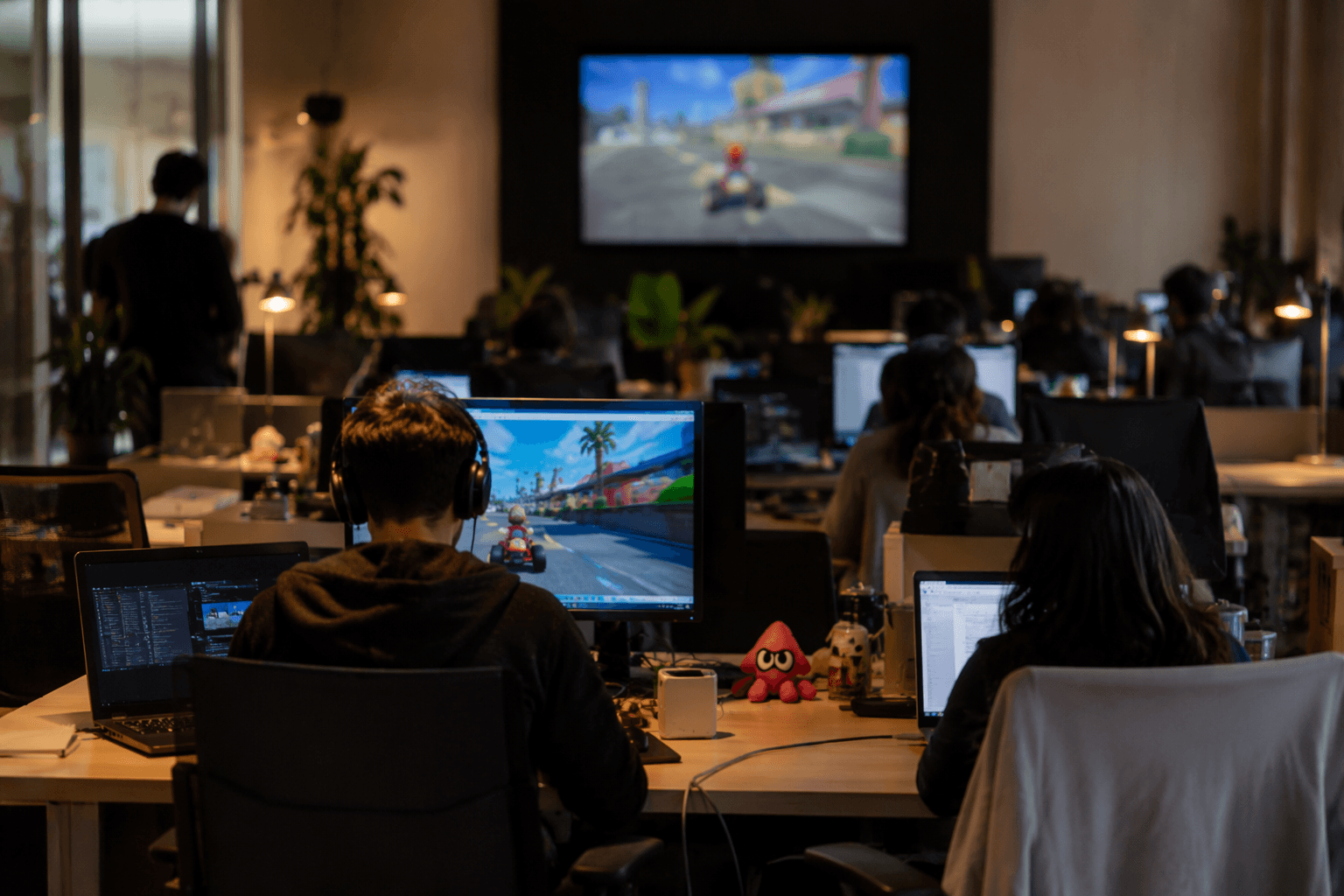
For developers, the live segment forces a practical question: how does the game read when someone outside the team is playing it on camera, in front of an audience, with no chance to hide confusing menus or a slow start? That is where live-demo support becomes part of the product work itself. A feature that looks elegant in an edited promo can feel very different when it has to be explained on the fly.
Nintendo has kept using the format for focused post-Direct coverage. A later Nintendo Treehouse page for Splatoon Raiders listed approximately 30 minutes of livestreamed gameplay after the Splatoon Raiders Direct 6.30.2026, and included examples such as Mario Kart World - Grand Prix Gameplay and Mario Kart World - Knockout Tour Gameplay.
What the archive reveals about Nintendo’s operating model
By keeping spotlight pages, follow-up streams, and regional messaging in one place, the archive preserves cadence. Nintendo creates a record of how it packages each announcement and how that packaging shifts across markets. For PR, localization, and developer relations teams, that archive becomes a reference point for future launches, especially when the company needs to balance secrecy with clarity.
Nintendo is not only funding trailers and reveal copy. It is supporting the people who can explain a game, demo it live, and keep the messaging coherent after the first wave of attention.
This article was produced by Prism’s automated news system from verified source data, official records, and press releases, then run through automated quality and moderation checks before publishing. The system is built and supervised by the people who set the standards it runs under. Read our full AI policy.
Did this article answer your question?