Nintendo explains how Tomodachi Life keeps Mii identity fresh
Nintendo’s Tomodachi Life sequel widens expression with non-binary options and deeper creation tools, while keeping the series’ strange, tightly controlled identity intact.
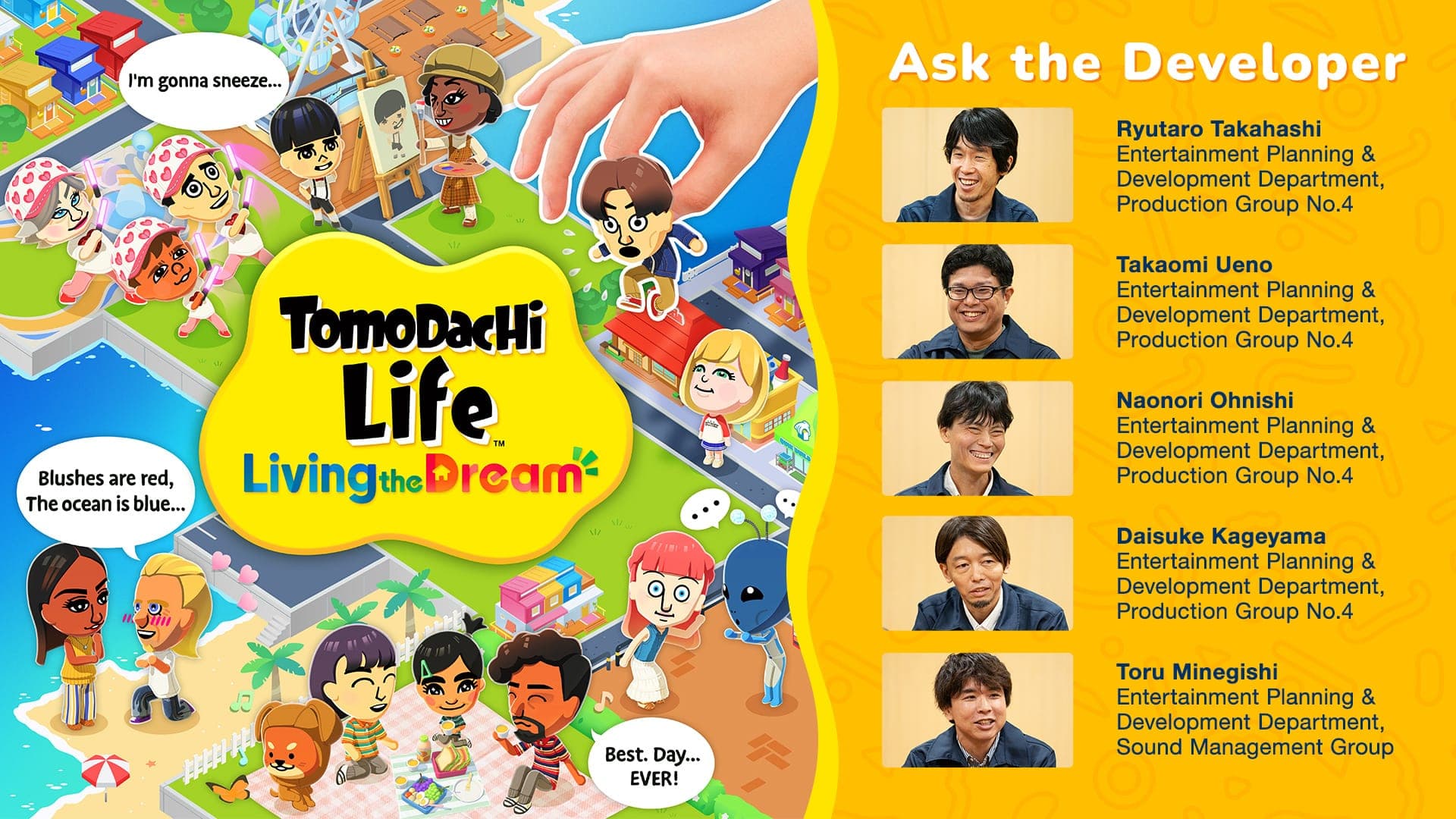
A sequel built on restraint, not sprawl
Tomodachi Life: Living the Dream is the kind of sequel that tells you more about Nintendo’s development culture than a press release ever could. It adds broader character creation, new identity options, and more expressive island life, but the real story is how carefully the team protected the series’ original feel while expanding what players can do.
Nintendo frames the game as the first new Tomodachi Life entry in more than 10 years, and that long gap matters. This was not a quick follow-up or a content patch dressed up as a revival. Nintendo says development began after Miitomo wrapped up in 2016, and that the project was rebuilt from the ground up while staying faithful to the series’ style. That combination, a fresh build with strong guardrails, is classic Nintendo sequel management.
What Nintendo decided to preserve
The most important design choice in the new Tomodachi Life is not what changed, but what stayed recognizable. Across the developer interview, Nintendo emphasizes a shared understanding of what Mii characters are supposed to be: lightly absurd, highly readable stand-ins for real people, not blank avatars that can mutate into anything. That identity gives the series its tone, and Nintendo clearly treats it as a rule, not a suggestion.
That helps explain why the sequel’s expanded customization feels intentional instead of bloated. The team did not simply pile on options for their own sake. It asked what kind of expression the series should support, and what emotions it should still evoke. For game teams inside Nintendo, that is the lesson: freedom works best when it is filtered through a very specific creative brief.
Broader expression without losing the Mii concept
Nintendo’s current pages highlight a much wider creation system than the original Tomodachi Life offered. Players can build Mii characters from scratch using a robust profile system, then create original items and island objects that make the world feel more personal. That broadens the toy box, but it does not erase the underlying Mii identity that defines the series.
The practical result is a sequel that gives players more room to make both realistic and imaginative characters. That matters for designers because it shows how Nintendo manages legacy IP evolution. The company is not treating modernization as a race toward complexity. It is treating it as a curation problem, deciding which kinds of expression deepen the concept and which ones would blur it.

The features that reveal Nintendo’s quality bar
The series’ quality-first culture shows up most clearly in the development decisions that could have gone the other way. Nintendo says features such as Mii News were nearly cut when schedules got tight, but the team kept them because they believed those features were essential to the game’s identity. That is not just a cute anecdote. It is a reminder that Nintendo’s version of polish is often about defending the weird little systems that make a game feel like itself.
The developer interview also describes an idea board where anyone on the project could propose scenarios. That sounds simple, but it is a meaningful production detail: the game’s humor and surprise come from a workflow that lets people across roles contribute concrete ideas, then gives passionate contributors ownership over the ones they care about most. For producers and leads, the message is clear. Creativity at Nintendo is not unstructured. It is organized so that good ideas can survive the machinery of development.
Why inclusion is now part of the core design
Living the Dream also marks a visible shift in how Nintendo handles identity in a long-running social sim. Nintendo says players can choose a Mii’s gender as male, female, or non-binary. Players can also set dating preferences to male, female, non-binary, multiple options, or none, and married couples may have babies regardless of gender.
That is a notable evolution from the public conversation around the 2014-era Tomodachi Life, when the absence of same-sex relationships became part of the franchise’s history. Here, Nintendo is not just adding a checkbox. It is rewriting the rules of the simulation so more players can see themselves reflected in it without having to fight the game’s structure. For localization, community, and global product teams, this is a major signal: cultural adaptation is now part of the game’s design language, not an afterthought layered on later.
Nintendo also says the game is fully localized beyond Japanese and American English, with support for British English, French, Italian, German, Spanish, Korean, Dutch, Simplified Chinese, Latin American Spanish, Canadian French, Traditional Chinese, and Japanese. That breadth matters because Tomodachi Life lives or dies on small social details, and those details only work if the writing, humor, and character framing survive translation.
A global release built for today’s platform reality
The new game launched on Nintendo Switch on April 16, 2026, with Nintendo’s U.S. store listing it at $59.99 and offering a free demo. Nintendo also says it can be played on Nintendo Switch 2 with behavior consistent with Nintendo Switch. That tells you the company is treating the sequel as part of its current platform strategy, not a nostalgia project confined to one hardware moment.
Nintendo also says save data and islands are not shared among users on the same system. That detail may sound small, but it affects how the game fits into family consoles, shared devices, and household play patterns. It reinforces the idea that Tomodachi Life is still a personal sandbox, even when the hardware is shared.
Why the original still matters
The sequel’s scale makes more sense when you remember what Nintendo is reviving. The original Tomodachi Life released in Japan in April 2013, then in North America, Europe, and Australia in June 2014. Nintendo says it sold 6.73 million units worldwide lifetime, which places it firmly in the category of established commercial IP rather than cult obscurity.
That legacy is why this sequel is being handled so carefully. Nintendo is not trying to reinvent a dead brand from scratch. It is extending a proven one, and the company knows the difference. The best proof is how many decisions here are about continuity: the rebuilt foundation, the protected oddball features, the emphasis on Mii identity, and the disciplined expansion of representation and creation tools.
The real takeaway for Nintendo teams
Living the Dream is a useful case study because it shows how Nintendo governs legacy IP when the creative pressure points pull in opposite directions. On one side is the urge to modernize, widen access, and give players more expressive power. On the other is the need to keep a recognizable series shape, so the sequel still feels like Tomodachi Life and not a generic life sim wearing the name.
Nintendo’s answer is selective expansion. Preserve the signature rules. Keep the features that give the game personality. Let more players into the system, but do not flatten the system to make that possible. For a company built on long-lived franchises, that balance is the work.
This article was produced by Prism’s automated news system from verified source data, official records, and press releases, then run through automated quality and moderation checks before publishing. The system is built and supervised by the people who set the standards it runs under. Read our full AI policy.
Did this article answer your question?
