Nintendo hardware history page doubles as a company culture guide
Nintendo's hardware timeline reads like a culture memo: it celebrates reinvention, signals risk tolerance, and tells candidates why legacy still drives the work.
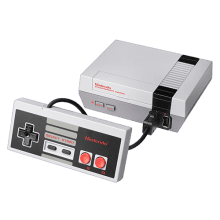
Nintendo's hardware history page does more than list consoles. It shows employees and candidates how the company wants to be understood: as a hardware-first business that keeps reinventing play without breaking from its own past. For developers, QA, localization, marketing, and operations teams, that is not branding fluff; it is a map of how product decisions ripple through the workplace.
A timeline that doubles as onboarding
Nintendo's Australia history page calls Nintendo Co., Ltd., of Kyoto, Japan, “the worldwide pioneer in the creation of interactive entertainment,” then moves quickly from the Nintendo Entertainment System in 1983 to a long run of hardware milestones. The sequence includes Game Boy, Game Boy Advance, Super NES, Nintendo 64, Nintendo GameCube, Wii, Nintendo DS, Nintendo 3DS family systems, Wii U, and the Nintendo Switch family of systems. That list does more than preserve memory. It tells staff that the company sees itself as a lineage of hardware bets, not just a publisher of software.
The careers site pushes the same idea into employer branding. Its Nintendo History section opens with, “Whether you grew up with Nintendo games and systems or you’re just hearing about us for the first time, we’re glad you’re here.” That line matters because it makes the company feel both inherited and open-ended. Longtime fans get recognition, but the door is not reserved for people who already speak Nintendo fluently.
Hardware is part of the design language
The timeline becomes more revealing when you line up the major transitions: the Nintendo DS launched in 2004, the Wii in 2006, the Nintendo 3DS in 2011, the Wii U in 2012, and the Nintendo Switch in 2017, with a global release date of 2017-03-03. Each of those machines changed how people held, touched, split, or docked the system. That is a different philosophy from simply chasing more power, and it explains why Nintendo often treats hardware as a creative tool rather than a container for games.
For developers and designers, that approach changes the job. Interface decisions, controller schemes, accessibility, and performance targets all sit closer to the hardware conversation than they might at a company built around brute-force specs. A new system is not just a technical refresh; it can redraw what kinds of ideas are worth greenlighting, which mechanics feel native, and how much risk the team can tolerate in the first place.

Why QA feels every hardware jump
Nintendo's hardware history also explains why quality assurance carries so much weight across the company. When the form factor changes, the testing matrix changes with it. Compatibility, accessories, region-specific behavior, and launch readiness become recurring pressure points because each new platform can create new failure modes that do not show up on the previous one.
That is especially true for systems built around unusual interaction models. The Wii's motion controls, the DS's dual screens and touch interface, and the Switch's portable and docked modes all expanded the kinds of edge cases QA teams have to catch before players do. For testers, that means certification planning is not an administrative afterthought. It is part of protecting the brand promise that Nintendo hardware will feel novel without feeling fragile.
Localization teams feel the same ripple in a different way. Region-specific behavior is not just about language strings; it also touches formatting, regulatory details, platform features, and how hardware behaves across markets. A company that treats hardware as an identity marker has to make sure that identity survives translation, regional rules, and launch-day stress.
What the page leaves out is the point
The most telling thing about Nintendo's hardware history page is not only what it includes, but what it smooths over. The page emphasizes continuity, clean succession, and a steady line from one generation to the next. It does not linger on the internal friction that comes with each transition, or on the operational burden that novelty creates for teams trying to ship reliably across markets and product families.
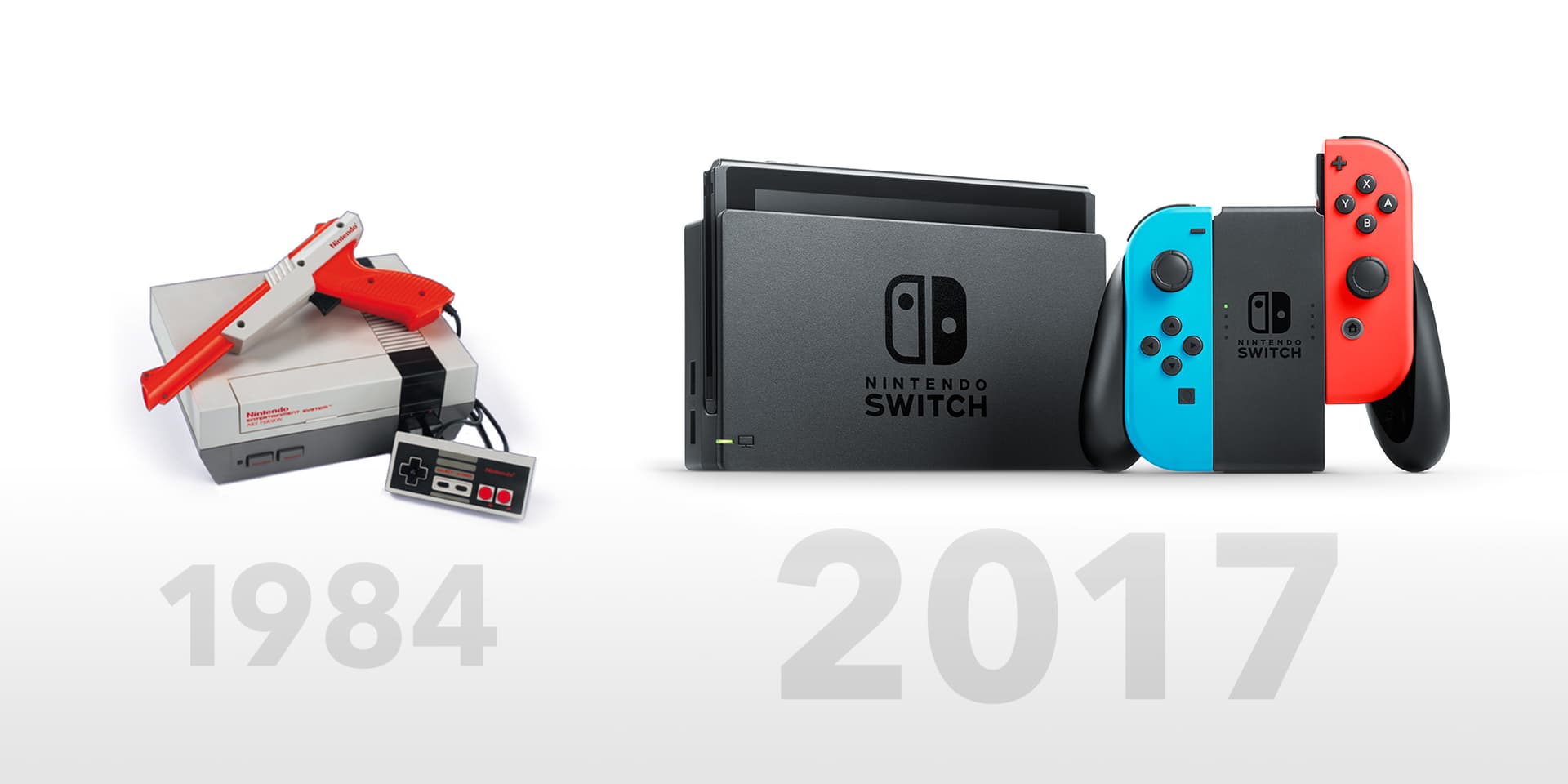
That omission is a kind of discipline. By keeping the story focused on successive hardware identities, Nintendo presents innovation as orderly and cumulative, not chaotic or purely experimental. The message to workers is that risk is acceptable when it serves a recognizable company pattern: different inputs, different form factors, different play styles, same core idea that hardware can shape culture.
For business teams, that framing matters because it clarifies how Nintendo protects its brand. The company has repeatedly made large bets on differentiated user experience over direct spec competition alone, and the timeline quietly reinforces that habit. It is a reminder that Nintendo tends to win when it can explain a product in human terms, not technical ones.
A culture document hiding in plain sight
Taken together, the history page and the careers site act like a compact manual for how Nintendo wants people inside the company to think. The story is not just that Nintendo has been around since the NES era. It is that the company expects every new platform to fit a long-running identity built on reinvention, restraint, and memorable play.
For anyone working inside Nintendo, that makes the hardware timeline more than a nostalgic archive. It is a statement about how the company measures progress, how it asks teams to absorb change, and why the next system will probably be judged less by raw specs than by whether it feels unmistakably Nintendo.
This article was produced by Prism’s automated news system from verified source data, official records, and press releases, then run through automated quality and moderation checks before publishing. The system is built and supervised by the people who set the standards it runs under. Read our full AI policy.
Did this article answer your question?