Nintendo localization QA explained, why source text freezes matter
Localization QA is where polished language becomes shippable product. At Nintendo, that means freezing source text, protecting schedules, and treating LQA as real QA, not proofreading.
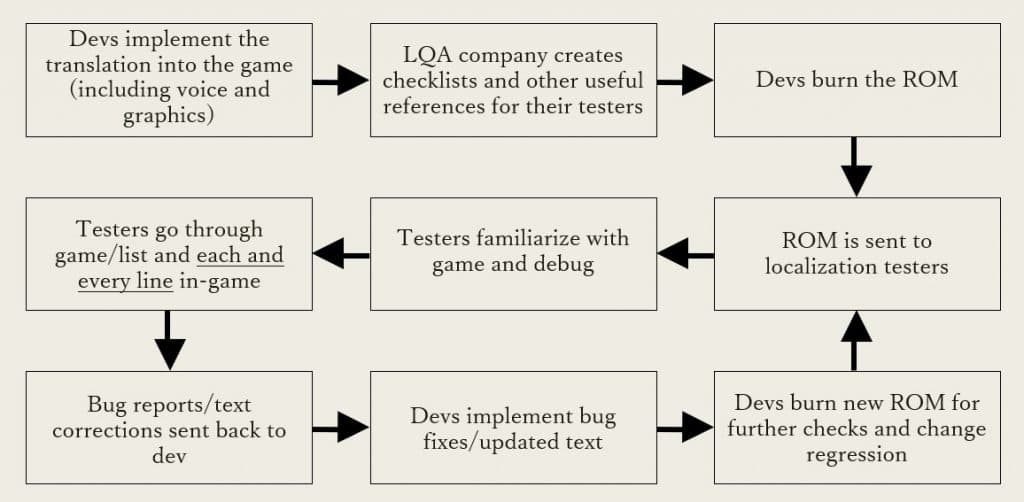
Nintendo localization QA only makes sense when you stop treating it like a final typo sweep. The work sits after translation, editing, and proofreading, and it exists to catch the problems that only appear when text, UI, voice, art, and culture meet a real player experience. That is why source text freezes matter: if the script keeps changing while localization QA is underway, teams end up rechecking the same strings, losing version control, and burning time they do not get back.
LQA is a production gate, not a copy desk
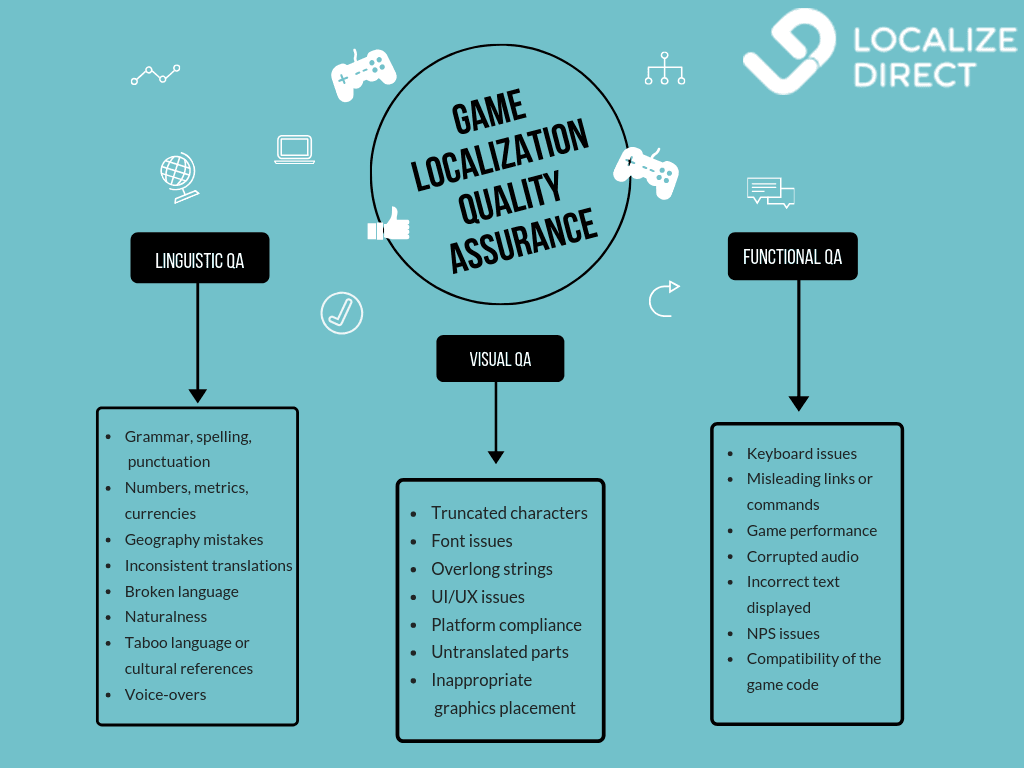
The easiest mistake is to imagine localization QA as a native speaker glancing at a script and signing off. IGDA’s localization guidance draws a much firmer line: LQA is QA for localization, which means checking how text behaves in context, whether terminology stays consistent, whether characterization still reads correctly, and whether the layout, fonts, and UI still make sense once the language changes. It also means catching image, sound, gesture, and other cultural issues that can create problems in the target market.
That broader remit matters at Nintendo because the company’s quality standards are built around the player noticing when something feels off, even if the core game logic is fine. A misplaced line in a menu, a mistranslated item name, or an awkward cultural reference can break trust in a way that a simple proofreading pass will not catch. LQA is the layer that protects the experience from becoming technically translated but functionally unfinished.
Where LQA sits in the pipeline
The distinction that matters most is timing. Translation and editing happen first, then proofreading, then localization QA checks the localized content in its actual game or product context before ship. That sequence matters because a test string that looks clean in a document can fail in a build, where text boxes clip, voice timing runs long, terminology conflicts with a prior installment, or an interface label becomes confusing on hardware.
Nintendo’s staffing descriptions make that pipeline concrete. Its localization manager role in Redmond, Washington, says the job manages localization from Japanese into North American and Latin American markets while coordinating schedules, workflow, budgets, and postmortems. That is not the language of a casual editorial pass. It is the language of a production function that has to mesh with planning teams, development teams in Japan, and other Nintendo Company Limited subsidiaries.
The company’s Language QA Tester role says the tester checks consumer-facing documents and in-game text and voice for context, grammar, spelling, possible trademark issues, and overall presentation. It also calls for identifying possible culturalization issues and proposing solutions, while using a testing toolset to report bugs and confirm fixes. In other words, LQA sits between localization craft and product verification, which is exactly where a Nintendo-scale release needs it to sit.

Why source freezes save time and credibility
Source text freezes are not bureaucracy for its own sake. They are the point where production says the text is stable enough for language QA to do meaningful work without restarting every few days. IGDA’s scheduling guidance warns that almost everyone underestimates how long localization takes, and it is blunt about the tradeoff: a quick, cheap localization at high quality is impossible.
That warning lands especially hard for teams shipping across multiple markets at once. If source strings keep moving, every change can ripple through terminology, UI space, voice timing, legal text, store copy, and related materials. IGDA says teams working early in development should add at least 50 percent to rough localization estimates, which is a practical way of acknowledging uncertainty, rework, and the extra coordination that comes with unfinished source text.
The fix is straightforward. QA the source language early, freeze or lock the text while LQA is underway when possible, and clearly flag changed strings whenever edits cannot be avoided. That simple discipline reduces version-control chaos and prevents the same issue from being rediscovered three times by three different people on three different builds. For producers, it is a schedule safeguard. For testers, it is a way to stop spending energy on work that was already effectively invalidated.
What Nintendo’s hiring tells you about the job
Nintendo’s own career pages make the point that language QA is specialized labor, not a side task. The Language QA Tester role in Redmond requires 1 to 3 years of proofreading experience in a high-volume, deadline-oriented QA setting. That requirement alone tells you the company is not looking for casual editorial polish. It is looking for someone who can work in the pace and pressure of game production, where bugs are bugs even when they are linguistic instead of technical.
The same posting says the tester uses a testing toolset to report bugs and confirm fixes. That means the work is operational, traceable, and cross-functional, with findings feeding back into development rather than sitting in a comment document. It also means the person doing the job has to understand both language and process, because fixing a string is not the same as understanding why it broke the player experience in the first place.
Nintendo’s wider American operation also helps explain why this matters. The company describes its work in the Americas as spanning games, hardware systems, partnerships, marketing, and live-stream and promotional work, while partnering closely with Nintendo Co., Ltd. to bring franchises like Mario, The Legend of Zelda, Animal Crossing, Pikmin, and Splatoon across the region. When that much content is moving through the pipeline, localization and LQA become a coordination problem, not just a wording problem.
The Nintendo example shows how heavy localization really is
A useful reminder comes from Nintendo’s 2016 interview about DRAGON QUEST VII: Fragments of the Forgotten Past. The game reached Europe 16 years after its original Japanese release, and the Japanese-to-English localization team said four people worked on it, and at times five. From start to finish, the process took just over a year, including familiarization, glossary creation, translation and editing, and QA.
That example is bigger than one Square Enix title. It shows how much invisible labor sits behind a polished release when text has to be consistent across a long-running franchise, multiple languages, and a high-expectation audience. It also shows why language QA cannot be the last hurried check before build lock. If a project already needs a year with a small team, then late-stage instability does not just create inconvenience. It threatens the whole schedule.
IGDA’s best-practices guidance points in the same direction by stressing that translators, editors, and localization testers all need context. It recommends giving teams a playable build or similar familiarization materials along with a localization kit and style guide, because the more context and background information you provide, the smoother localization will go. That is a production lesson as much as a language one: good inputs create fewer surprises, and fewer surprises mean fewer emergency rewrites.
The real lesson for Nintendo teams
For Nintendo, the point is not that localization QA should be bigger than development. The point is that it should be treated with the same seriousness as any other QA lane. LQA protects player trust, keeps terminology aligned across hardware and software, and catches cultural or presentation issues before they become public mistakes.
When source text is frozen at the right time, when LQA is staffed as a real production function, and when localization teams get the context they need, the work gets cleaner and the release path gets smoother. That is how quality-first culture stays practical instead of ceremonial.
This article was produced by Prism’s automated news system from verified source data, official records, and press releases, then run through automated quality and moderation checks before publishing. The system is built and supervised by the people who set the standards it runs under. Read our full AI policy.
Did this article answer your question?
