Nintendo outlines governance focus on long-term value and stakeholders
Nintendo’s new governance update pushes long-term value over short-term pressure, with board checks on conflicts, shareholdings and talent policy shaping daily work.
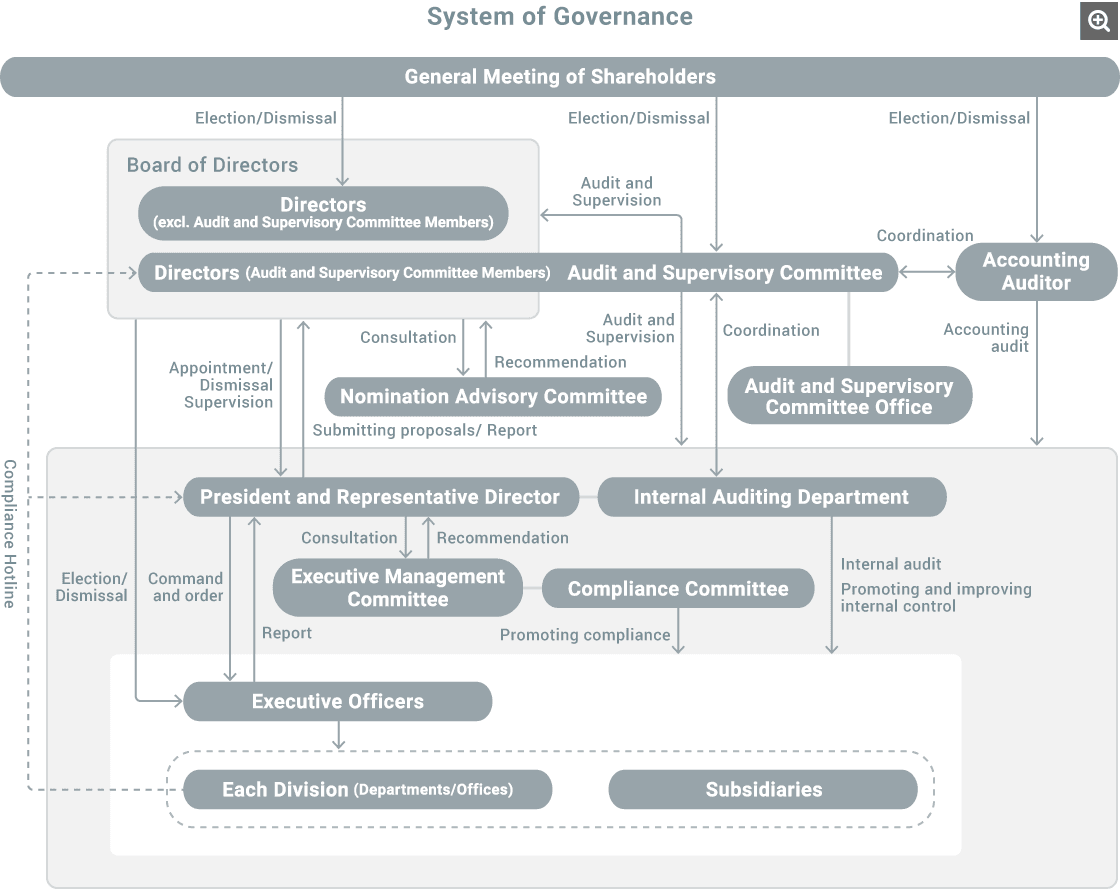
Nintendo posted a Corporate Governance Report on June 29 saying the company is built to maximize long-term, continuous corporate value while weighing shareholders, consumers, business partners, employees, local communities and other stakeholders at the same time. For anyone building, approving, localizing or supporting games at Nintendo Co., Ltd., it is the frame management uses to justify partnerships, capital decisions, conflict checks and the patience needed to carry a project through a long franchise life.
Governance is being tied to people policy, not just the boardroom
Nintendo refreshed its sustainability page on June 26, 2026, and the page points to updates in corporate governance, compliance, workplace policy, talent and stakeholder sections. The company is presenting governance as a system that reaches into hiring, working conditions and internal accountability, not just board process. Nintendo’s recruitment principle says it respects human rights and hires without regard to a long list of personal attributes.
For developers, designers, QA staff and business teams, that has a practical effect. A company that links governance to talent cultivation and workplace policy is telling managers to think beyond the release calendar and the next milestone. Resource decisions, staffing stability and internal controls are being framed as part of how Nintendo protects value over time.
Conflicts of interest are not left to informal judgment
Nintendo’s governance report says related-party transactions involving directors require board approval under internal rules. It also says the company conducts an annual survey of directors, executive officers and the management teams of significant subsidiaries to confirm whether such transactions exist.
Inside the organization, that changes how people should think about outside ties, vendor relationships and any arrangement that could blur the line between personal interest and company interest. A project lead cannot treat a director-linked relationship as a casual workaround, and a business manager cannot assume that a helpful side arrangement will stay invisible if it sits outside the normal approval path. The process is built to create scrutiny.
Cross-shareholdings are being treated as assets that must keep earning their place
Nintendo’s 2021 governance filing spelled out how the company handles cross-shareholdings in more detail. The board examines whether listed shareholdings are reasonable in light of transaction size, market value and other metrics, and it will consider reducing them if their significance diminishes. The filing also said Nintendo holds listed shares to maintain or develop business alliances or business relationships when doing so is judged to contribute to long-term corporate value, and that voting rights attached to those holdings are exercised case by case based on mid- to long-term value considerations.
For finance teams, procurement, partnership managers and executives who inherit legacy relationships, the message is that old ties do not get a free pass just because they have been around for years. If a holding no longer supports long-term value, the company says it can be reduced.
The timing shows this is an active reset, not a ceremonial update
Nintendo held its 86th Annual General Meeting of Shareholders on June 26, 2026. The same day, it issued a resolution notice from that meeting, and its June 29 investor-relations page listed both the Corporate Governance Report and a Company View Regarding Stock Trading Unit Reduction. The board also appointed and had representative directors assume office after the June 26 shareholders’ meeting.
A stock-trading-unit review points to how accessible the shares are in the market, while the governance report shows how the company wants those shares and its internal controls to be understood.
The financial backdrop makes the governance posture easier to read
Nintendo’s fiscal year ended March 31, 2026 with net sales of 2,313.0 billion yen, up 98.6% year on year, and operating income of 360.1 billion yen. Management also said Nintendo Switch 2 got off to a good start after its June 2026 launch, helped by expanded software sales.
This article was produced by Prism’s automated news system from verified source data, official records, and press releases, then run through automated quality and moderation checks before publishing. The system is built and supervised by the people who set the standards it runs under. Read our full AI policy.
Did this article answer your question?
