Nintendo profile reveals global workforce, subsidiaries and Kyoto roots
Nintendo says it has 8,666 workers worldwide, but only 3,084 sit at Nintendo Co., Ltd., showing how much of the company runs beyond Kyoto.
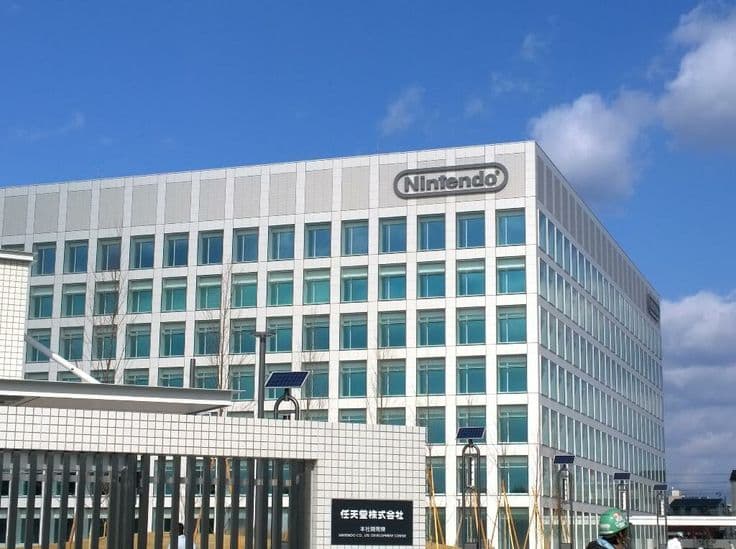
Nintendo’s public profile cuts against the easy image of a Kyoto-only game maker. The company says it had 8,666 employees on a global consolidated basis at the end of March 2026, with 3,084 at Nintendo Co., Ltd. alone, a split that shows how much of the business lives outside headquarters and into regional offices and specialized subsidiaries.
That structure runs deep. Nintendo’s affiliated-company list includes Nintendo Systems, Nintendo Sales, Nintendo Cube, Mario Club, 1-UP Studio, Monolith Software, SRD, Nintendo Pictures, Nintendo Stars, The Pokémon Company, Nintendo of America, Nintendo of Canada, Nintendo of Europe, Nintendo Australia, Nintendo of Korea, Nintendo Hong Kong, Nintendo Taiwan and Nintendo Singapore. For employees, that means development, quality assurance, sales, marketing, media and regional support are not centralized in one building in Kyoto. They are distributed across the enterprise, which helps explain why a game, a hardware launch or a localization decision can move through multiple offices before it reaches players.

The company’s own history page reinforces that footprint. Nintendo began in 1889, when Fusajiro Yamauchi started making hanafuda cards in Kyoto. It was incorporated in 1947, adopted its current name in 1963, opened a Tokyo branch in 1961, set up Nintendo of America in New York in 1980 and then moved and reorganized that subsidiary in Seattle in 1982. It established Nintendo of Europe in Germany in 1990, moved its headquarters to its current Kyoto location in 2000, launched Nintendo Sales in Tokyo in 2017, opened Nintendo TOKYO in Shibuya in 2019, brought Super Nintendo World to Universal Studios Japan in 2021 and introduced Nintendo Switch 2 in 2025.
The physical footprint matches the corporate map. Nintendo lists its corporate headquarters and development center in Kyoto, a Tokyo branch office and a Uji plant, along with regional offices in Redmond, Washington; Frankfurt am Main, Germany; Burnaby, British Columbia; Scoresby, Victoria; Seoul, Republic of Korea; Hong Kong; and Taipei City, Taiwan. The company’s leadership page names Shuntaro Furukawa as president and representative director, with Shigeru Miyamoto listed as executive fellow and representative director, member of the board, another sign that creative and operational authority is spread across a formal global structure rather than a single campus.

That scale is not abstract. Nintendo reported 2.313 trillion yen in consolidated net sales and 360.1 billion yen in operating profit for the fiscal year ended March 31, 2026. It also said cumulative Nintendo Switch 2 hardware sales reached 19.86 million units, while Nintendo Switch hardware sales reached 380 million units. For workers, those numbers point to a company whose quality standards, regional coordination and career paths are shaped by a worldwide platform business, not just by the Kyoto headquarters that still defines the brand.
This article was produced by Prism’s automated news system from verified source data, official records, and press releases, then run through automated quality and moderation checks before publishing. The system is built and supervised by the people who set the standards it runs under. Read our full AI policy.
Did this article answer your question?
