Nintendo QA certificate reframes quality as a core development discipline
Nintendo’s QA story is bigger than bug hunting: the certificate treats quality as risk management, from certification to save data and launch-day trust.
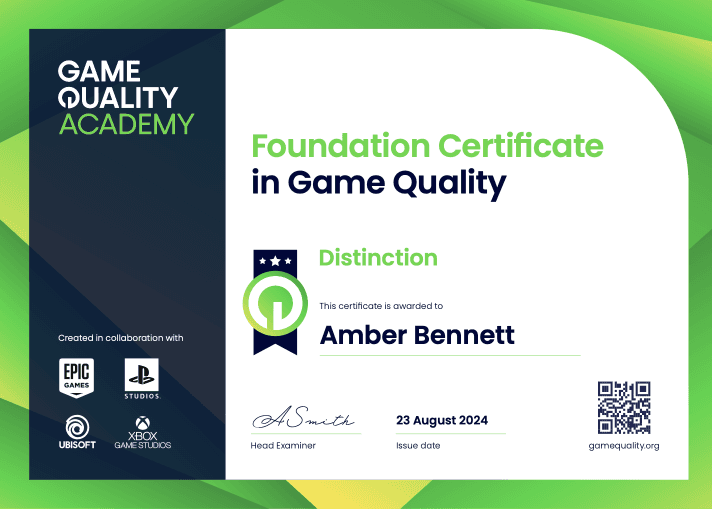
Nintendo’s quality culture works best when it is treated as a product risk system, not a cleanup crew. That is the real lesson in the Foundation Certificate in Game Quality: QA is not just about catching bugs late, it is about shaping how a game gets built, reviewed, certified, localized, and supported so it can survive launch without damaging player trust.
Quality starts long before submission
The certificate’s framing is more mature than the old stereotype of QA as end-of-line bug hunting. Game Quality Membership describes it as a comprehensive introduction to game quality in action, with terminology, testing methodologies, best practices, platform-specific considerations, and practical insights from industry experts. It also puts risk management at the center, which matters because the failures that hurt a flagship release most are rarely the obvious ones. The expensive problems are the ones that touch save data, progression, online services, certification, or day-one stability.
That framing fits Nintendo’s own development culture. The company’s developer portal says a product must be submitted for review before publication, and that the review exists to ensure the game can be safely played and conforms to Nintendo production standards. Just as important, the portal tells developers to keep Nintendo guidelines in mind throughout the development process, not only at the end. For a studio built around long-running franchises and a reputation for polish, that is not a paperwork detail. It is a signal that quality is a cross-functional responsibility from concept through release.
Why the certificate matters inside a Nintendo workflow
The certificate is positioned by Game Quality Membership as a pathway for new entrants and early-career QA professionals, but the value extends beyond early career training. It is a collaboration with Epic Games, PlayStation Studios, Ubisoft, and Xbox Game Studios, which gives it a shared-industry language that travels well across platforms and studio cultures. For Nintendo teams, that matters because the company’s quality standards are not isolated from the wider game business. They sit in a global ecosystem where certification, online operations, and platform compliance can determine whether a game ships cleanly or becomes a support burden.
For designers, this means QA is not an obstacle to creativity. It is a systems partner that helps preserve the player experience the design is trying to create. For producers, it means milestones need to account for review, compliance, localization, and platform-specific checks early enough to avoid last-minute rewrites. For business teams, it means QA is part of launch risk management, because every preventable defect that slips through can become a reputation problem as quickly as a technical one.
Save data is a trust issue, not a footnote
Nintendo’s support materials make one of the clearest cases for why QA needs to think in business terms. On Nintendo Switch, save data is stored in system memory and, for the most part, associated with the individual user. It cannot be copied to a microSD card. Nintendo also maintains a specific troubleshooting flow for missing, corrupted, or unreadable save data, which tells you how seriously the company treats the problem.
That is not just a support issue. It is a trust issue. When a player loses progression, the failure is personal and immediate, and for a flagship platform it can overshadow every other good impression the game made. QA teams that understand this early are not just checking whether a save file exists. They are pressure-testing the whole chain: user identity, data integrity, recovery behavior, edge cases around corruption, and how the game communicates with the player when something goes wrong.

Platform-specific QA has become a moving target
The certificate also emphasizes platform-specific considerations, and Nintendo’s own developer resources show why that matters. The company says that on March 25, 2021, new development for older platforms such as Nintendo 3DS and Wii U was no longer possible for new developers, while the portal points teams toward Nintendo Switch and Nintendo Switch 2 resources. That is a reminder that platform targets, certification rules, and technical assumptions can change faster than internal habits.
This is where a modern QA discipline earns its keep. A test plan that is solid on one device or in one region may not be enough when the same build has to meet different technical conditions, age-rating workflows, online-service requirements, or save-data behaviors across hardware generations. Nintendo’s support guidance also underscores that save-data transfer and cloud backup behavior can differ by system and account setup. The company notes that backups can be shared between Nintendo Switch 2 and Nintendo Switch systems using the same Nintendo Account, and that downloaded backups replace existing save data on the console. That kind of detail is exactly why platform-aware QA cannot be treated as a generic checklist.
The business case is launch readiness
Nintendo’s corporate materials reinforce the broader point: quality, safety, and risk preparation are part of maintaining consumer trust. That language matters because it connects day-to-day QA work to the company’s larger promise to players. A game that passes through review cleanly, protects save data, handles platform rules correctly, and supports stable online behavior does more than avoid a patch. It protects the launch window, reduces support load, and preserves the franchise’s reputation for care.
There is also a practical argument for making QA visible earlier in development. Nintendo says registering for the Developer Portal and downloading tools is free, and that digital-only titles can use IARC to obtain age ratings at no fee in participating countries. Those facts do not make shipping easy, but they do show that the company has built some of the infrastructure for an earlier, more disciplined approach. The organizations that use that structure well are the ones that can move faster later, because they are not discovering compliance or process gaps at the worst possible time.
What the certificate really reframes
The biggest value of the Foundation Certificate in Game Quality is not that it teaches people to find more bugs. It is that it gives QA a vocabulary for the work Nintendo already depends on: keeping the player experience safe, stable, and shippable across hardware, regions, and release pressure. For a company where quality is part of the brand promise, that shifts QA from a support function to a core development discipline.
That is the frame Nintendo teams need now. The strongest releases will not be the ones that simply survive launch week. They will be the ones whose QA process was embedded early enough to protect certification, patch cadence, online reliability, and the trust that keeps players coming back to the platform.
This article was produced by Prism’s automated news system from verified source data, official records, and press releases, then run through automated quality and moderation checks before publishing. The system is built and supervised by the people who set the standards it runs under. Read our full AI policy.
Know something we missed? Have a correction or additional information?
Submit a Tip