Nintendo raises Switch 2 prices as profit outlook weakens
Nintendo lifted Switch 2 pricing in Japan to 59,980 yen and forecast a 27% profit drop, putting pressure on software, support and regional teams.
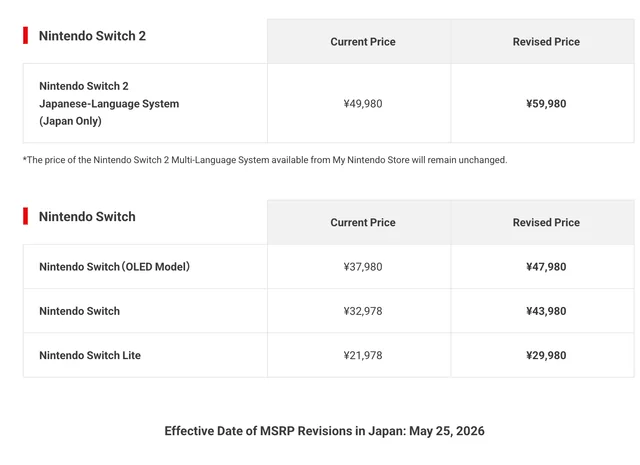
Nintendo raised the Switch 2 price in Japan to 59,980 yen from 49,980 yen and planned U.S. price increases as it projected an 11 percent revenue decline and a 27 percent drop in net profit for the current fiscal year. For employees, that turns a consumer-facing price move into a companywide operating change, with harder cost discipline for hardware teams and a much tighter test for whether the platform’s premium price still feels justified.
The pressure lands across functions that normally work on different clocks. Hardware and supply chain teams now have to manage costs more aggressively as memory prices stay elevated. Software producers and release planners face a sharper mandate to deliver first-party titles that can support a more expensive machine, while marketing has to explain value without sounding defensive. Localization and customer support teams will likely see more questions about regional pricing, bundles and why Japan and the United States are moving differently. Business teams, meanwhile, have to show how higher prices fit a platform strategy built around quality and long-term franchise value.
That internal shift came after Nintendo set an ambitious bar for the Switch 2 before launch. On April 2, the company said the console would arrive on June 5 at $449.99 in the United States and 49,980 yen in Japan. On May 8, it forecast 15 million Switch 2 units and 45 million software units in its first fiscal year, alongside revenue of 1.9 trillion yen and operating profit of 320 billion yen for the year ending March 2026. Those targets now sit beside a more cautious outlook, tightening the gap between the launch plan and the operating reality.
Early demand was strong, but so was the strain. Launch-day shortages were expected amid pent-up demand, and by June 11 the Switch 2 had become Nintendo’s fastest-selling console. Nintendo later said it sold about six million units in the seven weeks after launch while keeping its full-year forecast unchanged at that time. The combination of fast sell-through and higher memory costs helps explain why pricing pressure arrived so quickly.
For developers, designers, QA testers and localization staff, the new equation is straightforward: a pricier Switch 2 raises expectations on software cadence, technical polish and regional execution. If the platform asks more from buyers, every missed release window, storefront mismatch or support escalation becomes harder to absorb. That leaves Nintendo’s quality-first culture under a more visible test, because the value proposition now has to be proven not just at launch, but through the pace and consistency of everything that follows.
This article was produced by Prism’s automated news system from verified source data, official records, and press releases, then run through automated quality and moderation checks before publishing. The system is built and supervised by the people who set the standards it runs under. Read our full AI policy.
Did this article answer your question?