Nintendo stock sinks on weak Switch 2 outlook and price hikes
Nintendo’s stock dropped about 10% after a weak Switch 2 forecast, with memory costs, tariffs and higher prices overshadowing a strong launch year.

Nintendo’s stock fell about 10% in Tokyo on Monday to its lowest level since August 2024 after the company signaled that Switch 2 growth will cool faster than investors expected. Nintendo said it now expects to sell 16.5 million Switch 2 units in the fiscal year ending March 31, 2027, down from 19.86 million in the launch year, while software sales are projected at 60 million copies.
The pressure is coming from both ends of the business. Nintendo has already moved to raise Switch 2 prices in key markets, lifting the Japanese-language system in Japan from 49,980 yen to 59,980 yen on May 25 and increasing the U.S. price from $449.99 to $499.99 on September 1. The company said the revisions were made “in light of changes in market conditions” and after considering the global business outlook.

That price action landed just as Nintendo warned that rising component costs, especially for memory, plus tariffs will hit results by about 100 billion yen. Investors were also disappointed by the software outlook, with the company not pointing to a major holiday system seller on the scale of a new 3D Mario release. For a platform built on tightly managed release timing and first-party franchises, that absence matters. It suggests a thinner holiday calendar, more pressure on the teams building software to carry the hardware, and less room for error if demand softens.
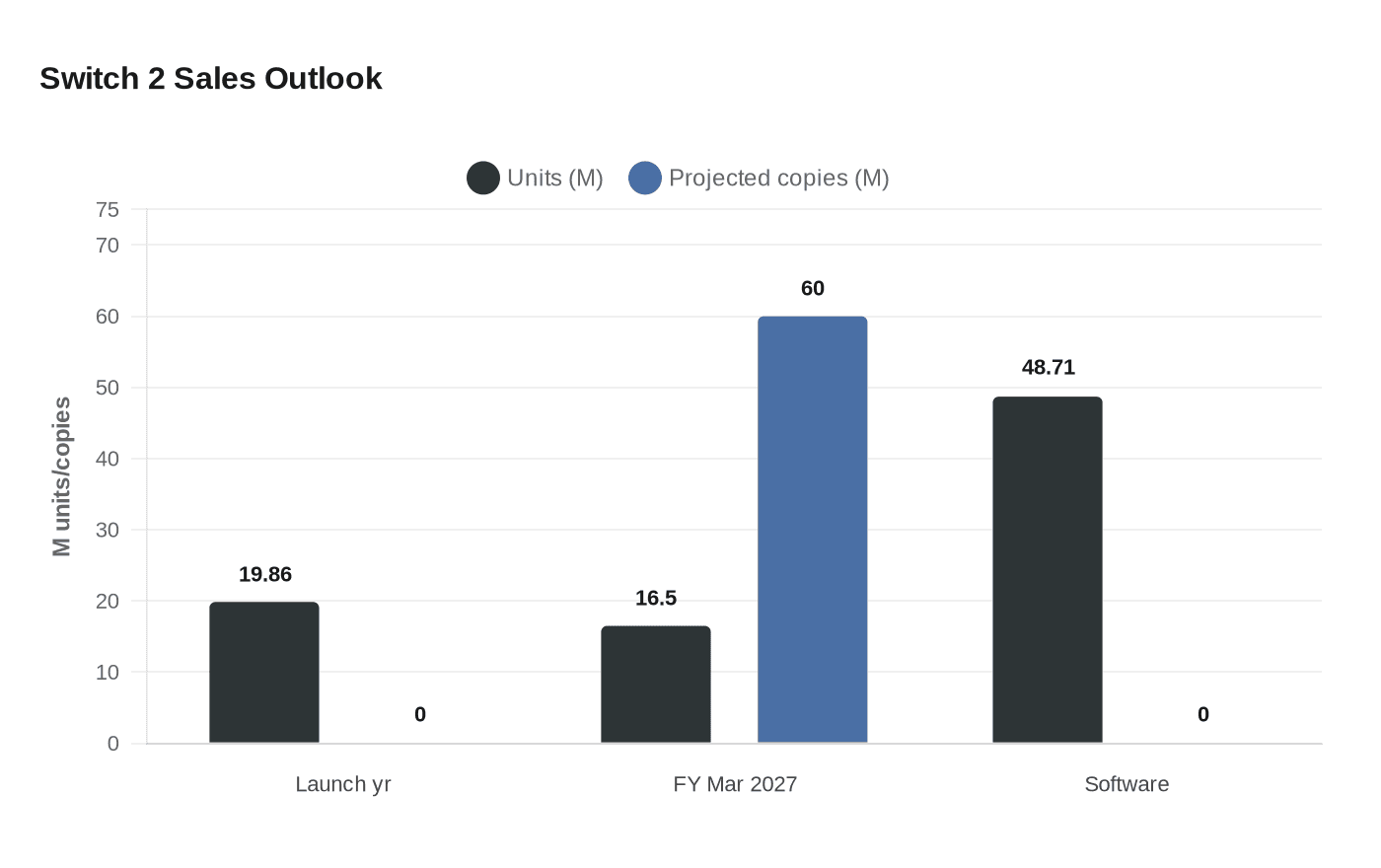
The selloff came despite a launch year that was still unusually strong. Nintendo sold 48.71 million Switch 2 software units and remained about 5 million units ahead of the original Switch at the same point in its life cycle. Even so, the company is now forecasting slower second-year sales, a reversal from the usual console pattern. Dr. Serkan Toto of Kantan Games said that console sales normally rise in year two, making Nintendo’s projected 17% decline stand out.
For workers inside Nintendo, the message is not subtle. Softer hardware and software expectations usually mean tighter project prioritization, more scrutiny on budgets, and slower hiring in areas tied to launch support, localization, QA and production. Kyoto headquarters and overseas offices alike are likely to feel the push to do more with less, especially if the company leans on cost control while trying to preserve the quality-first standards that define its biggest franchises.
Know something we missed? Have a correction or additional information?
Submit a Tip