Nintendo’s multilingual reach highlights IGDA’s localization best-practices guide
Nintendo’s global launch machine depends on localization as production planning, not a late translation pass. IGDA’s guide maps the workflow choices that keep text, voice, QA, and release timing aligned.
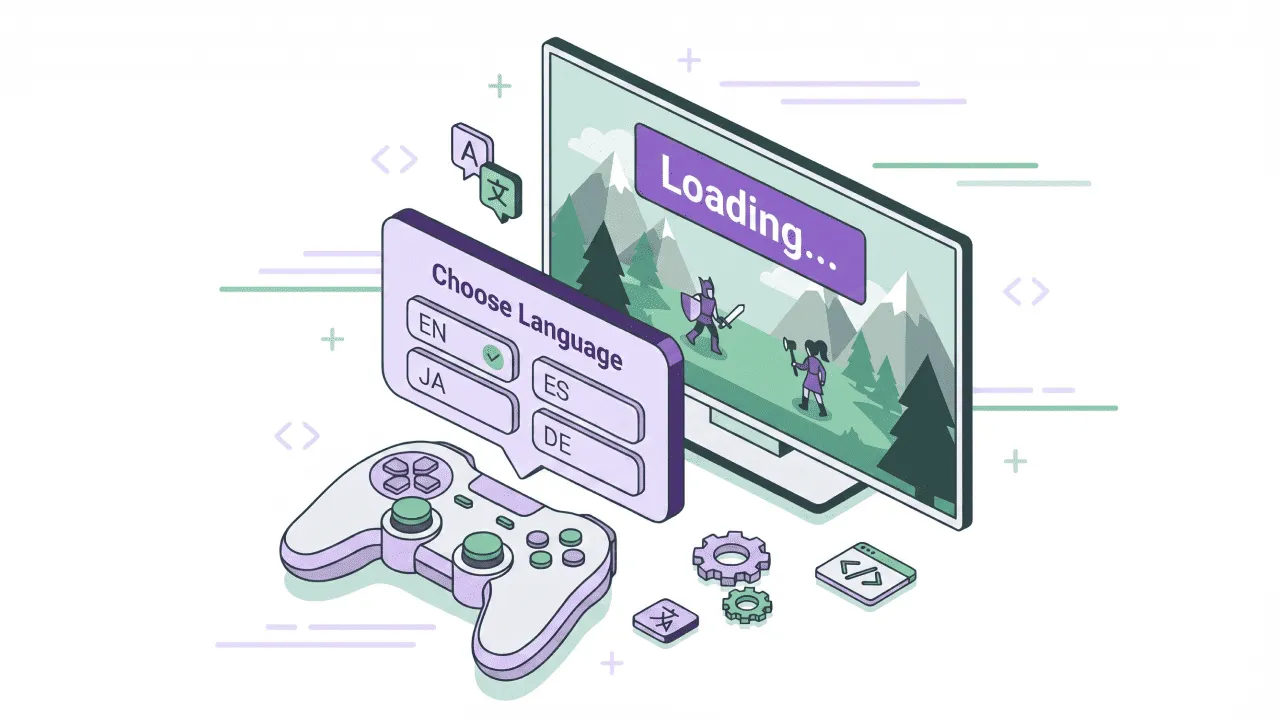
Nintendo’s reach across the Americas, Europe, the Middle East and Africa, and Asia Pacific is not just a marketing fact. It is a production reality that shapes how every major release has to move through planning, writing, testing, and launch. Nintendo of America says it works closely with Nintendo Co., Ltd. to bring core franchises such as Mario, Donkey Kong, The Legend of Zelda, Metroid, Animal Crossing, Pikmin, and Splatoon across the Americas, and that kind of scale only works when localization is treated as part of the build, not a clean-up step.
The International Game Developers Association’s Localization Special Interest Group has been making that point for years. The group was founded in 2007 to give a focal point to a growing field of localization professionals, and IGDA describes its special interest groups as volunteer-run global communities for anyone from student to AAA developer who wants to work in a particular discipline. That matters at Nintendo because the company’s games do not simply need to read correctly in another language. They need to feel like Nintendo in every market.
The IGDA guide is really a production-policy document
The best-practices guide for game localization is useful because it treats localization as a workflow discipline. The updated resource page was designed to help translators, game developers, narrative designers, localization teachers, and localization project managers, which is a reminder that the work spans far more than one department. For Nintendo teams, that means localization cannot sit outside planning, art, UI, audio, QA, or release management.
The guide’s strongest lesson is that the important decisions happen before the text is frozen. Terminology needs to be established early. UI constraints need to be understood before menus, button labels, and system prompts are locked in. Cultural references, character names, voice assets, and release scheduling all need to be part of the same conversation while the game is still being shaped. If those choices arrive after content is already built, the team ends up forcing production to fit language instead of fitting language into production.
That is exactly why the guide still lands for Nintendo. The company’s most recognizable franchises rely on tone consistency as much as literal accuracy. A late pass that only checks whether a sentence fits on screen misses the larger point: localization affects pacing, presentation, menu flow, and even how confidently a game can launch worldwide at the same time.
What Nintendo’s own hiring materials say about the workflow
Nintendo’s careers materials reinforce the same production logic. A recent Manager, Localization posting says the role works with the Planning team and Localization Management to develop schedules and coordinate workflow with other localization team members. It also tracks project spend and manages localization of products from Japanese to North American and Latin American markets while making recommendations based on Nintendo of Europe market needs. That is not the profile of a narrow translation role. It is a scheduling and coordination function with direct impact on launch readiness.
An Associate Localization Specialist posting points in the same direction. Nintendo says the role localizes game text, voice scripts, marketing materials, and supplementary development and testing-related documents and materials to support products and services through launch and beyond. That scope tells production teams what actually sits inside localization at a company like Nintendo: in-game copy, voice, external messaging, and the documents QA needs to validate the work. When those layers are handled together, teams reduce the chance that one market is ready while another is still waiting on text, voice, or test assets.
For Redmond-based teams, that also means cross-time-zone handoffs matter. A localization schedule built with Japan, North America, Latin America, and Europe in mind has to account for review cycles, approvals, and asset delivery windows that do not line up neatly. The more global the launch, the more expensive every late decision becomes.
Context is not optional, especially for names, voices, and story tone
IGDA’s localization resources make one point especially clear: translators, editors, and localization testers all need context. That sounds basic, but in practice it is one of the biggest quality issues in game production. Without context, teams are forced to guess whether a line is a joke, a battle callout, a menu label, a narrative beat, or a legal notice. That is how rework starts.
The guide on character names and voices pushes the lesson further. Some games require careful treatment of identity, performance, and context, especially when a franchise has a strong legacy or a global fan base. Nintendo lives in that space constantly. Names, catchphrases, and voice performances can carry years of audience expectation, so a localization choice is never just linguistic. It is brand stewardship, and in a company known for polish, that stewardship has to be handled with the same care as animation or level design.
This is where localization planning intersects with creative freedom. If narrative teams know early how names, honorifics, vocal delivery, or regional references will be handled, they can write with fewer contradictions and fewer emergency rewrites later. If they do not, the production schedule absorbs the cost in the form of duplicate passes, late approvals, and assets that no longer match the final text.
Treat localization QA like design validation, not a bug sweep
The practical lesson for developers and QA testers is that localization quality assurance belongs inside design validation. It is not enough to check whether text fits in a box after the rest of the game is done. Teams need to test whether language supports the interface, whether voice timing matches animation, whether subtitles reflect the intended meaning, and whether the asset pipeline preserves the right versions of text and audio across markets.
That becomes even more important for Nintendo because the company’s games often rely on carefully tuned pacing and character expression. If a line expands too much, a menu can break. If a voice script arrives late, cutscene timing can slip. If a tester does not have the right context, an issue that looks small can survive until the final stages, where it is far more expensive to fix.
For business and production staff, the sequencing is the real lesson. Launch readiness depends on getting localization involved while the project is still being shaped. When translation starts too late, it can distort UX, marketing materials, and even the release calendar. When it starts early, it helps the entire team ship cleaner builds with fewer bottlenecks.
The bottom line for Nintendo teams
IGDA’s guide is a reminder that localization is a workplace discipline with schedule, labor, and coordination implications. The strongest teams do not ask localization to rescue a finished product. They build production around it from the beginning, so text handling, asset pipelines, voice timing, and cross-team handoffs all support the same launch plan.
For Nintendo, that approach fits the company’s global footprint and its quality-first culture. Translation should follow production planning, not replace it at the end.
This article was produced by Prism’s automated news system from verified source data, official records, and press releases, then run through automated quality and moderation checks before publishing. The system is built and supervised by the people who set the standards it runs under. Read our full AI policy.
Know something we missed? Have a correction or additional information?
Submit a Tip