Roblox settles Nevada case, adds stronger child-safety protections nationwide
Nevada forced Roblox to verify every user’s age, cap minors’ chat and strip encrypted messaging, setting a new child-safety benchmark.
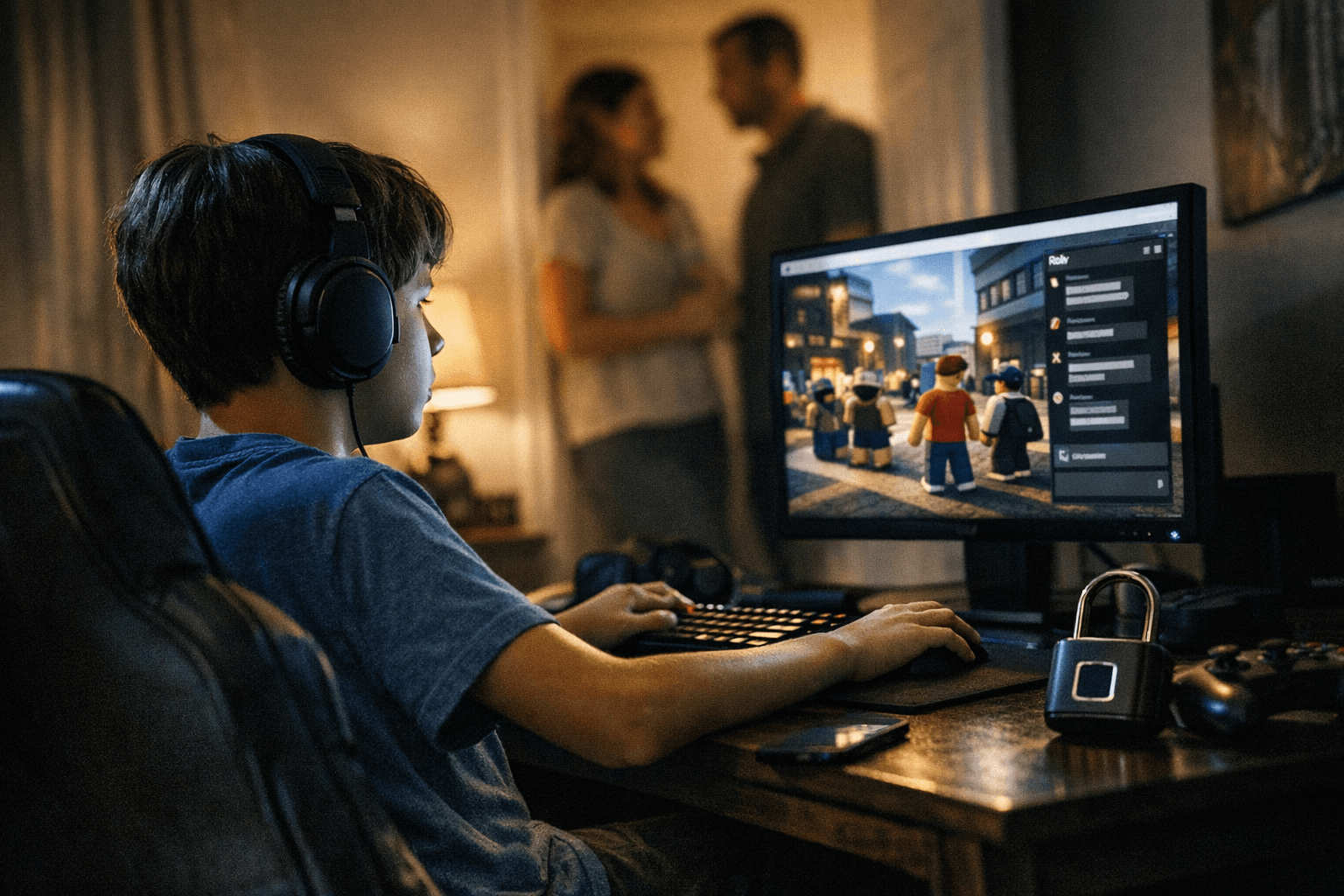
Roblox will have to verify the age of every user and tighten how minors can talk, play and get notified as part of a Nevada settlement that turns child safety into a concrete platform obligation. Nevada Attorney General Aaron D. Ford announced the deal on April 15, and called it a first-of-its-kind agreement that could shape how other interactive platforms handle young users.
The settlement requires Roblox to use facial age-estimation technology and government-issued ID for age verification, along with behavioral monitoring to spot users who may have been assigned the wrong age. Nevada said the company will pay $10 million over three years for non-digital youth programs, plus $2.5 million for an online safety campaign and a law enforcement liaison position, for more than $12 million in total. Ford said the strengthened features would be available nationwide by early June.
The practical effect is straightforward for families: safer defaults, fewer ways for minors to be contacted, and more friction before anyone can move into a looser account setting. The agreement also requires stricter parental controls, limits on chat for minors, removal of encryption from minors’ messages and restrictions on nighttime notifications for minors. Those changes land alongside Roblox’s April 13 rollout plans for Roblox Kids, for ages 5 to 8, and Roblox Select, for ages 9 to 15, which bundle age checks, content ratings, ongoing moderation and expanded parental controls into a single framework. Roblox has said users who have not completed an age check will be limited to Minimal or Mild content, with all communication turned off until verification is finished.
Roblox has also spent the past year building out a parent-facing framework around those protections. Its Global Parent Council launched in February with 80 parents from 32 countries, and the company introduced new parental controls in April 2025 that let parents block specific friends and experiences and manage a child’s time on the platform. That matters because the Nevada settlement is not just about enforcement after the fact. It is about proving, with product design, that younger users are being treated differently from older teens and adults.
The pressure is not coming from Nevada alone. Kentucky sued Roblox in October 2025, alleging the platform could be used by child predators and that children as young as six could create accounts without parental consent. Reuters reported in November 2025 that Texas sued Roblox over alleged deception of parents about safety risks. Kentucky’s filing also said the company had not required informed parental consent or identity verification for child accounts.
For Nintendo employees, the larger lesson is hard to miss. Family-friendly branding now has to be matched by visible safety infrastructure, especially in account systems, parental controls, moderation workflows and online community features. Age assurance is moving from a compliance issue to a core product expectation, and the Roblox settlement gives regulators, parents and rivals a new benchmark for what “safe enough” is supposed to mean.
Know something we missed? Have a correction or additional information?
Submit a Tip