Toei launches in-house game label, targets Nintendo Switch expansion
Toei opened Toei Games with a Steam-first plan and a Switch expansion, signaling Japanese media giants now see original game IP as a core business.

Toei has put games on the same footing as film, television and events. The company opened the official website and X account for Toei Games Inc. on April 21 and said the new label will launch first on Steam before expanding to Nintendo Switch, PlayStation and Xbox, with the first title set for announcement on April 24.
For Nintendo employees, the important detail is not just that Toei is making a game, but that it is building a publishing arm around new intellectual property instead of recycling Dragon Ball, One Piece, Sailor Moon or Digimon. President and CEO Fumio Yoshimura framed the move as part of a broader business shift, saying Toei Games is meant to become a new pillar alongside the company’s existing media businesses. The launch materials also tie the effort to Toei’s medium- to long-term vision, TOEI NEW WAVE 2033.
That matters in a market where platform holders already compete for attention against anime, manga and streaming franchises. Toei is saying openly that games are not a side product of the entertainment machine, but a way to create durable brands that can travel across screens and regions. The company said it will collaborate with creators in Japan and abroad, and it described games as a global medium that can carry its stories to wider audiences. It is also leaning on its production identity, saying it will use technology and expertise built through video work to support the new business.
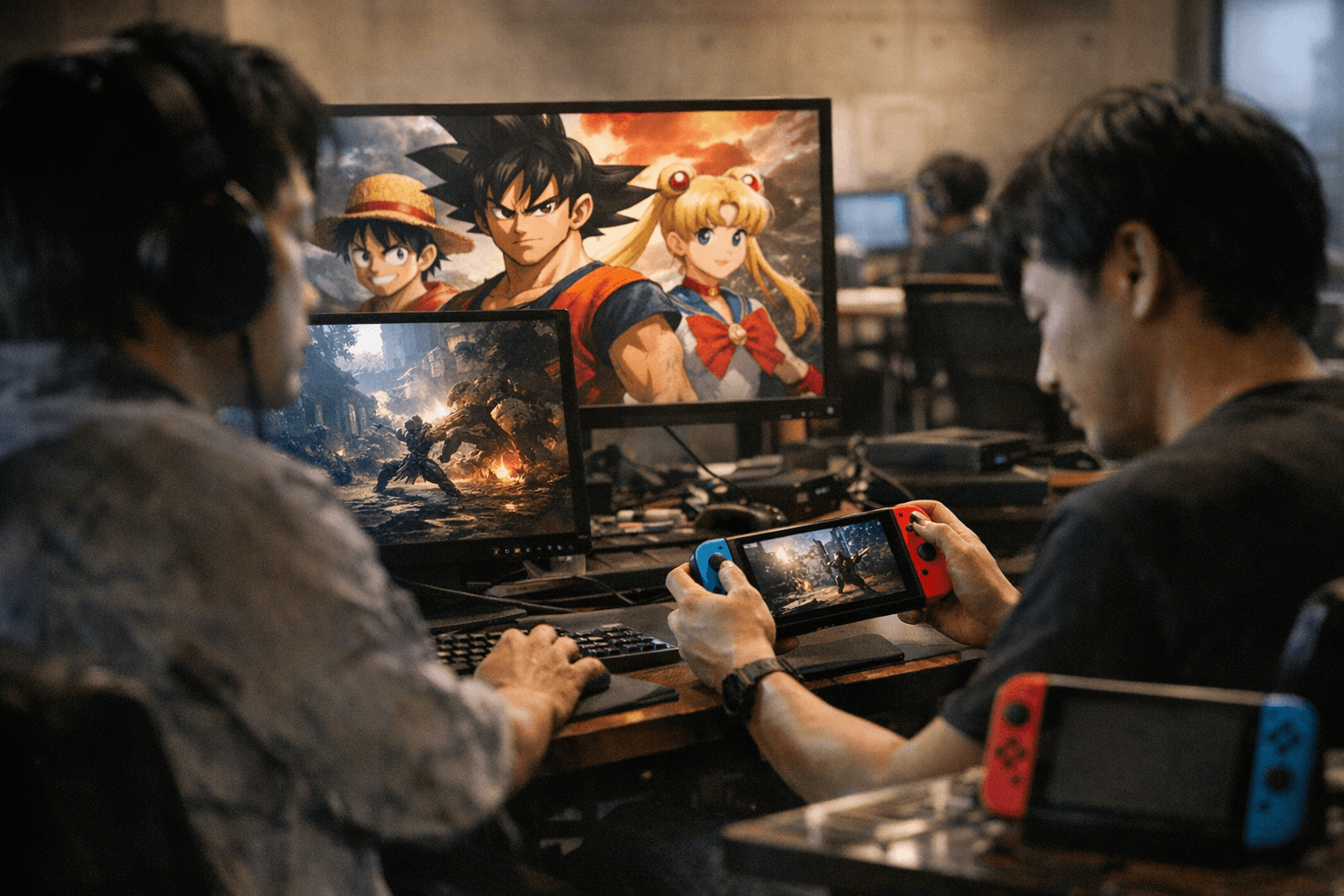
Toei’s branding push was designed to look like a real game business from day one. The Toei Games logo was created in collaboration with Kairosoft, a name that will register with developers who know how much signal matters when a media company tries to earn credibility inside game culture. The rollout also lands in Toei’s 75th anniversary year, giving the launch a symbolic weight that goes beyond one label or one release slate.
For Nintendo, the broader trend is clear. Sanrio also launched an in-house gaming brand on April 21 and said it plans ten games over three years. Taken together, those moves show that major Japanese entertainment companies are no longer treating games as licensing extensions. They are trying to own the production stack, build internal publishing muscle and claim a bigger share of the value chain, which means more competition for player time but also more serious partners for Switch when new franchises are born.
Know something we missed? Have a correction or additional information?
Submit a Tip