Valve raises Steam Deck OLED prices, signaling hardware cost pressure
Valve’s Steam Deck OLED price hike shows how quickly memory and storage costs can squeeze handheld margins, a warning Nintendo cannot ignore.
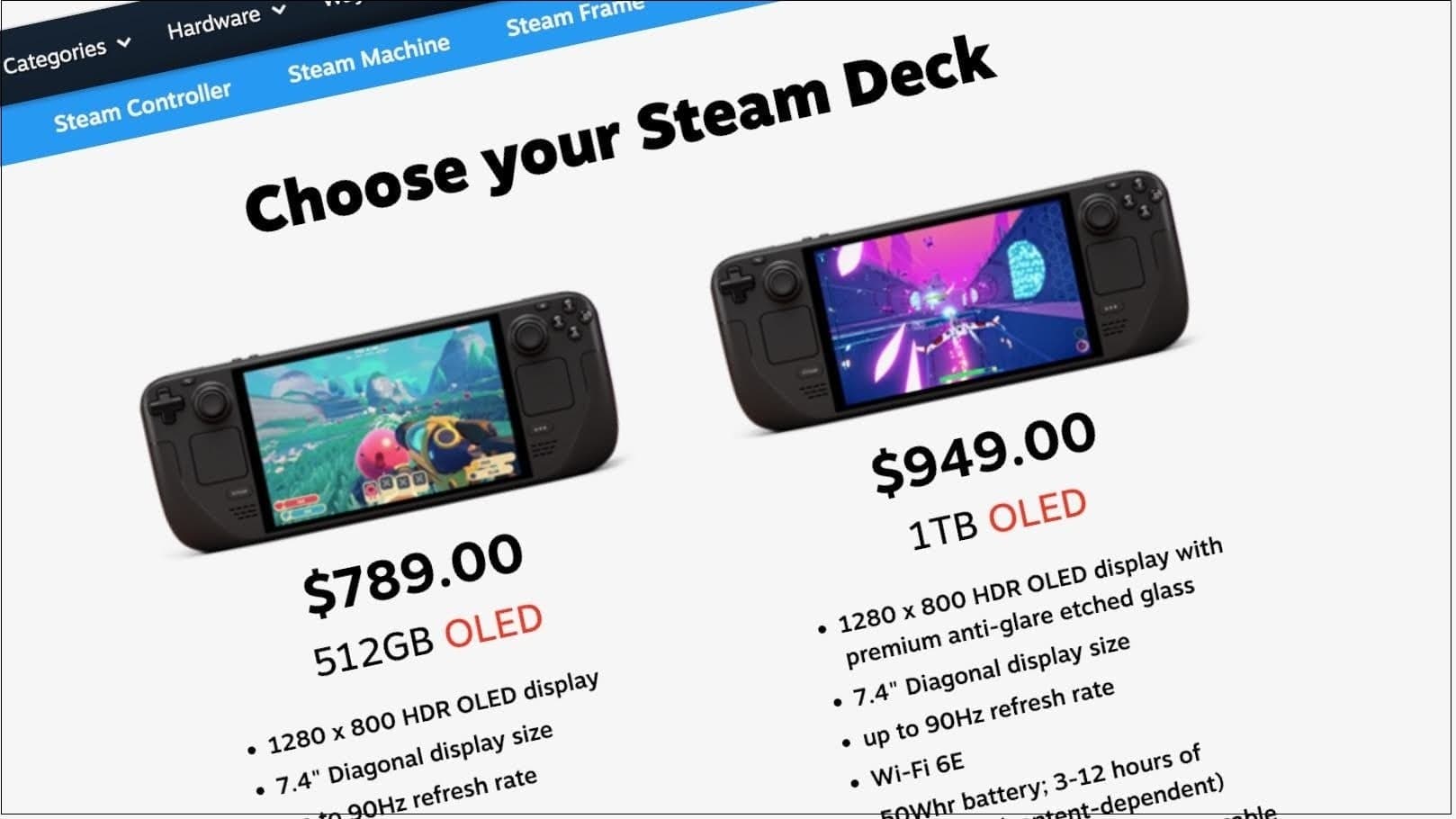
Valve’s Steam Deck OLED is back in stock, but the return comes with a sharper bill: both models now cost more because of “rising memory and storage costs.” For Nintendo hardware, finance, and product teams, the bigger takeaway is not the handheld itself but the speed of the repricing. When a premium PC device can jump by more than $200 in the U.S., it is a reminder that margin assumptions can move faster than a release schedule.
Valve has not meaningfully changed the device. Its product page still emphasizes the HDR OLED display, 30 to 50 percent more battery life, faster Wi-Fi, and Wi-Fi 6E. That matters because it shows the company is not asking buyers to pay more for a new hardware generation. It is asking them to absorb higher component costs on an existing one. For any team planning a launch window, accessory bundle, or holiday promotion, that distinction is critical: the cost environment can shift even when the spec sheet does not.
Nintendo has already had to make similar calls. On August 1, 2025, the company announced that U.S. prices for the original Switch family and selected accessories would change effective August 3, 2025. The update covered the Switch OLED, standard Switch, Switch Lite, and accessories, all under the banner of “market conditions.” That kind of move is rarely just about one SKU. It affects how planners think about regional pricing, inventory timing, and how much room remains for discounts without bruising margin or confusing consumers.

Japan brought the same lesson into sharper focus. On May 8, 2026, Nintendo said it would revise the MSRP for the Japanese-language Switch 2 system because of changes in market conditions and the global business outlook. The multi-language Switch 2 sold through My Nintendo Store would remain unchanged. For a company that manages a global portfolio from Japan while serving different regional offices and retail realities, that split pricing strategy is a sign of how carefully Nintendo is trying to protect both demand and profitability.
The pressure is easier to understand when you look at demand. Nintendo said in a 2025 earnings report that Switch 2 had sold through more than 6 million units worldwide in seven weeks, while demand was still exceeding supply in some countries. In its 2026 financial materials, Nintendo said the higher individual unit price of Switch 2 helped drive a year-on-year increase in dedicated video game platform sales. Strong demand does not eliminate hardware cost pressure. It can actually make the pricing math more delicate, because a hot platform gives companies less room to guess wrong.
This article was produced by Prism’s automated news system from verified source data, official records, and press releases, then run through automated quality and moderation checks before publishing. The system is built and supervised by the people who set the standards it runs under. Read our full AI policy.
Did this article answer your question?
