why video codecs make Nintendo game development harder
Codecs fail late, not loud, and that makes them a production risk. At Nintendo, one bad video can hit QA, localization, capture, and platform approval at once.
.webp&w=1920&q=75)
The hidden risk in a polished pipeline
Video codecs look like a narrow technical decision until a splash screen fails, a cutscene stutters, or a partner video will not play on the target platform. At Nintendo, where polish is part of the brand and franchise legacy is scrutinized at every stage, that kind of failure is not a small media bug. It is a production risk that can reach engine work, UI presentation, capture workflows, localization schedules, and QA sign-off all at once.
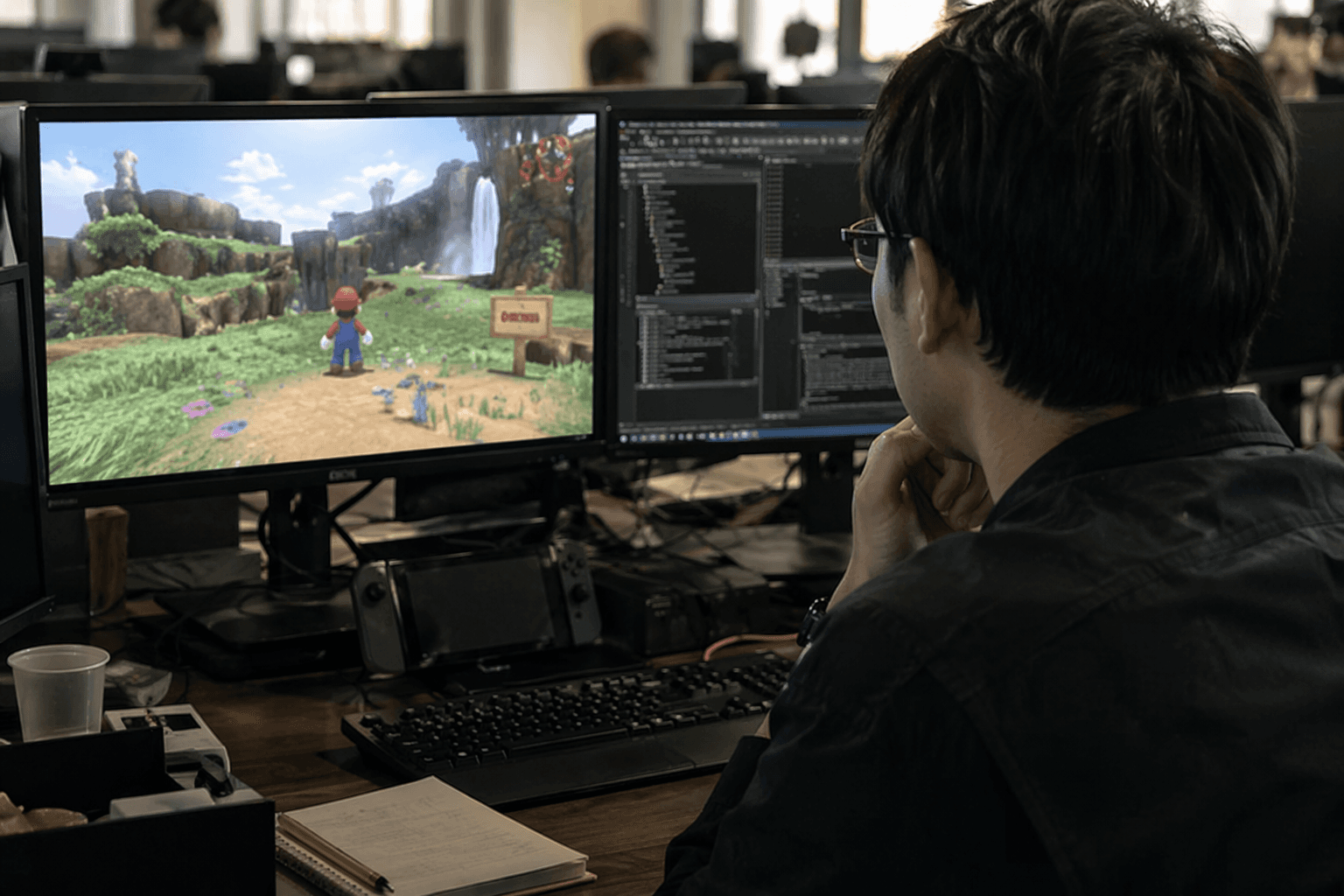
That is why codec choices belong much earlier in development than many teams want to admit. A video file is not just an asset sitting beside gameplay code. It is part of the user’s first impression, part of the compliance path, and often part of the most visible moments in a game. When the asset behaves differently across platforms, the problem is no longer about compression settings. It is about how the studio has organized ownership.
Nintendo’s process makes media decisions a policy issue
Nintendo’s own developer process makes clear that access is not casual. Developers must register on the Nintendo Developer Portal, go through a separate application for Nintendo Switch information, accept the Non-Disclosure Agreement and Terms of Service, and submit games for Nintendo review before release. The portal also says registration and downloading tools are free, but development hardware is still required for release.
That structure matters because it turns media support into a platform-specific obligation, not an afterthought. Nintendo says developers can use Unity or native C++ for Nintendo development resources, but the practical reality is that playback, encoding, and validation still need to match Nintendo’s documentation and support path. As of March 25, 2021, Nintendo Switch is the only Nintendo platform for which new development is possible, while new titles and patches for Nintendo 3DS and Wii U are no longer accepted. For teams carrying long-lived assets across ports or revisiting older content, that is a reminder that platform transitions can quietly break assumptions about video formats, tooling, and support.
Who gets hit when a codec decision goes wrong
The pain is not confined to one technical artist or one media engineer. Engine teams end up responsible for playback behavior, file handling, and integration with the rest of the runtime. UI teams feel it when video is embedded in menus, overlays, onboarding flows, or title screens that need to look seamless on every build.
Capture teams have their own version of the problem. Nintendo Support says video capture on Nintendo Switch is available only on consoles with system menu version 4.0.0 or higher, and it is compatible with most software. That is useful, but not universal, which means recording, review, and promotion workflows still need platform checks rather than assumptions. If a team is relying on captured footage for internal approvals or external assets, a version mismatch can become a late-stage delay.
Localization teams also pay the price. Multiple formats and multiple regional variants can multiply the number of assets that need to be verified, translated, and re-exported. A subtitle pass that changes timing, a logo lockup that changes by region, or a video asset that behaves differently in North America, Europe, or Japan can create a chain reaction across schedules that looked stable on paper.
QA sits at the center of the fallout. A broken intro movie or cutscene may not crash the game, but it still damages the first impression and can still block release readiness. In a quality-first culture, that is enough to make it a serious defect.
Why cross-platform parity is harder in video than in gameplay
The usual mistake is to treat video as simpler than gameplay code. In practice, the opposite is often true. Gameplay systems may be built with portability in mind, but video pipelines often rely on platform-specific playback behavior, encoding constraints, and tooling differences that are easy to overlook until the final integration pass.
That is especially true when the same studio is shipping across Nintendo and other platforms. A video that works on one system can fail on another, even if the gameplay logic is unchanged. The problem is not just the codec itself. It is the whole chain around it: authoring, compression, validation, capture, and the way each platform handles media at runtime.
Nintendo’s Direct archive adds another wrinkle. The company notes that some footage comes from software currently in production and may differ from the final retail product. That gap between presentational video and final gameplay is normal in development, but it also shows why teams cannot treat promotional footage, in-game video, and shipping assets as interchangeable. The farther a project gets from the source build, the more likely the media pipeline is to drift.
What policy-level ownership should look like
For studios shipping Nintendo titles, codec planning has to be owned like a policy decision, not a late technical fix. Someone has to decide which formats are allowed, how many variants are supported, what fallback behavior is acceptable, and where validation happens before a build reaches QA or release review. If no one owns that question early, the cost shows up later in re-exports, extra testing, and avoidable support escalations.
The most effective teams treat video as a first-class pipeline component. That means engine, UI, capture, localization, and QA all work from the same asset rules, the same platform documentation, and the same review expectations. It also means recognizing that Nintendo’s approval and hardware requirements are not paperwork in the background. They shape what can be tested, when it can be tested, and how much recovery time is left when something goes wrong.
For Nintendo, that matters more than it might at a looser publisher. The company’s reputation is built on games that look and feel finished, and video is part of that finish. When codecs are owned early, they disappear into the polish. When they are ignored, they become the kind of expensive late-stage failure that everyone notices, from Kyoto to North America and Europe, right when the build should be calming down.
This article was produced by Prism’s automated news system from verified source data, official records, and press releases, then run through automated quality and moderation checks before publishing. The system is built and supervised by the people who set the standards it runs under. Read our full AI policy.
Did this article answer your question?
