Atlassian urges one-stop HR support to reduce remote work friction
Remote work friction often starts with hidden policies, not geography. Atlassian says a single HR hub, tracked tickets, and clearer onboarding cut the churn.

The real problem is information friction
Remote work does not usually fail because people are too far apart. It fails when employees cannot find the policy, the benefit detail, the pay answer, or the person who can approve the next step. Atlassian’s guidance puts that friction at the center of the remote-work debate, arguing that companies need a one-stop shop for HR resources, clear documentation, and a communication plan that makes support easy to reach.

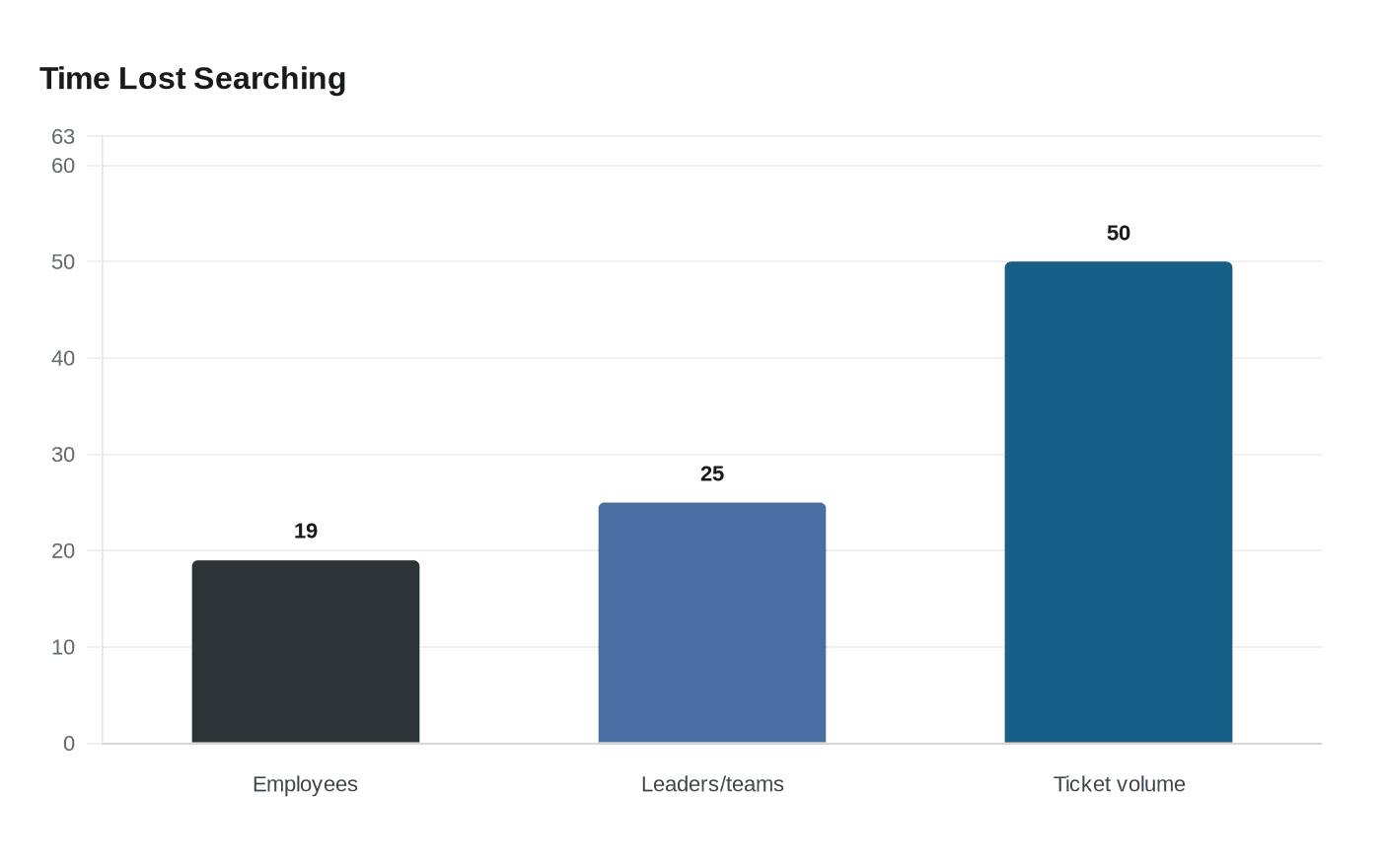
The numbers explain why this matters. Atlassian says the average employee spends 19% of a 40-hour workweek searching for and gathering information. In its State of Teams 2025 research, leaders and teams said they waste 25% of their time just searching for answers. That is not a small inconvenience. It is a structural drain on time, attention, and morale, and it falls hardest on people who already have less context, including new hires and employees working across time zones.
For NlckySolutions, the practical lesson is blunt: if employees have to hunt through Slack threads, old emails, or scattered documents to understand basic rules, the company is building avoidable delay into everyday work. Remote teams need expectations made visible and support made easy to access, or the flexibility of hybrid work gets swallowed by confusion.
Build one HR front door
Atlassian’s core recommendation is simple: create a single place where people can find HR resources, policies, benefits, pay information, onboarding materials, and support contacts. That one-stop model reduces the back-and-forth that turns routine questions into long interruptions. It also sets a standard for how the company communicates, which matters when work is spread across locations and schedules.
The company’s HR materials go a step further by arguing that a company-wide intranet with AI search can reduce ticket volume by up to 50%. That matters because the burden is not only on HR. Every repeated question, duplicate request, or misrouted message adds work for managers, payroll, benefits teams, and employees waiting for a response. A well-organized knowledge base, such as Confluence, gives workers a place to check before they ask. A service tool such as Jira Service Management gives the company a structured way to receive and track what still needs human help.
Atlassian’s help desk guidance is especially relevant for distributed teams. Employee requests can come through email, a web portal, chat, or a mobile app, but they should not stay in those loose channels. They should become organized tickets, routed by issue type, urgency, or preset rules. That shift sounds administrative, but it is really about fairness and speed. If the company does not standardize how requests enter the system, then the loudest or most connected worker often gets help first.
Make onboarding legible from day one
The stakes are highest when someone is new. Atlassian’s onboarding workflow guidance lays out a sequence that includes signing the contract, ordering equipment, reviewing policies, training, and understanding the probationary period. That is more than a checklist. It is a map for the first days and weeks, when unclear instructions can quickly become lost time and unnecessary anxiety.
Remote teams lose context easily. A casual answer in a chat thread may not be the same as a documented policy. A manager’s verbal guidance may not match what another team thinks is standard. That inconsistency can slow onboarding, frustrate new hires, and create uneven interpretations of the same rule. A clear workflow does the opposite: it shows people what happens next, who owns each step, and where to go when something changes.
For NlckySolutions, that means the company should treat onboarding as an operations system, not a welcome packet. New employees should be able to find the contract, the equipment timeline, the policy library, and the probation rules without guessing where each piece lives. If they cannot, the company is forcing them to learn the organization through friction.
Remote work also needs a human system
The operational piece is only half the story. Remote work also changes how people feel about work, because the boundary between job and home can blur. Harvard Business Review has highlighted that problem, and an HBR-sponsored piece citing JLL research says 61% of the workforce is craving human interaction with colleagues. That helps explain why strong documentation alone is not enough. People also need predictable communication, visible support, and some sense that they are not working in isolation.
This is where companies often overstate flexibility and underbuild the infrastructure around it. If workers are expected to be available across time zones, they need a reliable place to see urgent updates when something changes quickly. If managers want people to stay focused, they need to limit the time spent searching and reduce the number of informal side channels where answers disappear. The better the documentation, the less every issue has to become a meeting.
The broader remote-work conversation, shaped by voices such as Nicholas Bloom, Kris Byron, Molly Sands, and Laura Amico, has consistently returned to the same point: distributed work succeeds when trust, clarity, and human connection are built into the operating model. Gallup’s long-running focus on engagement has also kept attention on how people experience work, not just where they do it. That is the thread running through Atlassian’s advice as well.
What the strongest remote setup looks like
The companies that do this well usually share a few habits:
- One central place for HR policies, benefits, pay details, and support contacts.
- A documented process for asking questions, not just a general invitation to “reach out.”
- Tickets routed by issue type and urgency instead of scattered replies in chat.
- Onboarding steps that are written down, sequenced, and easy to follow.
- A clear way to push urgent changes to everyone who needs them.
- Internal search that helps employees find answers without escalating every request.
Atlassian’s own distributed-work reporting suggests the payoff is not just efficiency. It says 92% of Atlassians believe the distributed-work policy allows them to do their best work, and 91% say it is an important reason they stay at the company. That is a strong reminder that support systems shape retention as much as productivity. People stay where work feels understandable, not where they spend half the morning looking for answers.
For NlckySolutions, the message is less about remote work as a perk and more about remote work as infrastructure. A distributed team can only move as fast as its information system allows. When policies are easy to find, requests are tracked, and expectations are explicit, hybrid work becomes workable. When they are not, friction turns into delay, inequity, and burnout.
Know something we missed? Have a correction or additional information?
Submit a Tip