Microsoft lays out a 90-day AI fluency plan for workers
Microsoft’s new 90-day AI plan turns worker anxiety into a practical roadmap, with simple habits that help staff at NlckySolutions build fluency without becoming engineers.
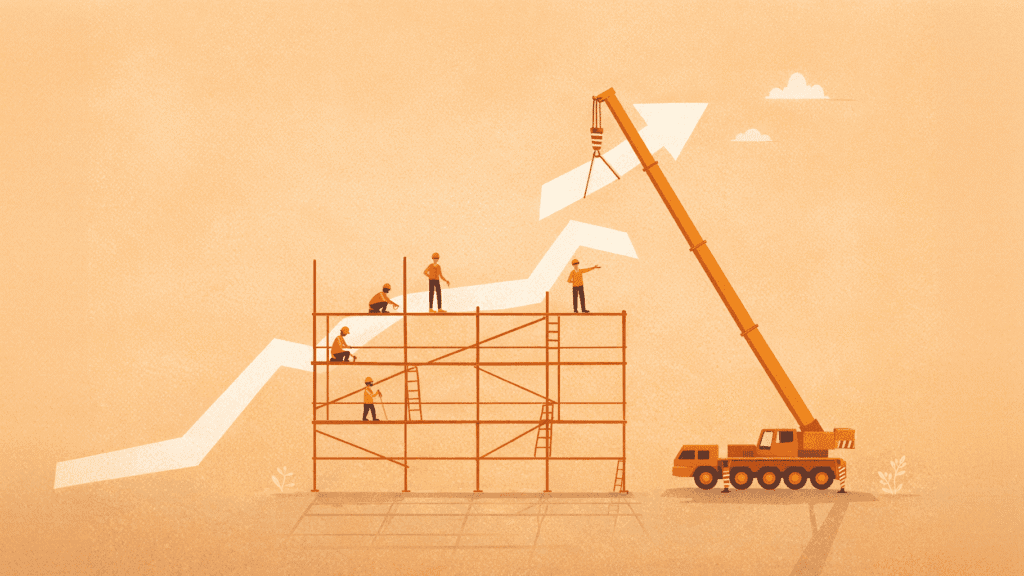
A practical answer to AI anxiety
Microsoft’s latest workplace guide does something many AI memos do not: it starts with the work people already do. Instead of asking employees to master a new technical stack, it lays out a 90-day path for becoming more comfortable, more useful, and less overwhelmed by AI in ordinary office routines.
That matters at NlckySolutions because the pressure around AI is no longer abstract. Teams are being asked to move faster, show productivity gains, and preserve quality at the same time. Microsoft’s message is that fluency does not begin with a giant transformation project. It begins with small, repeatable habits that help workers decide what AI should handle, what it should support, and what should stay firmly human.
What Microsoft is actually asking workers to do
The guide, published April 28, 2026 on Microsoft’s Signal Blog and written by Samantha Kubota, is framed as a real-world 90-day plan for using AI more confidently. Ryan Roslansky, LinkedIn’s CEO and Microsoft Office executive vice president, captures the uncertainty around this shift bluntly: the outcome of this moment is “not written yet,” and the new world of work is being assembled “task by task, policy by policy, business by business.”
That framing is important because it avoids the trap of treating AI as either a miracle or a threat. Microsoft is instead presenting it as a working habit, one that can be built in stages. For employees, that means the goal is not to become a machine-learning expert. It is to learn where AI can remove friction, where it can boost speed, and where human judgment still matters most.
Days 1 to 30: map the work before you change the work
Microsoft’s first move is deceptively simple: inventory your top 12 daily or weekly tasks and sort them into three buckets. The first bucket is for tasks AI can do alone. The second is for tasks you can do with AI. The third is for uniquely human work, the kind that depends on trust-building, ethical decision-making, and reading a room.
That exercise is useful because it turns vague worry into a work audit. At NlckySolutions, it can help employees see that not every task deserves the same treatment. Drafting routine emails might belong in the assisted bucket. Summarizing documents or prepping for meetings may be a good test case for collaboration. Sensitive conversations, judgment calls, and relationship management should stay in the human-first category.
This is where managers can make the biggest difference. A team lead who helps staff identify what should be automated, what should be augmented, and what should be protected as high-touch work is not just managing productivity. They are building clarity around expectations, which is especially valuable when workers are being asked to adopt AI without sacrificing quality.
Days 31 to 60: choose one routine task and test it daily
Microsoft does not advise people to overhaul everything at once. It recommends starting with one routine task, such as drafting emails, summarizing documents, or prepping for meetings, and running a daily test-and-learn loop. That means using AI, checking the result, adjusting the prompt, and trying again.
For many people, that kind of repetition is the real breakthrough. AI fluency is less about a dramatic leap than about learning how a tool behaves under pressure, what it gets right, and where it needs supervision. In practical terms, a worker at NlckySolutions might use AI for a first-pass summary of a long internal memo, then refine the output until it matches the tone, accuracy, and priorities of the team.

The value here is not just speed. It is consistency. A daily loop helps workers build judgment about when the tool saves time and when it introduces risk. That makes the learning process more manageable for teams that cannot afford a separate training track for every role.
Days 61 to 90: move from solo experimentation to shared habits
Microsoft’s guide also pushes workers to share prompt libraries with coworkers and even build small AI agents for recurring reports. That matters because the point of fluency is not individual experimentation in isolation. It is creating repeatable practices that spread across a team.
On a practical level, that could mean one employee shares a prompt that reliably turns meeting notes into action items, while another contributes a workflow for summarizing customer feedback. Over time, those shared templates become part of the team’s operating rhythm. For NlckySolutions, that kind of exchange can reduce duplicated effort and help departments learn faster without waiting for formal training cycles.
Small AI agents may sound ambitious, but the idea is grounded in recurring work. If a report follows the same pattern every week, a lightweight agent can take on some of the assembly work while employees focus on interpretation, decision-making, and next steps. That shift is the heart of Microsoft’s argument: workers become more valuable when AI removes repetitive labor and frees time for the work that only people can do well.
Why this matters now
Microsoft’s April guide lands in a broader story the company has been telling for more than a year. Its 2024 Work Trend Index, based on a survey of 31,000 people across 31 countries, found that 75% of knowledge workers were already using AI at work. It also found that 79% of leaders said AI adoption was critical to remain competitive, while 60% said their company lacked a vision and plan for implementation.
Another telling figure was that 78% of AI users were bringing their own tools to work. That created a double-edged reality: employees were experimenting quickly, but companies were also facing data-governance and consistency concerns. Microsoft’s 2025 Work Trend Index pushed this further by arguing that AI was moving from experimentation toward broader organizational change, introducing the idea of the “Frontier Firm.”
Taken together, the message is clear. The challenge is no longer whether workers will use AI. It is whether organizations can build the systems, guardrails, and habits that make that use productive instead of chaotic.
The larger Microsoft-LinkedIn push on careers
The 90-day guide also fits into Microsoft and LinkedIn’s wider career messaging around AI. On January 13, 2026, Microsoft announced Open to Work: How to Get Ahead in the Age of AI, the first book from LinkedIn, which was officially released on March 31, 2026. The project, involving Ryan Roslansky and Aneesh Raman, reinforces the same theme: the human skills that matter most are not disappearing, but they are changing shape.
For NlckySolutions, that is the real takeaway. The companies and workers who do best will not be the ones who treat AI as a grand reinvention. They will be the ones who treat it as a disciplined practice, built through a 90-day habit change that starts with one task, one prompt, one review, and one better way of working.
Know something we missed? Have a correction or additional information?
Submit a Tip