Microsoft Signals Enterprise AI Spending Stays Central to Growth
Microsoft’s AI business topped a $37 billion run rate, while cloud sales and capital spending kept climbing, signaling budgets are still flowing to AI.
Microsoft’s latest quarter makes one thing plain: enterprise AI is still being treated as a core growth engine, not a side bet. The company said revenue rose 18% to $82.9 billion in fiscal third quarter 2026, with operating income of $38.4 billion and net income of $31.8 billion. Satya Nadella framed the business around cloud and AI infrastructure for what he called the agentic computing era, while Amy Hood said results beat expectations across revenue, operating income and earnings per share.
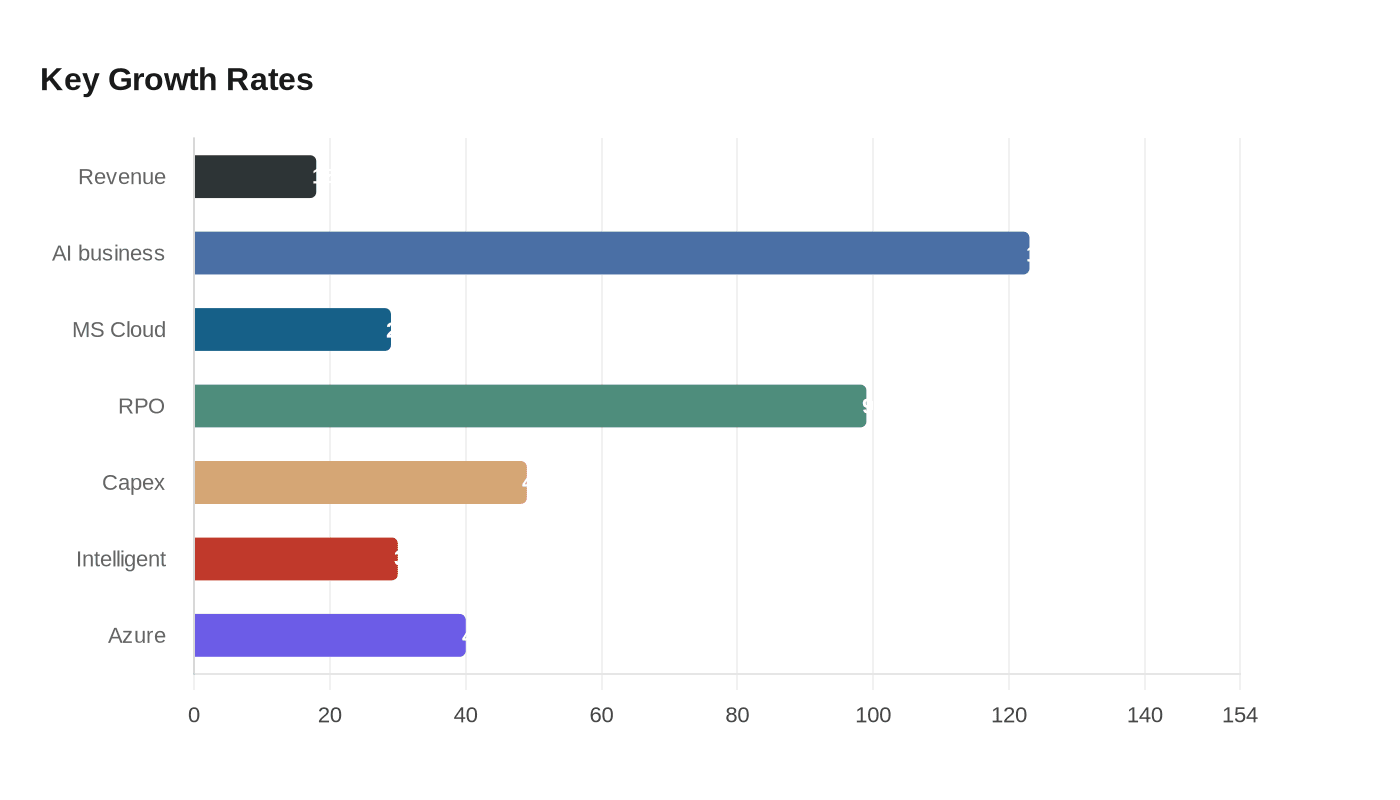
The clearest signal for workers is where the money is still going. Microsoft said its AI business surpassed a $37 billion annual revenue run rate, up 123% from a year earlier, while Microsoft Cloud revenue reached $54.5 billion, up 29%. Commercial remaining performance obligation climbed 99% to $627 billion, giving the company a large visible backlog and more room to keep spending on the systems that support AI. For employees at companies like NlckySolutions, that points to continued budget strength for cloud capacity, AI features, security, developer tooling and the go-to-market teams that have to turn technical promises into revenue.

That spending was not limited to product lines and sales motions. Microsoft reported $31.9 billion in capital expenditures and finance leases in the quarter, up 49% year over year, underscoring how much cash is still flowing into data centers and infrastructure. The Intelligent Cloud segment grew 30% to $34.7 billion, and Azure and other cloud services rose 40% in constant currency, which Microsoft said topped its own forecast. The company also set fiscal fourth-quarter revenue guidance of $86.7 billion to $87.8 billion and projected Azure growth of 39% to 40% in constant currency, even as it signaled operating margin pressure from continued AI investment.

That combination matters inside companies well beyond Redmond, Washington. When leadership says AI is driving growth, it usually changes how internal teams are measured. Product groups are pushed to prove that new features drive usage and revenue. Sales teams are asked to attach AI to larger deals. Engineering and operations teams are expected to move faster without breaking reliability. Internal tooling gets judged by whether it shortens cycle time, not whether it looks innovative in a demo.
Microsoft also gave itself and investors more clarity around its AI strategy by announcing amended partnership terms with OpenAI on April 27, 2026. The company said the revised arrangement was meant to simplify the relationship and provide long-term clarity, another sign that Microsoft sees AI not as an experiment, but as a business structure it expects to monetize over time. Even with margin pressure from the buildout, the message from this quarter is direct: AI spending is still winning the internal argument when leaders believe demand and cloud consumption can pay it back.
Know something we missed? Have a correction or additional information?
Submit a Tip