FDA handbook underscores sick-worker rules for Pizza Hut kitchens
Sick-worker calls, handwashing, and bare-hand contact are the pressure points that can sink a Pizza Hut rush faster than a ticket printer jam.
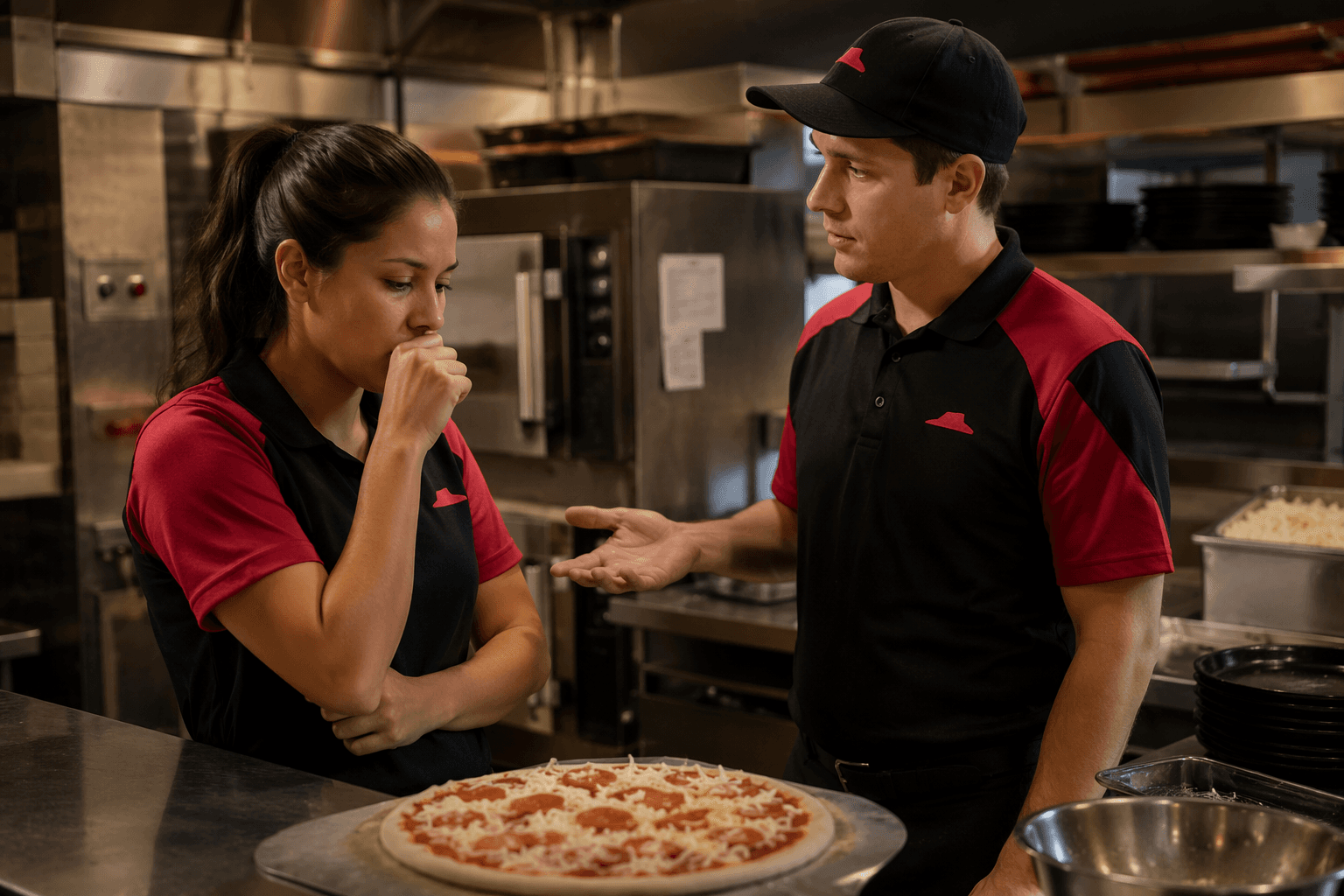
The fastest way a Pizza Hut store gets in trouble is letting one sick worker turn a dinner rush into a norovirus problem. The FDA’s Employee Health and Personal Hygiene Handbook is built for exactly that kind of risk: it is a practical playbook for stopping food employees from spreading viruses and bacteria, including Salmonella and norovirus, to the food leaving the make line. For Pizza Hut managers, the point is not theory. It is deciding, in real time, who stays off food, who gets restricted, and how to keep one bad call from becoming a guest complaint, a crew-wide illness, or a compliance headache.
What the handbook is really telling managers
The handbook was first released in March 2017 and later updated in 2020. It was built from the 2005 FDA Food Code and its Supplement, and the 2013 Food Code added nontyphoidal Salmonella as a reportable illness that requires action by the person in charge. That matters because the federal baseline is not vague about sick-worker handling: exclude or restrict ill food employees, insist on proper handwashing, and eliminate bare-hand contact with ready-to-eat food.
For a Pizza Hut shift lead, that turns food safety into a staffing decision. If a cook has vomiting, diarrhea, fever, jaundice, or a sore throat with fever, the manager has to know whether that person should be sent home, kept off food, or moved away from tasks that could contaminate ready-to-eat ingredients. The handbook also includes forms, tables, and decision trees, which is a clue in itself: this is meant to be used on a busy shift, not studied later in the office.
Where Pizza Hut kitchens are most likely to slip
The trouble spots are usually not dramatic. They are the small habits that get sloppy when tickets pile up and the dinner rush starts pushing the make line. The first is illness reporting. CDC research shows managers often left the decision to work up to sick employees, which is exactly how a short-staffed night turns into a store-wide mistake. If a crew member feels pressure to “push through,” the store is gambling with foodborne illness exposure.
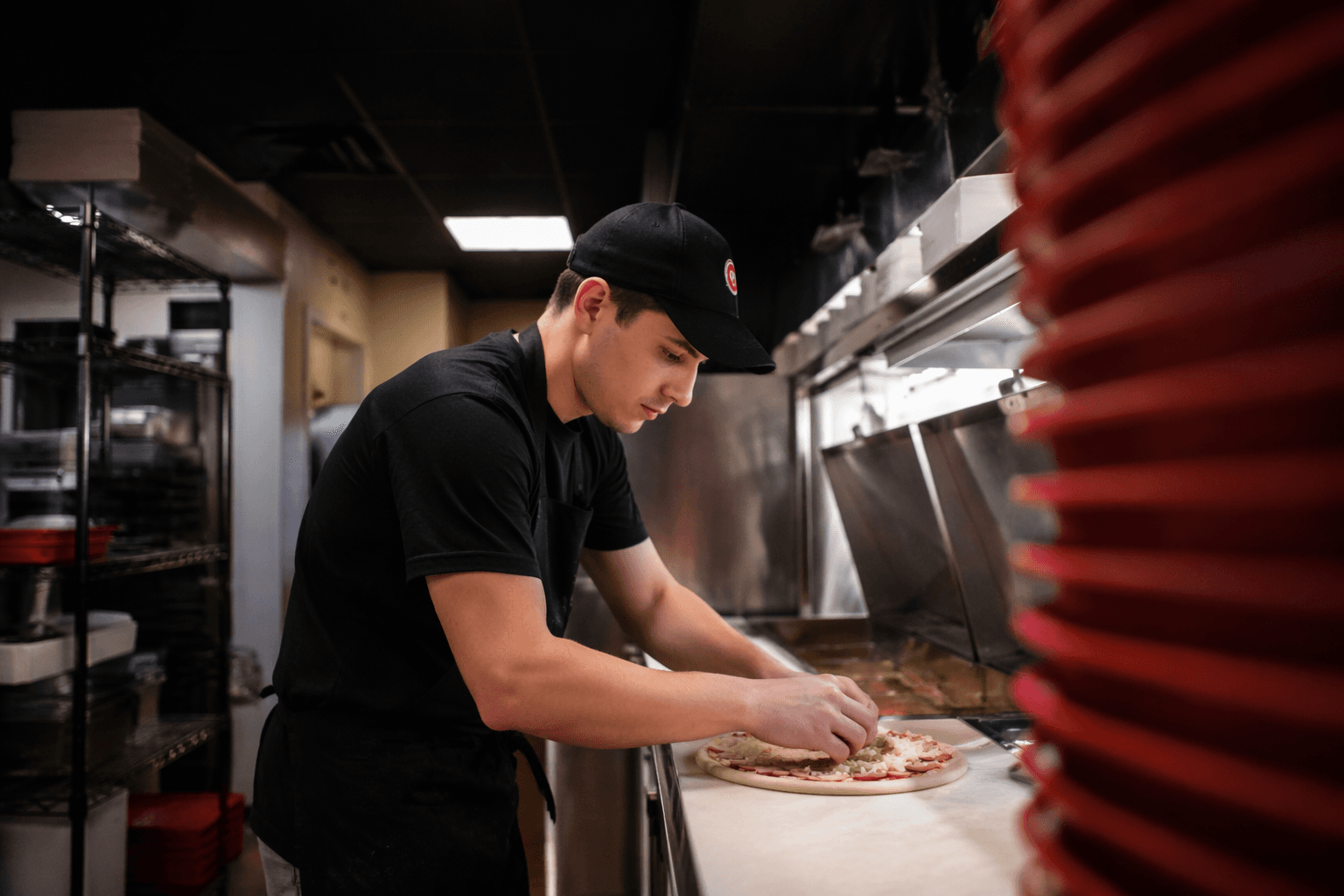
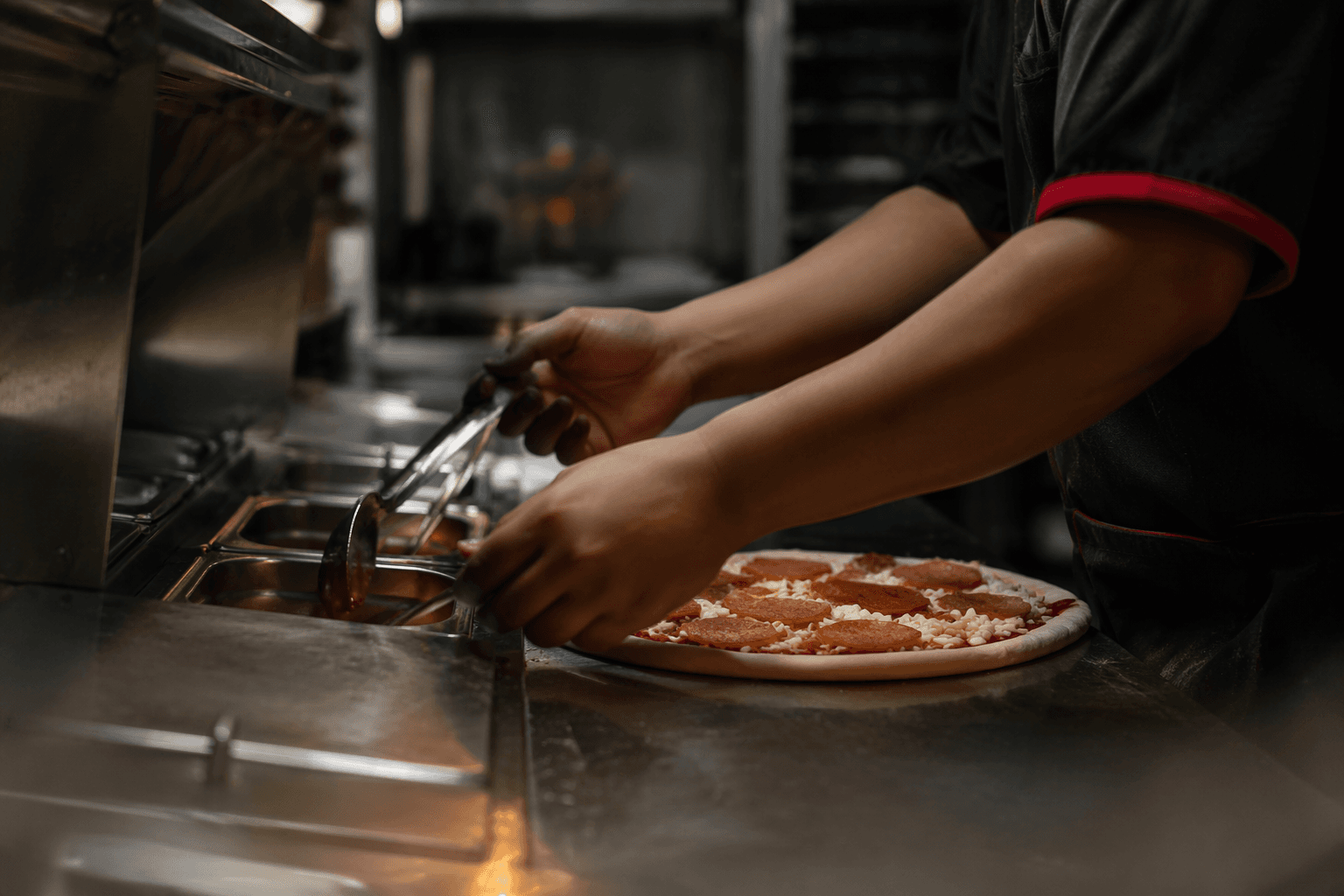
The second is handwashing. In a Pizza Hut kitchen, handwashing has to be enforced as a shift rhythm, not a poster on the wall. That means after bathroom use, after handling raw items, after touching the face or phone, and before handling ready-to-eat food. The third is glove use. Gloves do not replace handwashing, and they do not give anyone a free pass to switch between money, phones, trash, and pizza toppings without changing gloves and washing hands. The fourth is contamination prevention, especially the ban on bare-hand contact with ready-to-eat foods. That rule is where busy stores often drift, because it feels faster to grab cheese, veggies, or finished ingredients directly when the line is slammed.
Why the risk is so high in restaurant work
CDC says norovirus is the leading cause of vomiting and diarrhea and the leading cause of foodborne disease outbreaks in the United States. It also causes about half of all outbreaks of food-related illness. That is not a side issue for pizza shops, delis, caterers, and other retail food establishments. It is the central threat hiding in plain sight.
The restaurant outbreak data are even more direct. CDC found that contamination from sick workers caused 65% of outbreaks and sick workers touching food with bare hands caused 35% of outbreaks. Norovirus accounted for 45% of outbreaks in that study. In other words, the weak link is often not the oven, the cooler, or the delivery handoff. It is the person handling food while ill, rushed, or not following the basics.
A separate CDC finding makes the staffing problem harder to ignore: 1 in 5 food workers had worked while sick with vomiting or diarrhea for at least one shift in the previous year. The reasons were not mysterious. Personal, financial, and social pressure all played a role. In a franchise system like Pizza Hut, where local ownership and store-level management shape the day-to-day culture, that pressure can hit harder on lean nights and budget-sensitive dinner periods.
What supervisors should reinforce before the rush hits
The best managers do not wait for a bad shift to start enforcing hygiene. They build the expectations into onboarding, pre-shift check-ins, and the first five minutes of a rush.
- Require illness reporting before clock-in, not after symptoms get worse on the line.
- Make exclusion and restriction decisions the manager’s job, not the employee’s burden.
- Reinforce handwashing as a repeated task, especially after any contamination risk.
- Treat glove changes as part of the job, not an optional cleanup step.
- Block bare-hand contact with ready-to-eat food every time, even when the store is slammed.
- Use on-call or backup coverage so sick workers do not feel forced to choose between pay and public health.
That last point is especially important because CDC recommends written sick-worker policies and scheduling buffers to reduce the pressure to work while ill. A Pizza Hut store that runs too tight may save labor minutes on paper and lose far more when a bad shift triggers complaints, employee illness, or an inspection problem.
Why certified managers and Food Code adoption matter
The FDA says the Food Code is a model, not self-executing federal law. States, tribes, localities, and territories can adopt or adapt it for their own food-safety rules. That helps explain why standards can feel uneven from one jurisdiction to another, even under the same brand. The FDA also notes that the Food Code is now in its 30th year, which underlines that these are longstanding basics, not temporary pandemic-era advice.
CDC found that states adopting three specific Food Code provisions had lower rates of foodborne norovirus outbreaks per million person-years than states without those provisions. Those provisions were straightforward: exclude sick staff for at least 24 hours after symptoms go away, require a certified food protection manager, and prohibit bare-hand contact with ready-to-eat food. CDC also found that restaurants with kitchen managers certified in food safety were less likely to have outbreaks, and in that study all certified kitchen managers were familiar with HACCP while only 20% of other managers were.
That is the manager-side lesson for Pizza Hut. Certification is not just paperwork. It shapes whether a supervisor recognizes a risk early enough to stop it before it reaches a guest box, a delivery bag, or a complaint from the next dining room over.
What this means on a Pizza Hut shift
For drivers, the hygiene chain starts before the pizza ever reaches the car. One sick-worker lapse in the kitchen can show up later as a bad customer review, a refund, or a delayed dinner rush that hurts tips and on-time delivery. For cooks and shift leads, the takeaway is even sharper: the most important food-safety move is often the least glamorous one, telling someone not to work food when they should not be on food.
That is the real value of the FDA handbook. It gives managers a plain standard for illness calls, handwashing, glove use, and contamination control when the store is busy and the temptation is to let “just this once” slide. In a Pizza Hut kitchen, that is the difference between a normal Friday night and a store fighting a problem it could have stopped at the door.
This article was produced by Prism’s automated news system from verified source data, official records, and press releases, then run through automated quality and moderation checks before publishing. The system is built and supervised by the people who set the standards it runs under. Read our full AI policy.
Know something we missed? Have a correction or additional information?
Submit a Tip