Pizza Hut staffing challenge shifts to faster onboarding and retention
Pizza Hut’s staffing problem is no longer just hiring. The real edge now comes from faster onboarding, stronger managers, and technology that keeps shifts stable and service moving.
Staffing is becoming the operating system
Pizza Hut’s labor pressure is shifting from simply filling openings to making each hire productive fast enough to matter. That is the central lesson from the National Restaurant Association’s new staffing research, and it lands hard in a system where a slow start can mean delayed orders, stressed drivers, and crews covering too many gaps for too long.
The association’s current webinar lineup, including “Hire Smarter, Run Better: How to Win the Restaurant Staffing Game,” is built around the idea that staffing is a strategic investment, not a short-term cost. Its 2026 Research Insight: Hiring & Staffing report argues that onboarding, manager quality, and technology all affect restaurant return on investment after hire. For Pizza Hut managers, that makes staffing less about headcount and more about whether the store can keep ticket times down, stabilize shifts, and avoid burning out the people already on the clock.
The numbers explain why managers feel the squeeze
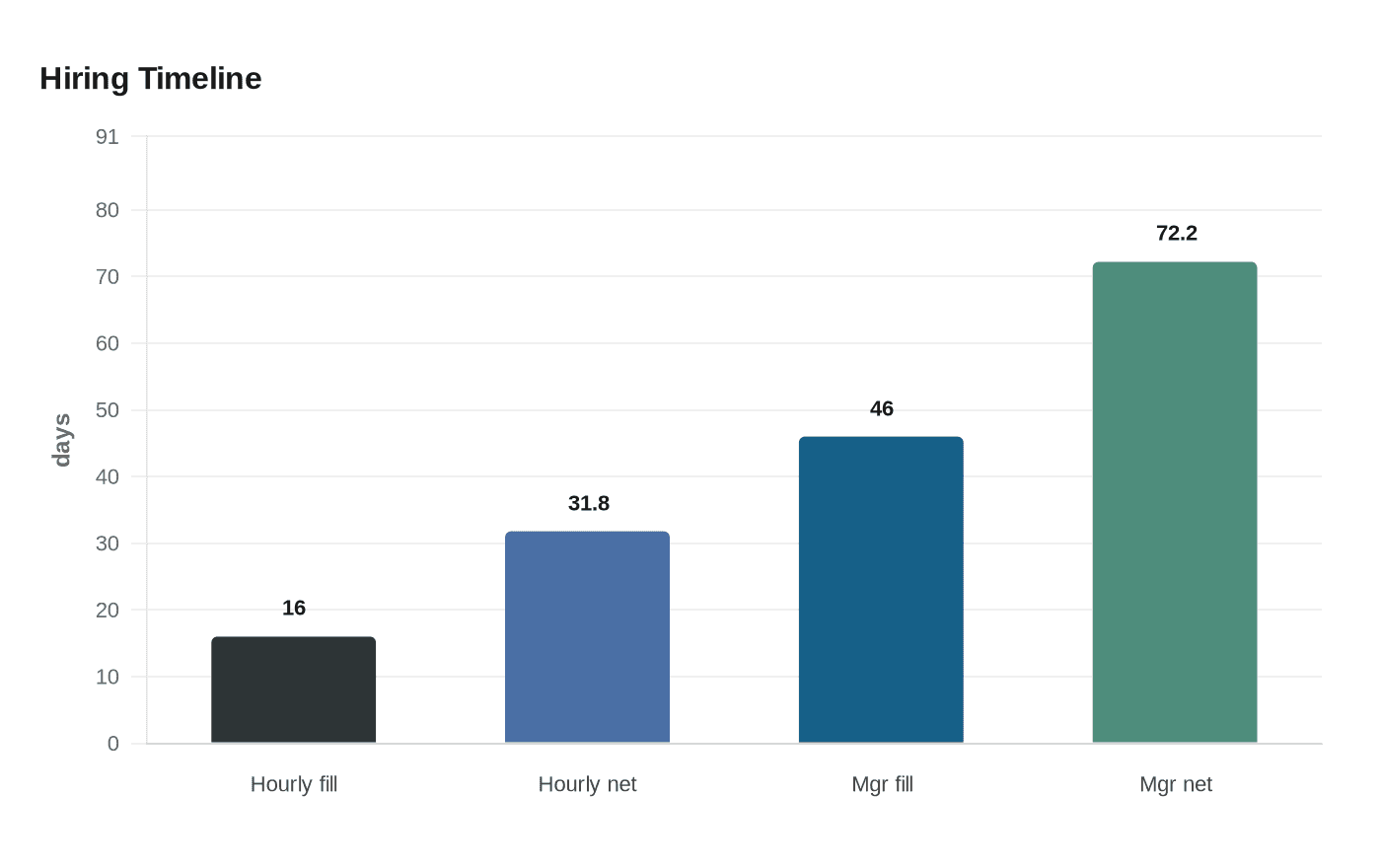
The report puts hard figures on what many restaurant crews already live through. Understaffing can cost hundreds of dollars per shift. Hourly employees take an average of 31.8 days to become net positive, while managers and salaried staff take 72.2 days. Hourly roles take about 16 days to fill, and manager roles take about 46 days.
Those timelines matter because a Pizza Hut store does not stop running while a new hire learns the work. Every extra day before an hourly worker is fully useful stretches the rest of the team thinner. Every weak manager extends the pain even more, because poor scheduling, uneven coaching, and messy deployment can turn one labor miss into a full shift problem, with late deliveries, remake mistakes, and callouts piling up on the same crew.
That is why the strongest operators are treating staffing as a throughput issue. The goal is not just to get a name into the system. It is to move that person from hire to productive shift coverage as quickly as possible, without letting quality slip.
Why Pizza Hut feels the problem so sharply
Pizza Hut sits inside a huge, decentralized franchise structure, and that makes store-level management quality especially important. Yum! Brands says it has approximately 1,500 franchisees operating more than 61,000 restaurants in over 155 countries and territories, and that franchisees are the primary operators of the system. Yum! also says its brands create thousands of part-time, entry-level restaurant jobs each year.
That structure helps explain why staffing can look very different from one Pizza Hut to another. In one market, a strong franchise operator may have a disciplined hiring pipeline, tight shift planning, and managers who know how to cross-train drivers and inside crew. In another, the store may be waiting on late hires, uneven training, and a manager who spends too much time putting out fires instead of preventing them.
Pizza Hut’s history also underscores how much the brand has depended on local execution. The company was founded in 1958 in Wichita, Kansas, by Frank and Dan Carney. Wichita State University says the first franchised Pizza Hut opened in Topeka, and that the brand grew to more than 11,000 restaurants in 90 countries. That scale is part of the challenge now: a concept built on expansion has to keep service consistent across thousands of different management teams.
The labor market is better, but not easy
Restaurant hiring has improved from the worst of the shortage era, but the sector is still dealing with a cooling labor market and persistent cost pressure. The National Restaurant Association says eating and drinking places added a net 21,500 jobs in March 2026 and 18,500 jobs in the first quarter of 2026. As of March 2026, the sector was still 76,800 jobs above its February 2020 peak.
That is real growth, but it is not the kind of rapid labor expansion that erases operational strain. Restaurants are hiring, yet not fast enough to remove the day-to-day pressure on managers who have to cover open shifts, rework schedules, and keep service moving when labor is tight. For Pizza Hut workers, that often means more pressure on drivers to cover longer routes, more burden on insiders to absorb prep and make-line spikes, and more risk of clopens and last-minute changes that make retention harder.
The industrywide point is simple: if hiring is slower than the pace of turnover or volume growth, staffing stops being a back-office function and becomes a direct threat to store performance.
What high-performing Pizza Hut managers do differently
The research points toward a more disciplined model of frontline management. The best stores are not necessarily the ones that hire the most people. They are the ones that get new hires productive sooner and keep experienced people long enough to reduce constant retraining.
That usually means a few practical habits:
- Cross-training inside crew, drivers, and shift leaders so one absence does not collapse an entire hour of service.
- Setting productivity expectations early, so new hires know how speed, accuracy, and order flow are measured.
- Using manager time on coaching and deployment instead of administrative busywork.
- Building onboarding around the actual rush periods a Pizza Hut store faces, not just the handbook.
- Keeping schedules stable enough that employees can plan around school, childcare, and second jobs.
For drivers and crew, the daily difference is immediate. Better deployment can mean fewer surprise clopens, fewer frantic callouts, and less of the “everybody covers everything” chaos that wears teams down. For managers, it can mean cleaner ticket times, fewer mistakes on the make line, and a shift that ends closer to plan instead of hours off schedule.
Technology is now part of labor strategy
Pizza Hut is already showing how technology fits into the staffing equation. Yum! Brands said Pizza Hut U.S. migrated to the Byte Kitchen & Delivery platform, and that the change improved retention rates and consumer experiences, including up to a five-minute reduction in delivery times.
That matters because technology can take pressure off managers if it removes repetitive work and improves flow. When a system helps teams route orders more cleanly, manage delivery timing better, and reduce friction in the kitchen, it gives managers more room to focus on coaching and coverage instead of paperwork and fire drills. In a labor-constrained store, that can be the difference between a manageable dinner rush and a shift that falls apart.
The takeaway is not that software solves labor problems on its own. It is that the right tools can make a good manager more effective, and a weak system less damaging.
Franchise growth raises the stakes
The scale of Pizza Hut’s franchise network makes these decisions even more important. Flynn Group says it entered the Pizza Hut system in 2021 with the acquisition of more than 900 U.S. restaurants, and later acquired Pizza Hut’s master franchisee in Australia with 260-plus units, making it the largest Pizza Hut franchisee in the world.
Large operators like that can spread better labor practices faster, but they can also magnify mistakes. If the staffing model is weak, the pain shows up across dozens or hundreds of stores at once. If the model is strong, the gains are just as visible, with steadier shifts, faster onboarding, and better service consistency across the brand.
For Pizza Hut, that is the real shift in 2026: staffing is no longer just about whether a store can hire. It is about whether the people already inside the building can be trained, deployed, and retained well enough to protect service, sales, and morale at the same time.
This article was produced by Prism’s automated news system from verified source data, official records, and press releases, then run through automated quality and moderation checks before publishing. The system is built and supervised by the people who set the standards it runs under. Read our full AI policy.
Did this article answer your question?