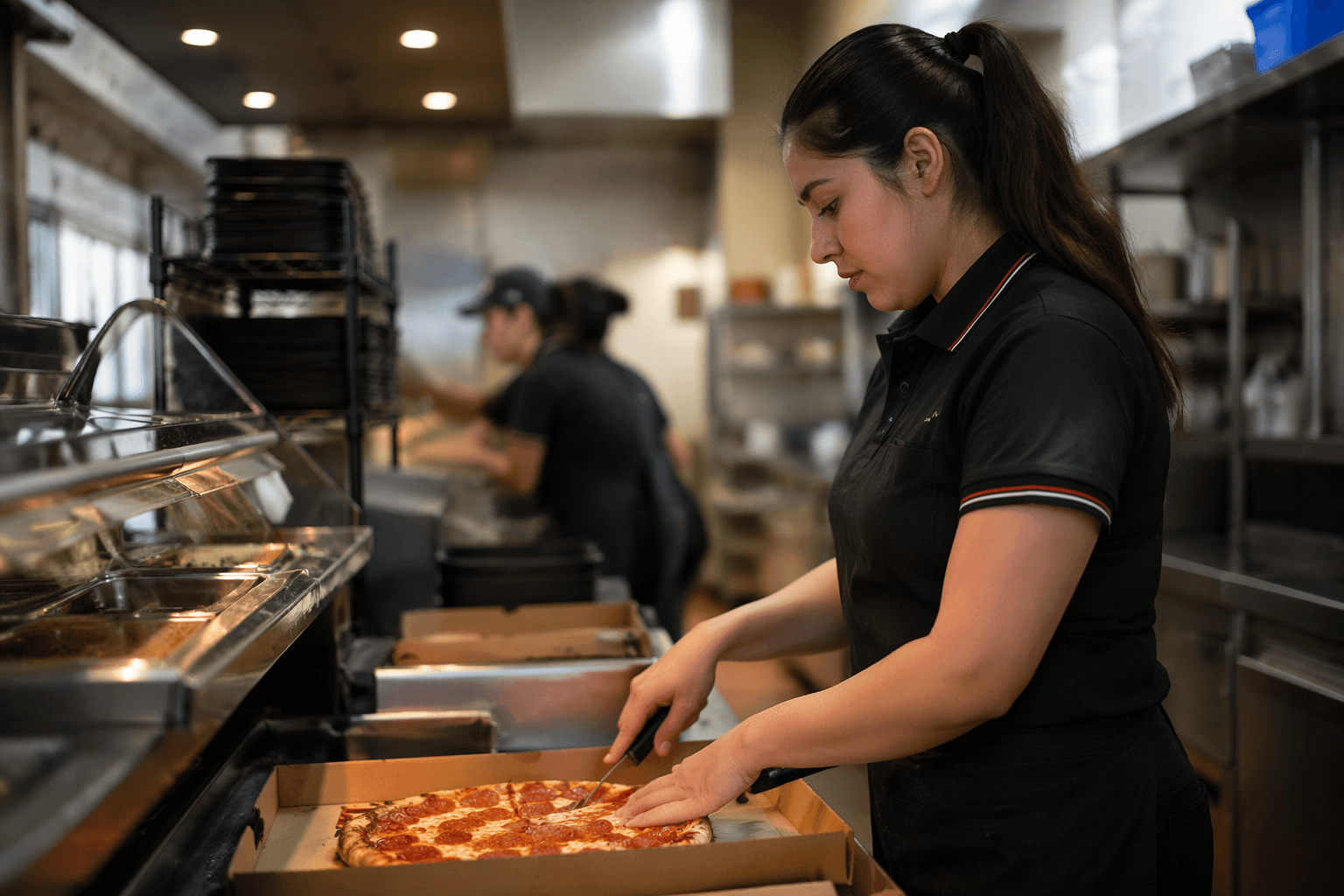
Pizza Hut workers, overtime and time records drive pay disputes
Most Pizza Hut pay mistakes start with two records: the time clock and payroll. If they do not match, missed overtime and off-the-clock work can cut wages fast.

The two records that decide whether you get paid correctly
At Pizza Hut, the fastest way to lose pay is usually not a dramatic showdown. It is a small mismatch between the time clock and the payroll record, and that gap can decide whether a worker gets every dollar owed. Missed punch corrections, late schedule changes, off-the-clock cleanup, and quiet edits to time entries are the kinds of problems that often turn a normal shift into a wage dispute.
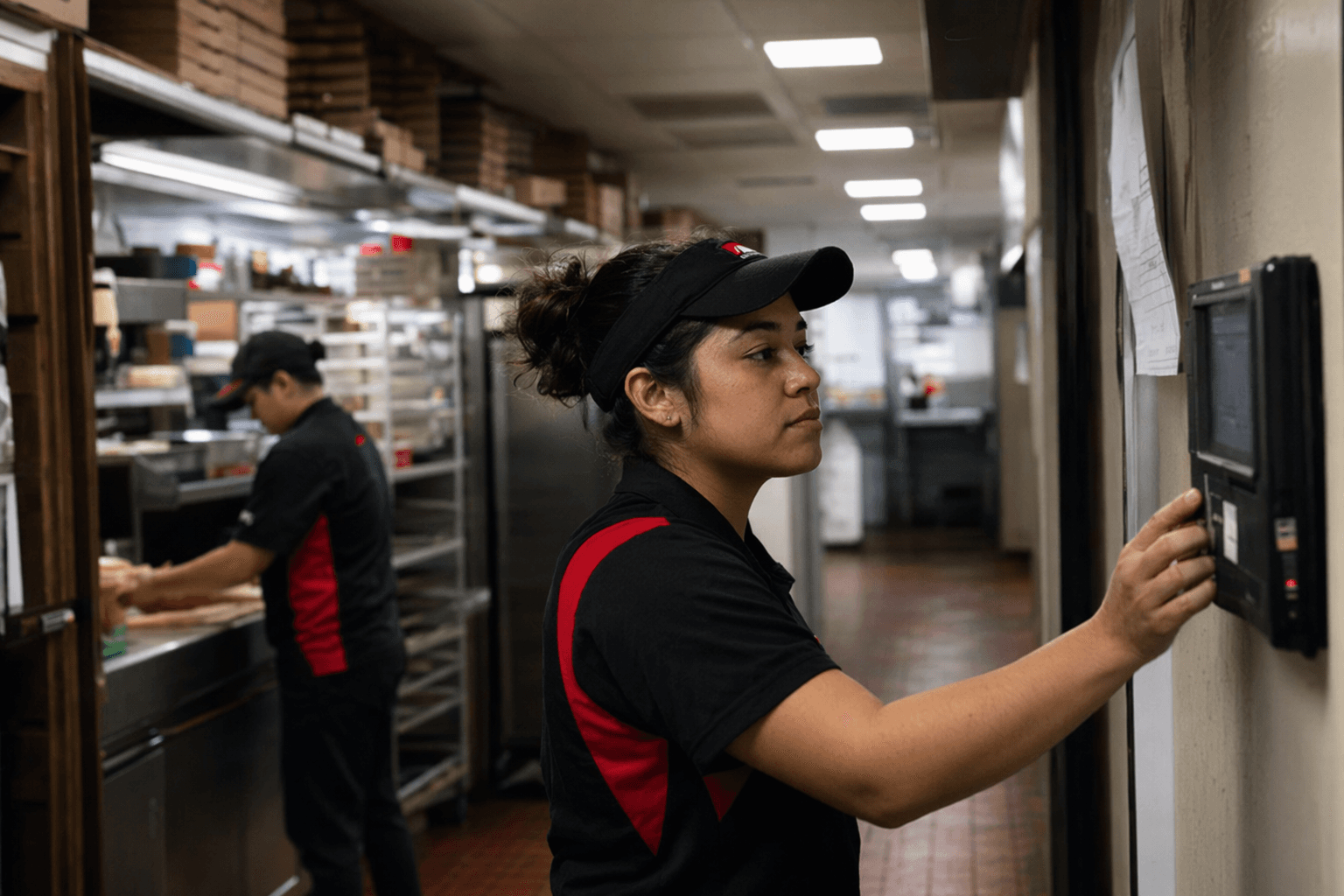
That is why the most useful framing for workers is simple: there are two records that decide whether you get paid correctly. One is the store’s time record. The other is the payroll record that shows what was paid and when. If those two do not line up, the missing money often hides in plain sight.
What federal wage rules require
Under the Fair Labor Standards Act, nonexempt employees must receive overtime pay at a rate of at least one and one-half times their regular rate for every hour worked over 40 in a workweek. The law does not require extra pay just because the shift falls on a Saturday, Sunday, holiday, or regular day of rest. The trigger is the total number of hours worked in the workweek, not the day on the calendar.
The same law also sets a federal minimum wage of $7.25 an hour, a rate that has been in place since July 24, 2009. Federal rules cover minimum wage, overtime, recordkeeping, and youth employment standards for most private-sector workers. For Pizza Hut crews, that means every shift, every clock-in, every clock-out, and every overtime hour matters.
Where Pizza Hut pay loss usually starts
In restaurants, pay mistakes rarely begin with a manager announcing theft. They usually begin with a small timekeeping problem that no one corrects. A worker finishes closing duties after the register is already balanced, a driver spends extra minutes on cleanup, a cook starts prep before the clock is running, or a schedule changes after the fact and the edited hours never match what actually happened.
Those are the moments that matter in a Pizza Hut store. Delivery drivers, kitchen crew, and shift leads often move between tasks fast, and the work does not always stop when the posted shift ends. If the time record only shows the “official” part of the shift, the hidden minutes before open and after close can disappear from the paycheck.
The checklist that catches problems early
The best defense is a simple personal log. It does not need to be fancy, but it does need to be consistent. Keep your own record of the store’s name, address, phone number, and the hours you actually worked, just as federal guidance recommends.
A basic checklist can help you spot trouble before a small paperwork problem becomes a wage claim:
- Write down your scheduled start and end times every shift.
- Record your actual clock-in and clock-out times.
- Note meal breaks and whether you were fully relieved from work.
- Save the time you spent on cleanup, prep, restocking, closing, or any other work done before open or after close.
- Track overtime carefully once your hours pass 40 in the same workweek.
- Watch for manager edits, punch corrections, or “adjustments” to your hours.
- Compare your pay stub to your own log as soon as payday hits.
If the numbers do not match, do not assume the shortfall is too small to matter. In restaurant work, small mistakes repeat fast, and a few missing minutes on several shifts can become a significant loss by the end of the month.
Why managers should care about clean timekeeping
For store managers, accurate timekeeping is not just a legal chore. It protects the store from disputes, makes payroll easier to audit, and reduces the chance that a worker’s missing minutes snowball into a complaint. In a restaurant where schedules change quickly and people fill multiple roles, clean records are the difference between a manageable payroll adjustment and a problem that can spread across an entire crew.
That matters even more in a franchise system. Yum! Brands says it franchises or operates a system of more than 63,000 restaurants in 155 countries and territories, and it said 98% of its restaurants were owned and operated by franchisees as of September 30, 2024. In a structure that local, pay problems often sit with the franchise operator first, not with corporate headquarters. If the store-level records are sloppy, the worker usually feels the damage first and the operator pays the price later.
Why the stakes are real
The Labor Department has repeatedly treated restaurant wage theft as a serious problem. In one 2023 case, investigators said Portland restaurant employees were denied overtime wages, with some working up to 25 overtime hours per week. In another 2023 case, the department recovered $1,651,550 for 83 workers at seven Los Angeles restaurants after investigators found denied overtime and false pay records.
Those cases show how the issue escalates. What starts as a missed punch or an unrecorded closing task can turn into a pattern of unpaid hours. Federal officials have said restaurant workers are often vulnerable to wage theft, and low-wage employees can least afford to have their pay shortchanged. That is the reality behind the paperwork.
Pizza Hut’s ownership structure adds another layer of pressure. Yum! Brands announced a formal review of strategic options for Pizza Hut in 2025, a sign that the brand remains a major part of a large and closely watched franchise network. When a system that big is under scrutiny, payroll discipline is not a side issue. It is part of whether stores stay stable, whether workers trust the schedule, and whether managers can prove that every hour got paid the way it should.
The rule in Pizza Hut stores is simple: if the time record and the payroll record do not match, the worker should start asking questions right away. That is where missed overtime, altered time entries, and off-the-clock work stop being routine and start becoming unpaid wages.
This article was produced by Prism’s automated news system from verified source data, official records, and press releases, then run through automated quality and moderation checks before publishing. The system is built and supervised by the people who set the standards it runs under. Read our full AI policy.
Did this article answer your question?