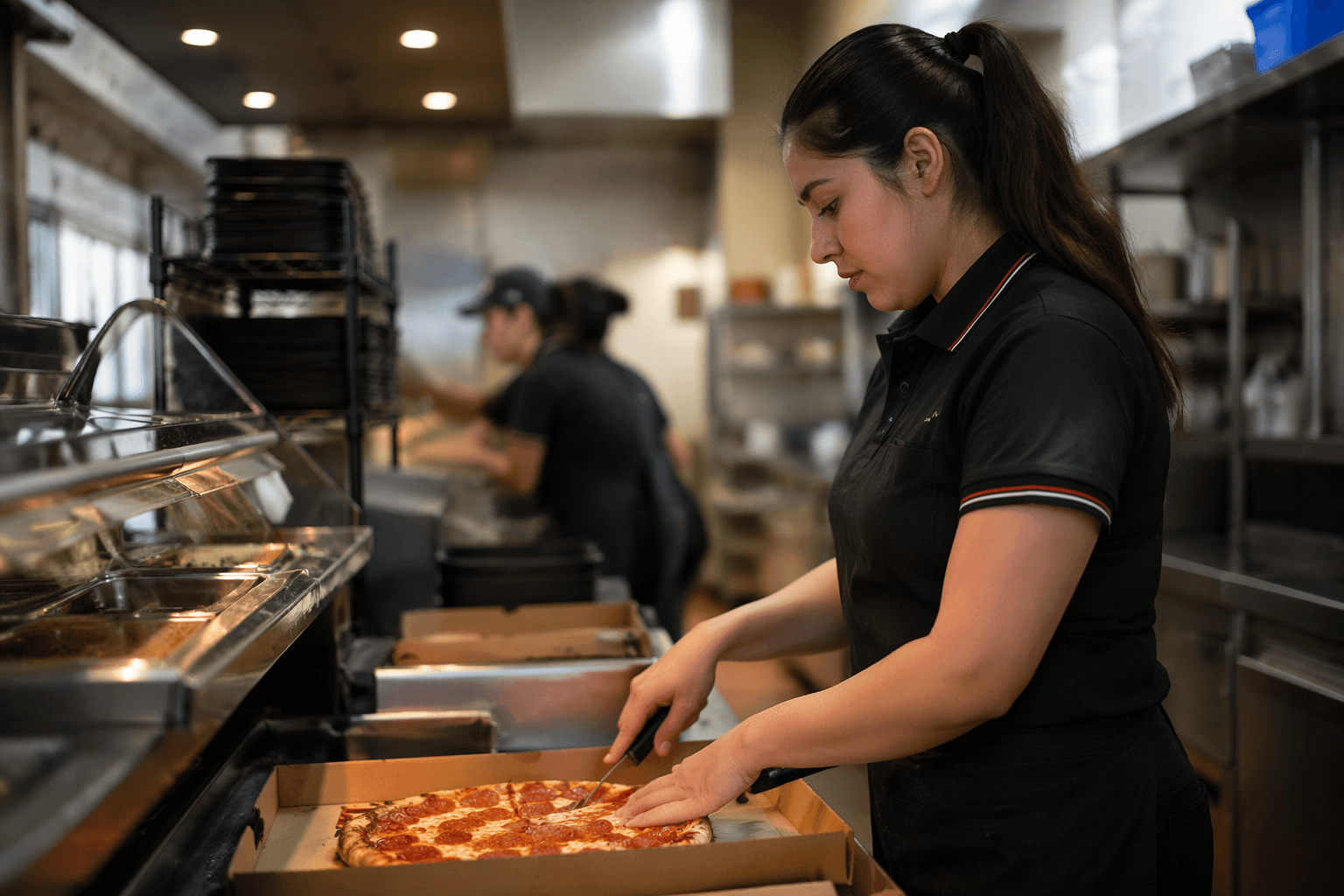
Pizza Hut workers praise flexibility, but pay and management lag
Pizza Hut still hires fast and feels flexible, but a 3.5 Indeed rating masks weak pay and management that keep staffing unstable.
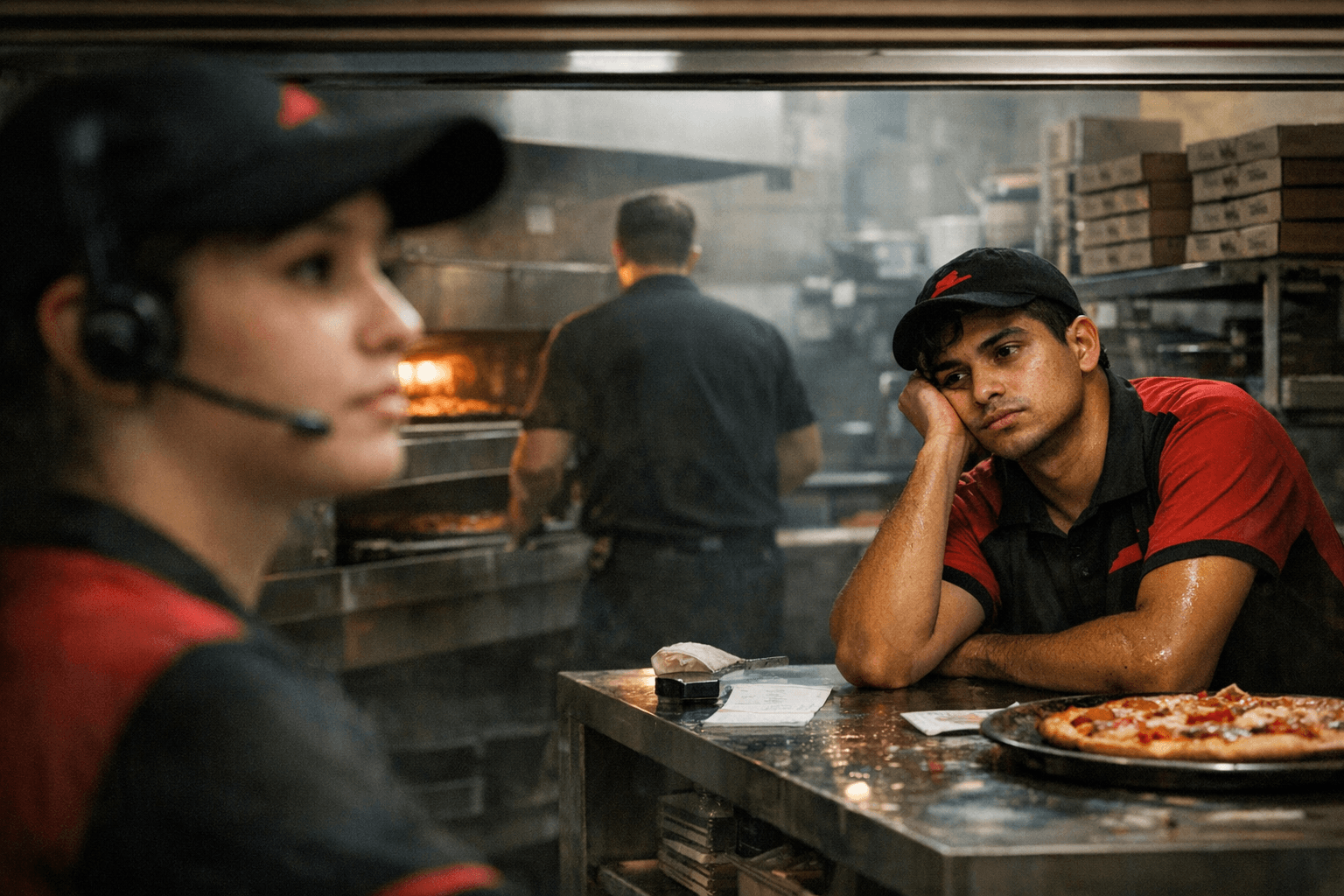
Pizza Hut still looks like an easy place to get hired, but the latest Indeed snapshot shows why it remains hard to keep people. The brand’s overall rating sits at 3.5 out of 5, while pay and benefits trail at 2.7, a gap that helps explain why flexibility gets praise but retention keeps slipping.
The 3.5 rating tells the story
The strongest signal in the review data is not that workers hate the job. It is that many see Pizza Hut as workable, familiar, and often flexible, especially for part-time employees and students who need quick entry into food service. The ratings for management at 3.3, culture at 3.3, work-life balance at 3.4, and job security and advancement at 3.1 suggest a workplace that functions, but only unevenly.
That is the kind of employer brand that can keep a franchise system moving without ever becoming truly competitive. Workers may stay for the schedule, the familiarity, and the chance to learn basic restaurant tasks. They are less likely to stay when the paycheck, the supervision, and the long-term path do not improve at the same pace.
Why Pizza Hut still reads as a starter job
The reviews paint Pizza Hut as a place that hires quickly and still serves as an entry point for people who are new to food service. That matters because “starter job” can be a strength when a brand needs applicants fast, but it becomes a weakness when the company depends on the same workers to cover nights, weekends, and rushes for months at a time.
The recurring complaints are familiar to anyone who has worked a chain restaurant shift: pay that does not feel competitive, stores that run short-handed, and local management that can make one location feel stable while another feels chaotic. Some reviewers call the job flexible and a good learning environment. Others describe it as a mixed bag that only works when the team, the pay, and the manager are all aligned. That is not a broken brand, but it is a stagnant one, and stagnation is bad news when labor is tight.
For delivery drivers, kitchen crew, and shift managers, the result is a familiar trap. The job looks easy to enter, but the day-to-day experience depends heavily on whether one store has enough people on shift, whether the manager communicates well, and whether the schedule is predictable enough to build a life around. When any one of those pieces slips, the flexibility that attracts workers in the first place turns into a reason to leave.
A franchise brand under pressure
That local variation matters even more because Pizza Hut is in the middle of a much bigger corporate reset. Yum! Brands said it began a formal review of strategic options for Pizza Hut and brought in Goldman Sachs and Barclays as advisers. Chris Turner, Yum’s chief executive, framed the brand as one with deep consumer appeal and a strong technology platform, but also one that needed more action to reach its potential.
The scale is enormous. Yum says Pizza Hut has roughly 20,000 units globally, and the broader Yum system spans more than 63,000 restaurants across 155 countries and territories. In that context, Pizza Hut is not a side project. It is a massive franchise network that has to execute the same basic staffing formula thousands of times over.
The strategy review is unfolding alongside a sharper operational reset in the United States. Yum has said Pizza Hut will close about 250 underperforming U.S. restaurants in the first half of 2026 under its Hut Forward strategy. At the same time, reporting on the company’s earnings call showed that U.S. same-store sales fell 3% in the fourth quarter of 2025, even as Pizza Hut opened 443 new restaurants in the quarter and added 1,184 gross new restaurants across 65 countries for the year.
That combination tells workers something important. The company is pruning weak stores, expanding elsewhere, and trying to reset performance at the system level. But if the staffing model inside the stores does not improve, closures alone will not fix the employee experience. The same stores that need leaner operations also need steadier crews.
Drivers have already felt the squeeze
Pizza Hut’s labor problems are not limited to anonymous review comments. Delivery drivers have already forced the company’s franchise system into concrete legal and operational fights. In one major case, a former Pizza Hut franchisee, MUY Pizza-Tejas, LLC, agreed to pay $4.75 million to settle a class-action wage suit brought by more than 1,000 drivers across multiple states. The drivers said unreimbursed gas, repairs, insurance, cellphone plans, and other vehicle costs pushed actual earnings below minimum wage.
That case matters because it goes straight to the economics of the job. A delivery role at a pizza chain is not just hourly pay. It is pay plus tips minus mileage, wear and tear, phone costs, and gas prices. When reimbursement is weak, the supposed flexibility of delivery work can disappear fast, especially when app-based delivery competitors like DoorDash and Uber Eats keep reshaping customer expectations and labor supply.
California showed another version of the same pressure. Two Pizza Hut franchisees there, PacPizza, LLC and Southern California Pizza Company, laid off more than 1,200 delivery workers ahead of the state’s fast-food minimum wage increase to $20 an hour. Pizza Hut said franchisees independently own and operate their restaurants and can adjust staffing based on local market conditions, which is exactly why the employee experience can swing so sharply from one store to the next.
What that means for staffing, service, and advancement
For managers trying to keep stores open and profitable, the message is not subtle. If pay lags, crews thin out. If crews thin out, schedules get harder to build, service gets slower, and the burden falls on the people who remain. That is when a job that looks simple on paper becomes exhausting in practice.
It also helps explain why Pizza Hut’s advancement ladder can feel shallow. A 3.1 rating for job security and advancement is not disastrous, but it is not the mark of a place where people expect to build a career. When workers see stores as short-staffed and management as inconsistent, they are less likely to imagine a stable path from crew to shift lead to store manager.
Pizza Hut’s problem is not finding people who will try the job. It is turning that first job into one people want to keep. Until pay, supervision, and staffing become more consistent across franchisees, the brand will keep leaning on its flexibility reputation while losing ground on the more important test: whether workers believe the next shift will be better than the last.
This article was produced by Prism’s automated news system from verified source data, official records, and press releases, then run through automated quality and moderation checks before publishing. The system is built and supervised by the people who set the standards it runs under. Read our full AI policy.
Did this article answer your question?