Trump’s tip tax push spotlights Pizza Hut delivery workers’ pay pressures
Trump’s DoorDash stunt put tip income on television, but Pizza Hut workers are the ones living the math every shift. In-house drivers, mileage and app deliveries all cut differently into take-home pay.
President Donald Trump turned DoorDash into a White House prop on April 13, having McDonald’s delivered to the Oval Office to push his tax cut on tips. He handed the delivery driver, Sharon Simmons, what appeared to be a $100 bill, a live-action photo op that made the tip economy look less like policy talk and more like a daily wage issue.
Simmons showed up in a red DoorDash Grandma shirt and said the no-tax-on-tips change had saved her a substantial amount of money since it took effect in January. That is the part Pizza Hut drivers recognize immediately: tip rules are not abstract when they help decide whether a shift ends with decent cash in hand or just more wear on the car.
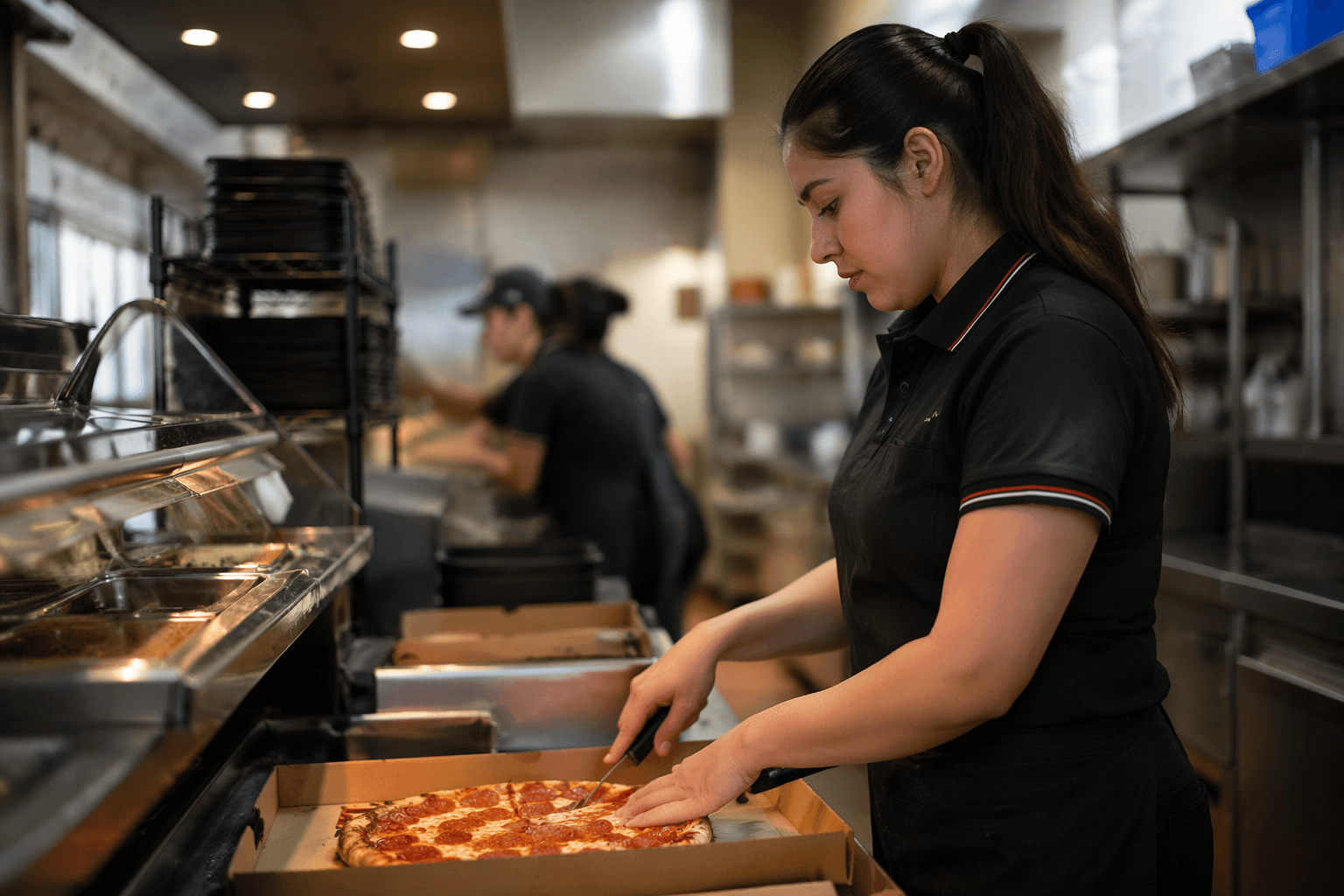
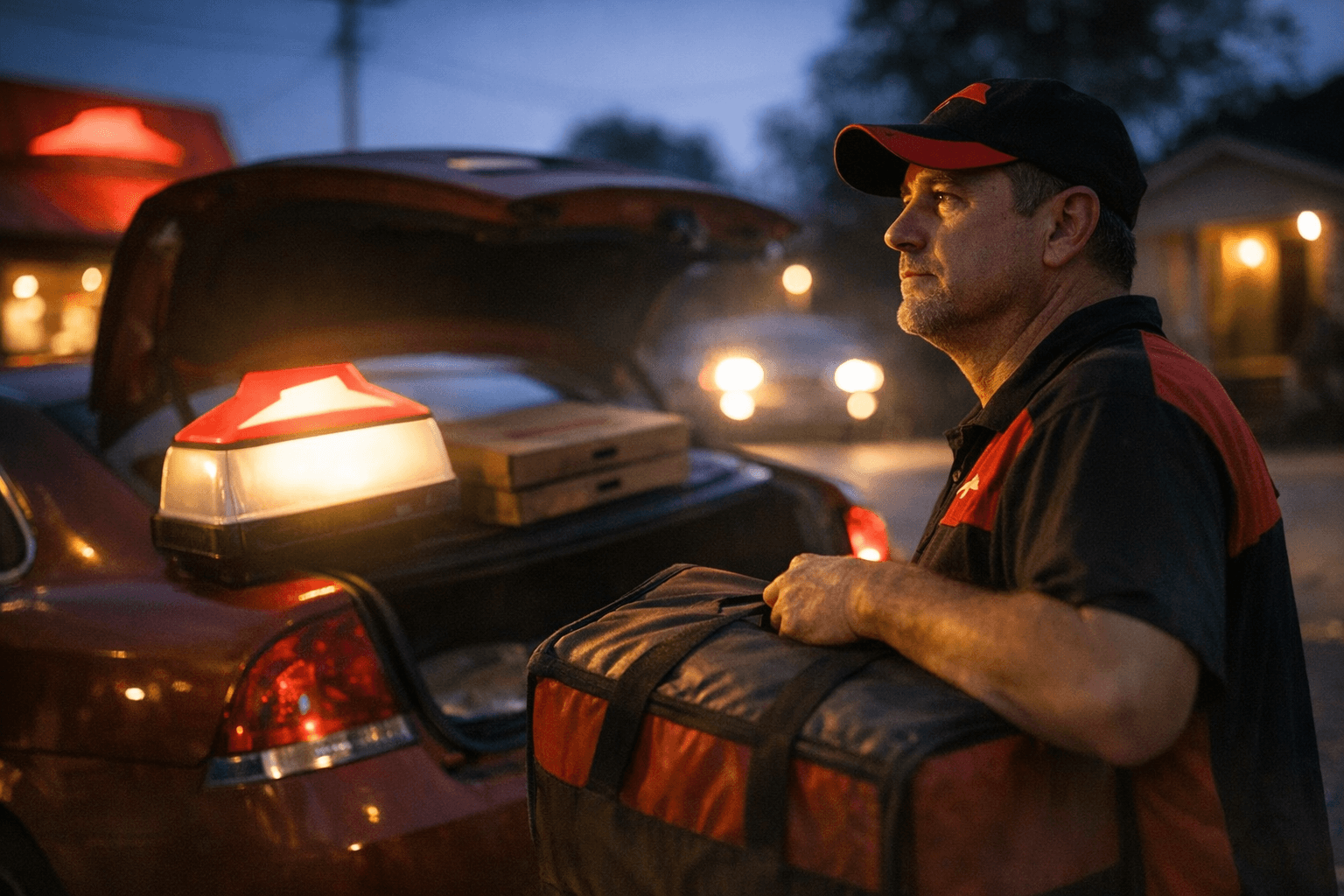
For Pizza Hut stores that still run in-house drivers, the pay formula can be messy but very real. A driver’s take-home depends on base pay, tips, mileage reimbursement, route density and fuel costs, all of which can swing from one neighborhood to the next. A short run with several stops can work better than a long, slow stretch across town, while a thin night of orders can leave a driver burning gas for little return.
A traditional Pizza Hut delivery and a third-party delivery order can look similar to a customer and feel very different to the worker. In-house drivers usually keep the delivery tied to the store, which means the driver’s earnings come from the Pizza Hut payroll structure plus the tip left on the ticket. A third-party order routed through DoorDash or a similar app changes that equation: the platform controls the courier assignment, the customer’s delivery expectations and much of the fee structure, while the Pizza Hut team inside the store loses some control over who actually handles the run.
That difference matters because app companies have already had to adjust to higher gas prices, and Pizza Hut workers are exposed to the same pressure even when they are not app couriers themselves. Higher fuel costs squeeze mileage-based earnings. Longer waits between orders cut the number of deliveries a driver can complete. If third-party delivery keeps growing, it also raises the stakes for kitchens and managers trying to balance in-house staffing against app partnerships and customer demand.
Trump’s stunt was political theater, but it put a worker issue in plain view. The real question for Pizza Hut crews is not how tip taxes play in Washington; it is how much ends up in the pocket after gas, miles, fees and route time are taken out. That is still the daily math shaping delivery work across the chain.
This article was produced by Prism’s automated news system from verified source data, official records, and press releases, then run through automated quality and moderation checks before publishing. The system is built and supervised by the people who set the standards it runs under. Read our full AI policy.
Did this article answer your question?