Boulder Council Split Over Slowing Tipped Wage Increases for Restaurant Workers
Boulder servers could lose $5.03 an hour in base pay if council slows tipped-wage hikes, shifting relief to restaurant owners and costs to workers.
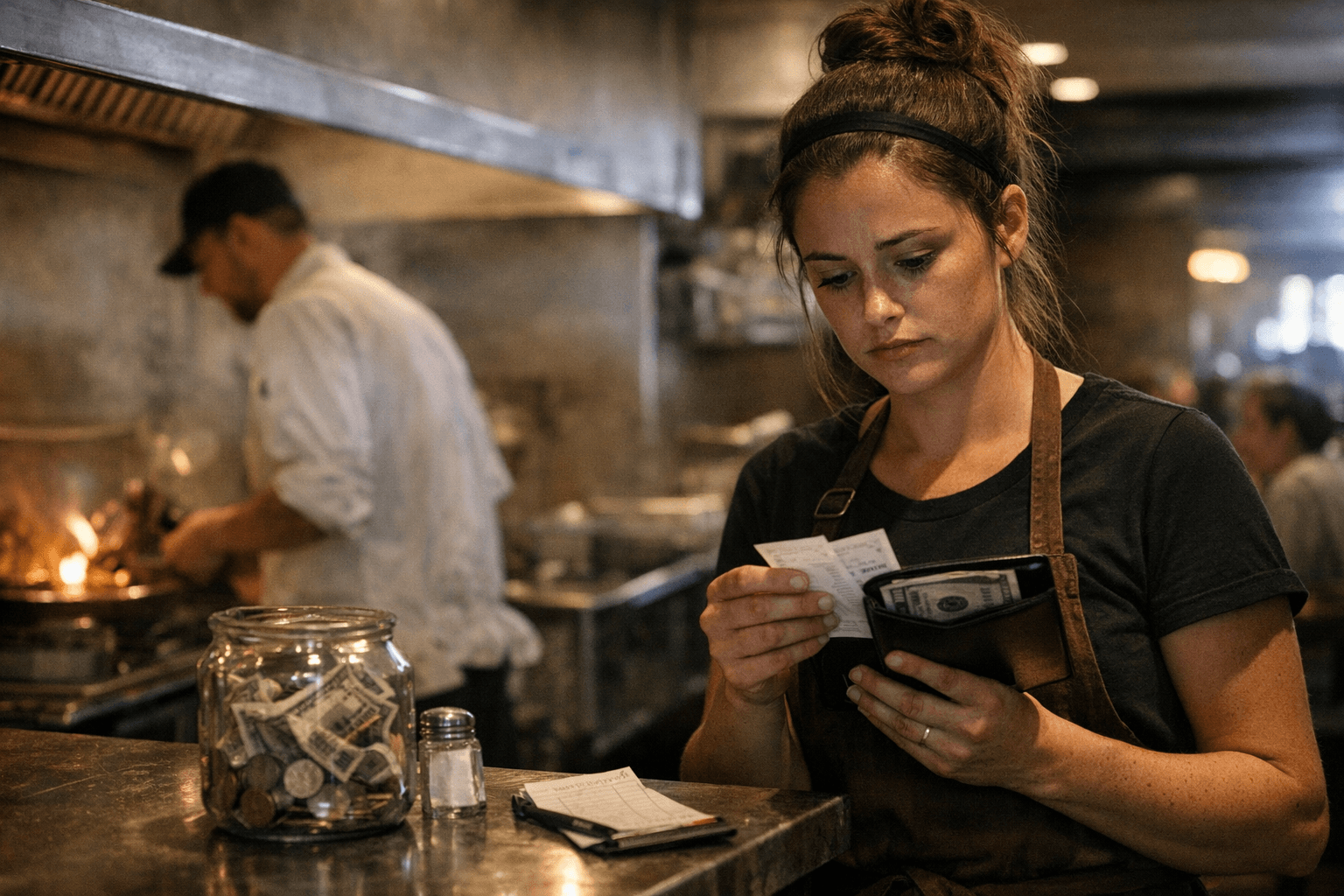
A Boulder server could lose $5.03 an hour in base pay next year if city leaders slow the city’s tipped-wage increases, a change that would move payroll pressure from restaurants onto tipped workers. The split on Boulder City Council has become one of Colorado’s sharpest restaurant labor fights because it goes straight to take-home pay, staffing and the price of keeping a dining room running.
Boulder’s current rules let employers count up to $3.02 an hour in tip income toward the wage obligation for food and beverage workers. The city’s minimum wage rose to $15.57 on Jan. 1, 2025, is scheduled to reach $16.82 on Jan. 1, 2026, and will rise again to $18.17 on Jan. 1, 2027. Under the current offset, a tipped worker’s base wage would be $13.80 in 2026 and $15.15 in 2027. If the city adopts the larger offset now allowed under state law, that base wage would fall to $8.77 in both years.
The city says tipped workers must still receive at least the full minimum wage. If tips do not cover the difference, the employer has to make up the shortfall. That protection matters on a slow lunch shift as much as on a packed Saturday night, because it determines whether the worker’s paycheck is padded by the house or by the guests at the table.
Council members approved an 8% annual wage increase plan in 2024 for 2025, 2026 and 2027, but at that point Boulder did not have authority to change the tip offset. That changed in 2025, when the Colorado General Assembly passed HB25-1208 and gave local governments with higher minimum wages the power to modify the offset. Boulder has since made exploring the issue a 2026 council priority, with officials expecting to wrap it up in summer 2026. On April 2, council voted to consider whether to keep the current approach.
For restaurant owners, the appeal is obvious. A bigger offset would reduce labor costs in a high-cost market where payroll has already climbed. For servers and bartenders, it would mean less guaranteed cash wage and more of their income tied to the nightly flow of tips, while back-of-house workers continue to watch tipped jobs hold a better wage floor than many kitchen positions. In the immediate term, the council’s decision will shape who absorbs the next round of pressure, workers or owners, and whether Boulder restaurants try to cover the gap with staffing cuts, service charges or higher menu prices.
This article was produced by Prism’s automated news system from verified source data, official records, and press releases, then run through automated quality and moderation checks before publishing. The system is built and supervised by the people who set the standards it runs under. Read our full AI policy.
Did this article answer your question?