DOL toolkit helps restaurant workers plan for retirement savings
Restaurant paychecks can swing week to week, but the Labor Department’s toolkit turns retirement saving into smaller, manageable moves workers can make now.
A retirement guide built for shaky schedules
Restaurant work rarely comes with a clean financial rhythm. Tips rise and fall, shifts change, hours get cut, and people move between jobs often enough that long-term saving can feel like a luxury. The Department of Labor’s Retirement Savings Toolkit is useful because it meets that reality head-on: it breaks retirement planning into plain-language pieces workers can use even when the rest of life is unpredictable.
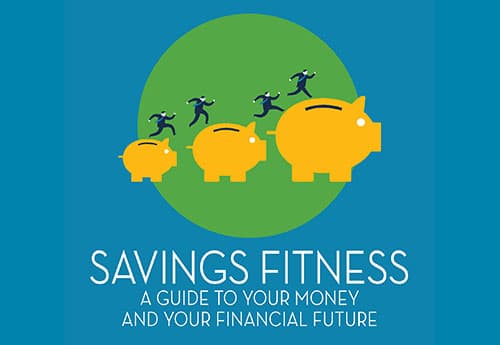
The toolkit gathers several DOL publications in one place, including *Savings Fitness: A Guide to Your Money and Your Financial Future*, *Taking the Mystery Out of Retirement Planning*, *Women and Retirement Savings*, *Top 10 Ways to Prepare for Retirement*, and *What You Should Know About Your Retirement Plan*. The point is not to make retirement sound simple. It is to make the first steps clear enough that a line cook, server, bartender, host, or manager can actually take them.
Why restaurant workers need a different kind of savings plan
Restaurants are built on labor that is often hourly, variable, and hard to forecast. The National Restaurant Association says 9 in 10 restaurants have fewer than 50 employees and 7 in 10 are single-unit operations, which helps explain why benefits can be thin and why one employer’s choices matter so much. The association also says 63% of adults have worked in the restaurant industry, so this is not a niche problem. It is a broad labor-market issue that has touched most working people at some point.
The size of the sector also shows how much is at stake. Eating and drinking places directly contributed $1.4 trillion in output in 2024 dollars based on 2022 data, and the industry had 14.2 million employees in 2022. In April 2026, leisure and hospitality employment stood at 16.978 million, with 1.045 million job openings, 978,000 hires, and 993,000 separations. That level of churn is a reminder that workers are often moving in and out of jobs, concepts, and schedules before they can build much continuity in a single plan.
Access to retirement benefits remains uneven too. In March 2025, the Bureau of Labor Statistics said service occupations had retirement-plan access for 52% of workers, compared with 75% for all civilian workers and 72% for private-industry workers. Part-time workers had just 46% access. For restaurant employees who are balancing tipped income, variable hours, and frequent job changes, those numbers explain why retirement can feel distant even when the need is immediate.
What the toolkit actually gives you
The Labor Department’s Saving Matters campaign, which the toolkit sits inside, is aimed at workers at every stage of working life: new job entrants, mid-career workers, people nearing retirement, and people already retired. The department’s message is straightforward: retirement is likely to be your biggest lifetime expense, so the earlier you start, the less pressure you face later.
The toolkit’s publications are meant to help workers estimate how much money they will need in retirement and figure out how to get there. That matters in restaurants because saving is often easiest when it is turned into a repeatable habit rather than a giant monthly goal. A server who can only save a little after rent and groceries still benefits from starting small, and a manager who finally has access to a workplace plan can use the toolkit to decide how much to contribute without overreaching.
A few DOL ideas are especially useful in a restaurant setting:
- Start with small contributions and keep them regular.
- If your employer offers a 401(k)-type plan and a match, treat the match as the first place to save.
- When you change jobs, pay attention to what happens to your retirement money.
- Use the DOL calculators and publications to estimate how much you may need later, not just how much you can spare this week.
That last point matters because restaurant workers often have to make savings decisions around slow seasons, surprise schedule cuts, and emergency expenses. A plan that depends on steady income will break quickly. A plan built around small, automatic contributions is much more realistic.
Why job changes matter so much in restaurants
One of the most practical parts of the DOL guidance is about portability. The department says workers should understand how a job change affects an employer-based plan and what options they have for their money. That is especially important in restaurants, where people leave one spot for another, pick up a second job, or bounce between front of house and back of house work in the same year.
The U.S. Government Accountability Office has found that workers can have trouble tracking 401(k) accounts when they transfer jobs. It also reported that 39% of working households lacked access to, or were not eligible to participate in, an employer-sponsored defined contribution plan in 2013. Those findings underline a basic truth for restaurant workers: if you do not stay in one job for long, your retirement savings strategy has to travel with you.
That is why rollover decisions matter. Accounts left behind after a job change can become hard to track, especially when someone moves through multiple employers in a busy industry. The restaurant worker who keeps a notebook, a saved email folder, or a simple list of old employers and plan providers may not feel like a retirement planner, but that recordkeeping can prevent real money from disappearing into administrative limbo.
How to make the toolkit work in real life
The best way to use the DOL materials is to treat them like a checklist, not a lecture. You do not need a perfect budget or a fully funded emergency account before you begin. You need a starting point that fits a schedule built around shifts, side work, and unpredictable tips.
1. Check whether your current job has a retirement plan.
If it does, learn the basics before you ignore it. A match can be meaningful even if your contribution is small.
2. Save enough to capture any match.
The Labor Department is clear that, when a match exists, it should be the first place you save. In restaurant work, leaving match money on the table is the same as turning down part of your pay.
3. Use the calculators to set a realistic target.
The point is not to guess whether retirement is possible. It is to get a number you can work toward, even if you contribute in small amounts.
4. Track every old account when you change jobs.
Restaurant careers can move fast. Keep the paperwork, account logins, and employer contacts somewhere you will actually find them later.
5. Revisit your savings whenever your hours change.
A bad season does not mean you stop saving forever. It means you may need to scale back temporarily and restart when your schedule improves.
A practical tool for an industry that rarely stands still
The appeal of the Retirement Savings Toolkit is that it does not assume a stable corporate ladder or a predictable salary. It fits an industry where many workers are part-time, many employers are small, and job changes are normal rather than exceptional. The Labor Department’s core message is simple but useful: start early, start small, and use every employer match and rollover option you can keep.
For restaurant workers, that is not abstract retirement advice. It is a way to turn a few steady choices into something durable in a job market that rarely gives you stability for free.
This article was produced by Prism’s automated news system from verified source data, official records, and press releases, then run through automated quality and moderation checks before publishing. The system is built and supervised by the people who set the standards it runs under. Read our full AI policy.
Did this article answer your question?