DoorDash Tasks App Enlists Gig Workers to Build AI Training Datasets
DoorDash quietly launched Tasks, paying its 8 million couriers to film chores and record conversations to train AI — but pay rates and data rights stay undisclosed.

DoorDash rolled out a standalone app called Tasks that pays its courier workforce to capture video, audio, and photographs of everyday activities, redirecting the downtime between deliveries into raw material for AI and robotics training datasets. The app, which launched quietly around March 19, turns a workforce of more than 8 million U.S. Dashers into a distributed data-collection operation at a scale that dedicated training-data companies like Scale AI and Appen cannot easily replicate.
Ethan Beatty, general manager of DoorDash Tasks, framed the initiative as an earning expansion for couriers. "There are more than 8 million Dashers who can reach almost anywhere in the U.S. and who want to earn flexibly beyond delivery. That's a powerful capability to digitize the physical world," he said.
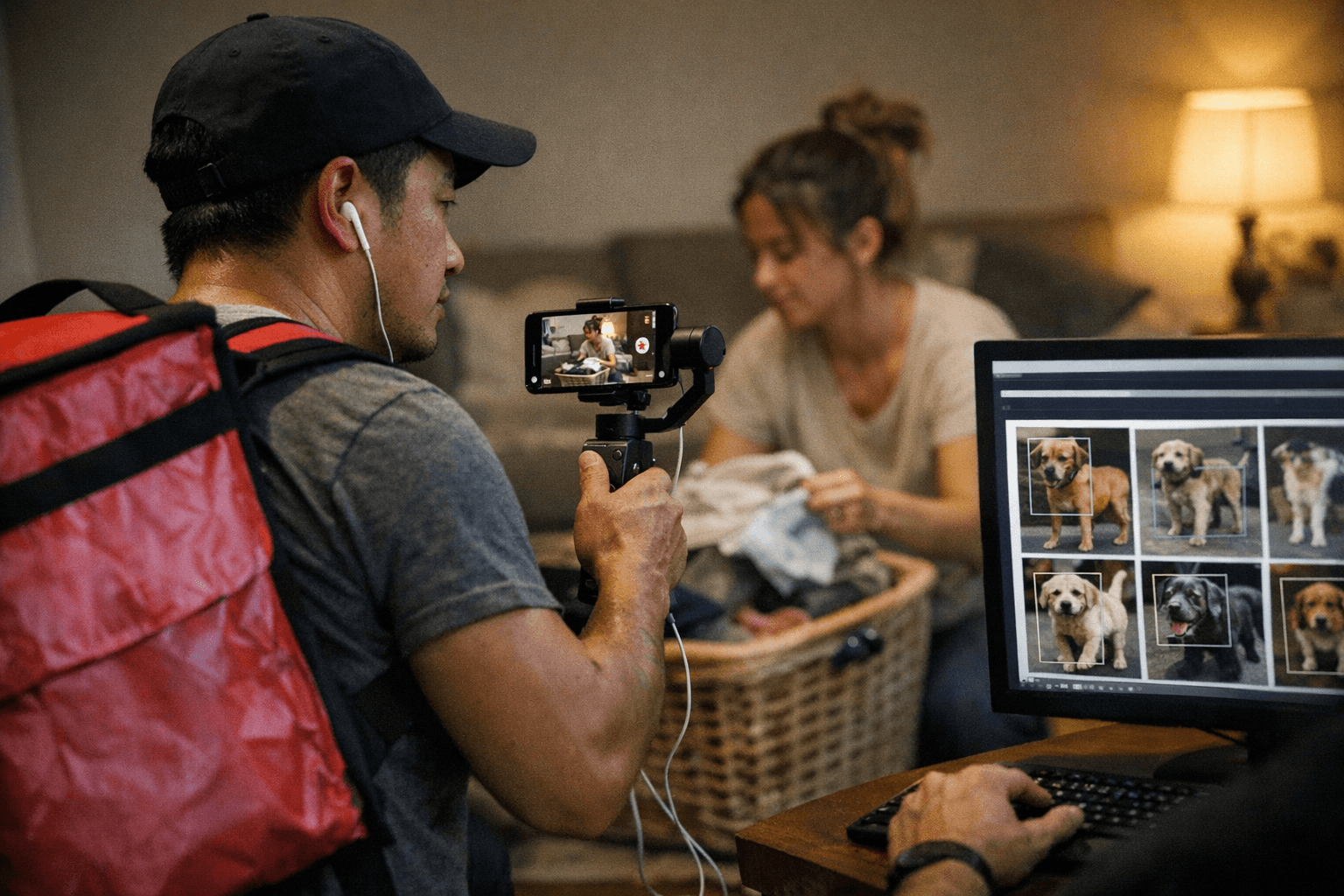
The assignments span a wide range of modalities. According to reporting and company materials, Dashers can be asked to film household chores like loading a dishwasher, handwashing dishes, or folding clothes, record unscripted conversations in Spanish, or capture step-by-step footage of routine physical actions. The data, per the company's announcement, helps AI and robotics models "understand the physical world." Some tasks connect directly to autonomous vehicle logistics: one cited example has couriers paid to close the doors of Waymo's self-driving vehicles after drop-offs.
DoorDash described the Tasks app as a small pilot relative to the broader suite of assignments already available inside the standard Dasher app. A spokesperson told NBC News that the app will initially focus on AI and robotics training activities, with other task types to follow. Those additional assignments, rolling out within the core Dasher app, could include checking a restaurant's holiday hours, photographing tricky drop-off locations to help other drivers navigate, or helping an autonomous vehicle "get back on the road."
For restaurant workers specifically, the expansion signals something worth paying attention to. Dashers assigned to photograph menu items or document building entrances are effectively gathering structured data about the physical spaces where restaurant workers spend their shifts. That data feeds systems that DoorDash has a stated interest in commercializing: the company committed to launching its autonomous delivery platform in 2026, and Tasks sits inside that roadmap rather than beside it.
The initiative puts DoorDash in competition with established training-data platforms while leveraging an advantage those platforms lack: a workforce already embedded in neighborhoods across every demographic and geography in the country, equipped with smartphones and accustomed to sporadic earning. Uber and Instacart made similar moves over the past year, suggesting the pattern is becoming standard practice across gig platforms rather than a one-off experiment.
What remains opaque is what Dashers are actually earning per task and what rights they sign away when they participate. No source in the company's rollout materials specifies pay rates, compensation formulas, or the terms under which DoorDash licenses or retains ownership of the collected data. Those gaps matter: if gig workers are generating datasets that DoorDash then sells to robotics developers or uses to power its own autonomous delivery fleet, the question of who profits from that data, and how much the people who created it are compensated, is not a minor footnote. It is the story underneath the story.
Know something we missed? Have a correction or additional information?
Submit a Tip