EEOC guidance reminds restaurants to accommodate pregnant workers quickly
The EEOC says pregnant restaurant workers can ask for simple fixes like water breaks, lifting help, or a stool before a crisis point. For managers, quick responses matter as much as formal policy.
A pregnant server who suddenly cannot carry a tray of drinks, a host who needs a stool at the stand, or a cook who cannot keep doing heavy lifts is not asking for a favor. Under the Pregnant Workers Fairness Act, those are the kinds of everyday limitations restaurant employers may need to accommodate quickly, before a small problem turns into a forced leave or a firing. The EEOC’s guidance matters because restaurant work is full of the exact conditions the law was built for: long shifts, constant standing, hot kitchens, cleaning chemicals, and fast decisions made on the floor.
What the PWFA gives restaurant workers
The Pregnant Workers Fairness Act requires covered employers to provide reasonable accommodations for a worker’s known limitations related to pregnancy, childbirth, or related medical conditions unless the change would create an undue hardship. In practice, that can mean extra bathroom or water breaks, help with lifting, time off for therapy or postpartum appointments, sitting while working when possible, avoiding hazardous chemicals, or temporarily moving someone away from the heaviest tasks.
That matters in restaurants because the work rarely pauses for a formal process. A line cook may need help with stock. A server may need a shorter section or a lighter side-work assignment. A host may need a stool instead of standing through a dinner rush. A manager who understands the law sees those as potential accommodations, not evidence that the worker is unreliable.
The EEOC also says the request does not have to be in writing or use special legal words. In restaurant life, that is a big deal. Many workers will not arrive at a shift ready to file paperwork. They are more likely to tell a shift lead, kitchen manager, or general manager that a task is suddenly hard, unsafe, or impossible. Under the PWFA, that conversation can count as the request.
Why the restaurant floor is exactly where the law matters
Restaurant work can strain the body even when everything is going smoothly. Pregnancy can make standing through a lunch rush painful, lifting trays or boxes risky, and repeated trips through a kitchen especially difficult. The EEOC’s guidance recognizes that the law covers limitations tied not only to pregnancy itself, but also childbirth, miscarriage, postpartum depression, and even concerns about continuing to carry heavy bags if that could harm the pregnancy.
That coverage is broader than a lot of workers realize. A pregnant bartender who cannot keep hauling ice buckets, a prep cook who needs help moving cases, or a server who needs to sit between lunch and dinner service may all be describing exactly the kind of limitation the law contemplates. The point is not to remove someone from work. It is to keep them working safely without being pushed out because their body has changed.
For restaurants, the practical takeaway is simple: temporary duty changes often solve the problem. Moving a pregnant worker off heavy lifting, shifting a host to a seated station, adjusting start times, or reducing exposure to cleaning chemicals can be enough. Those changes are not signs of special treatment. They are the ordinary adjustments the law was designed to make possible.
Managers do not need to wait for a perfect HR process
The EEOC’s message to employers is blunt: take requests seriously and respond quickly. That warning is especially relevant in smaller restaurants, where there may be no dedicated HR department, no formal accommodation platform, and no one trained to translate a brief conversation into action.
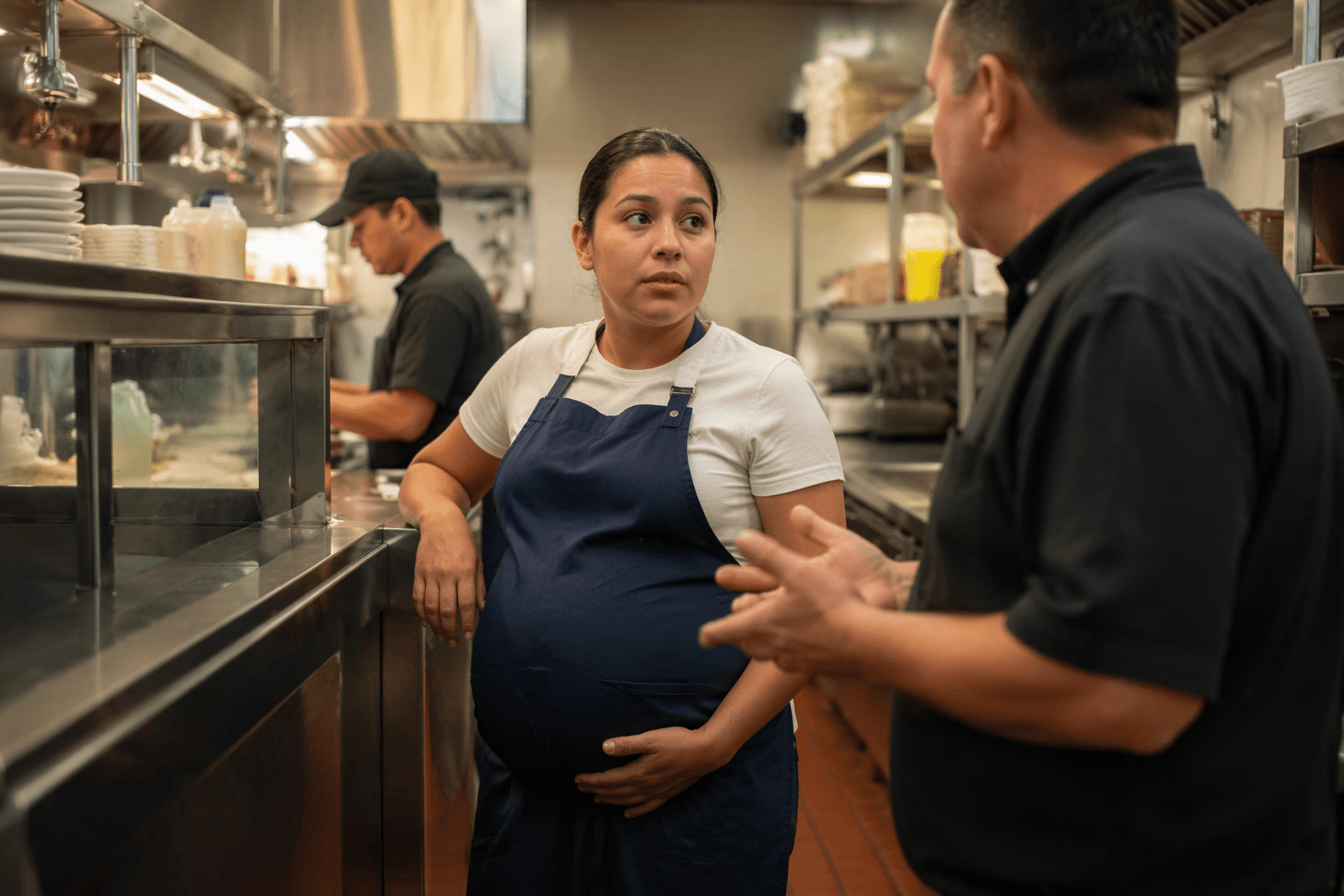
Waiting can be the problem. If a worker says she cannot keep lifting or cannot keep standing for an entire shift, that is not the moment to send her home and hope someone else handles it later. A quick response can mean asking what tasks are hardest, whether sitting is possible, whether another station works better, or whether a schedule change would solve the issue. In a busy restaurant, speed matters because the worker often needs the accommodation now, not after a week of back-and-forth.
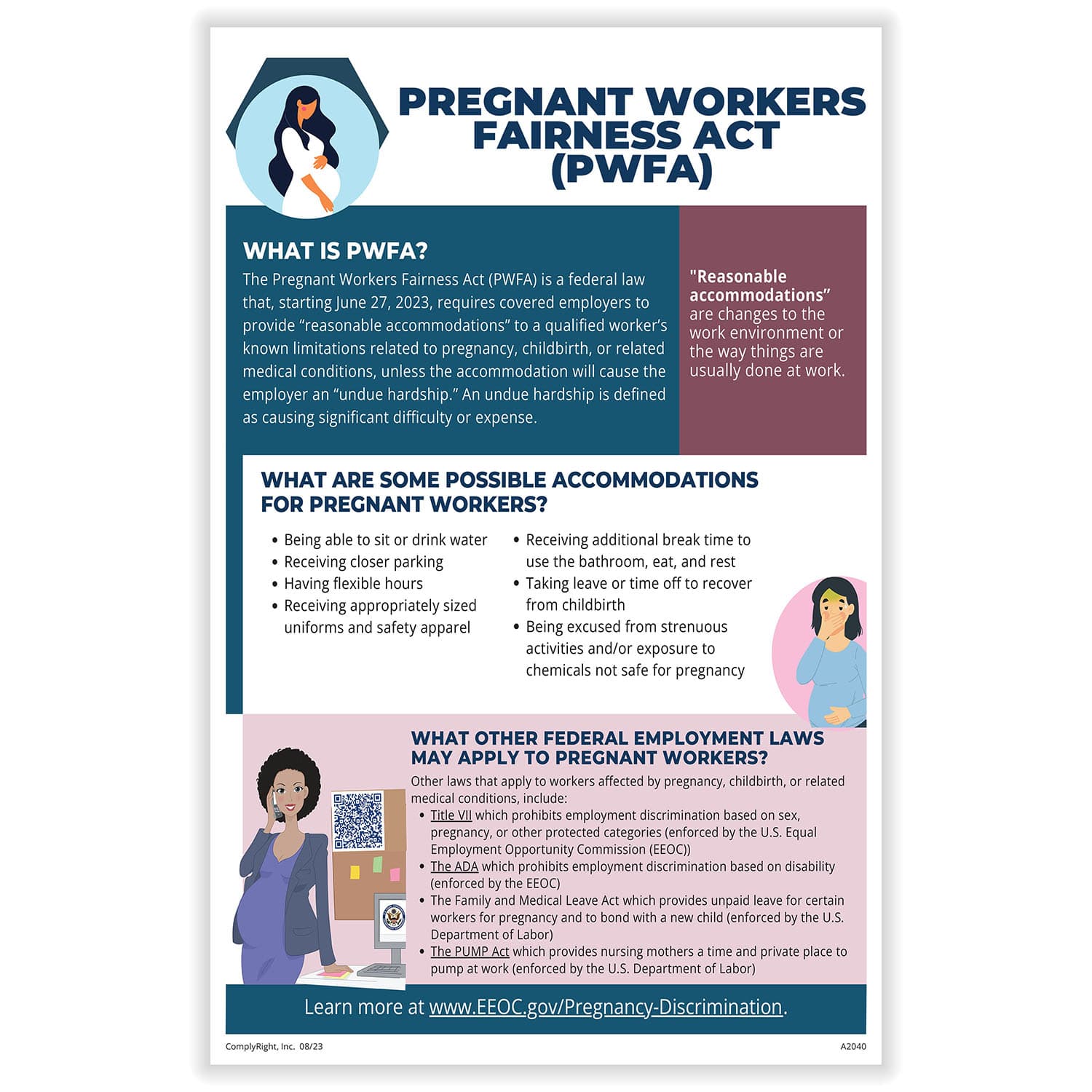
The law applies to most employers with 15 or more employees, which covers plenty of restaurants, chains, and larger independent operations. Covered employers also must post a notice describing the PWFA’s protections. For managers, that means the rule should not be a surprise. For workers, it means the protection is supposed to be visible, not buried in a handbook nobody reads.
The timeline shows how quickly this changed
The PWFA went into effect on June 27, 2023, and the EEOC began accepting charges under it the same day. The agency issued its final regulation on April 15, 2024, published it in the Federal Register on April 19, 2024, and the rule took effect on June 18, 2024. That sequence matters because it shows the law moved from promise to enforcement quickly, and restaurant employers now have a concrete standard to follow.
Congress passed the bill with a clear statement of purpose: to eliminate discrimination and promote women’s health and economic security by ensuring reasonable workplace accommodations for workers whose ability to do their jobs is limited by pregnancy, childbirth, or related medical conditions. The House approved it on May 14, 2021 by a 315-101 vote, a strong bipartisan margin that reflected how broadly lawmakers saw the need for a federal accommodation right.
WorkLife Law called the PWFA a historic law and highlighted that it covers childbirth recovery, postpartum depression, and lactation. That framing tracks with what restaurant workers experience on the ground. The hard part is rarely whether a policy exists on paper. It is whether a worker can keep her job, her income, and her health when the job starts to clash with pregnancy or recovery.
The enforcement example that should get restaurant attention
In June 2024, the EEOC sued a Pita Pit restaurant in Sioux Falls, South Dakota, alleging pregnancy-related accommodation violations after a worker asked for help with nausea. That case is a reminder that the law is not just theory, and that a request for a small adjustment can become a legal issue if an employer refuses to engage.
For restaurant workers, the lesson is clear: nausea, fatigue, lifting limits, or a need for more breaks are not problems to hide until they become an emergency. For managers, the safe response is to treat the first conversation as the start of accommodation, not as a nuisance. The PWFA fills a gap in federal law by creating an affirmative right to accommodation for pregnancy-related limitations, while Title VII, the ADA, and pregnancy-harassment rules can still offer separate protection.
In a restaurant, the law is supposed to be practical. A stool, a water break, a lighter station, a temporary schedule change, or help with the heaviest tasks can be the difference between staying on the floor and being forced out of the industry.
This article was produced by Prism’s automated news system from verified source data, official records, and press releases, then run through automated quality and moderation checks before publishing. The system is built and supervised by the people who set the standards it runs under. Read our full AI policy.
Know something we missed? Have a correction or additional information?
Submit a Tip