EEOC guidance urges stronger harassment prevention in restaurants
Restaurants can cut harassment risk fast by building reporting, floor coverage, and guest-interaction rules into every shift. The EEOC says one-time training is not enough.
Why restaurant harassment prevention has to work in real time
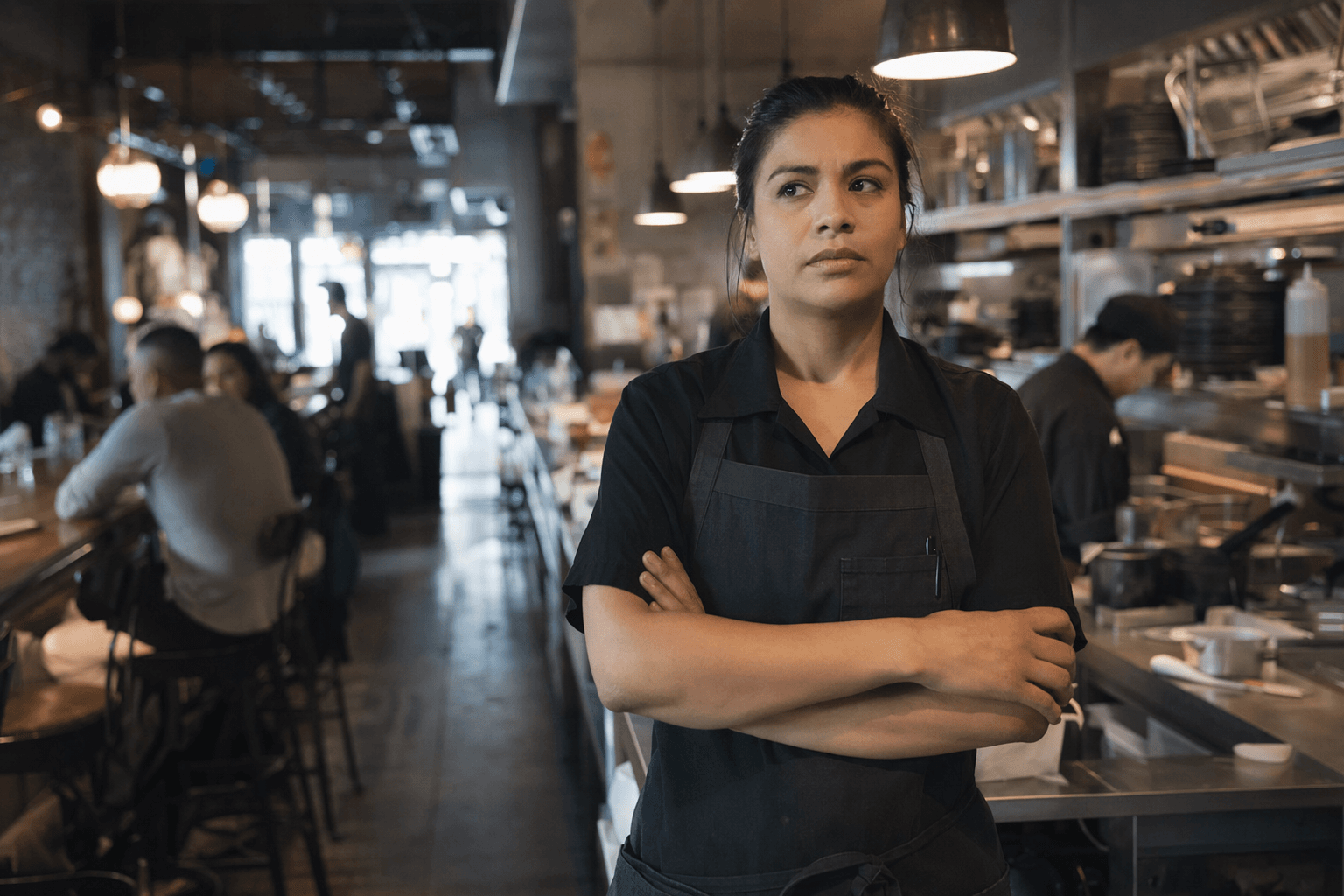
A server should not have to choose between protecting a paycheck and getting a guest to leave them alone. In restaurants, harassment can come from a supervisor, a coworker, a vendor, or a customer, and the pressure to keep service moving often pushes workers to absorb behavior they should never have to tolerate. The EEOC’s message is clear: prevention works best when it is built into how a restaurant runs, not treated like a once-a-year training slide.
That matters in an industry where the burden is heavy and well documented. The Shift Project says its work draws on a 2018 national survey of retail and food-service workers, and one of its findings was stark: 71% of women reported sexual harassment at some point in restaurant work, rising to 76% among tipped women workers. In a sector that employs millions and depends on hourly labor, those numbers are not an abstraction. They shape whether people stay, quit, or quietly endure abuse to make rent.
What the EEOC says a real prevention program looks like
The EEOC’s guidance on promising practices says effective anti-harassment programs usually rest on five core principles: committed and engaged leadership, consistent and demonstrated accountability, strong and comprehensive policies, trusted and accessible complaint procedures, and regular interactive training tailored to the audience and organization. That framework is especially useful in restaurants because the work is public, fast, and unpredictable.
The agency also makes an important legal point: harassment is a form of employment discrimination under Title VII, the ADEA, and the ADA. Anti-retaliation rules are meant to protect workers who raise complaints or participate in equal employment opportunity activity from materially adverse employer action. In practical terms, that means a restaurant cannot just say it has a policy. It has to show workers that complaints are safe to make, taken seriously, and acted on quickly.
What managers can change on the next shift
The most useful prevention steps are the ones a restaurant can actually do tomorrow. If the only response to harassment is a generic annual training, the operation has already failed the people on the floor. Managers need a response protocol that tells them who steps in, who documents the incident, and who follows up when a worker reports a problem.
- a clear reporting path that every worker can repeat without hesitation
- a manager assigned to respond to guest issues, so servers and bartenders are not left alone with escalating behavior
- a plan for moving a worker off a problem table or station without penalty
- a rule for when a guest is warned, monitored, or removed
- a non-retaliation practice that protects the worker after the complaint is made
A stronger shift-level system usually includes:
Those changes matter because restaurant harassment does not happen only in the office or at the host stand. Front-of-house staff often absorb guest behavior in public, while cooks and dish staff may face a different kind of verbal abuse behind the line. Good prevention has to account for both, especially in late-night service, intoxicated guest situations, and mixed-age workforces where younger workers may be less likely to push back on their own.
Complaint procedures only work if workers trust them
A complaint process is not effective if nobody believes it will be used fairly. Workers need to know exactly who receives the report, what happens next, and how long the response should take. If a server tells a manager about a hostile customer and then gets scheduled fewer hours, sent to worse shifts, or treated as difficult, the anti-retaliation promise means nothing in practice.
That is why trusted and accessible complaint procedures are one of the EEOC’s core principles. In a restaurant, accessibility means more than a hotline number buried in a handbook. It can mean multiple reporting options, plain-language instructions, and managers who know how to document an incident without questioning the worker’s judgment or making service the worker’s problem again.
Training has to match the room, not just the law
The EEOC says training should be regular, interactive, and tailored to the audience and organization. In restaurants, that means the examples have to sound like restaurant life. A useful session does not stop at legal definitions. It covers intoxicated guests, late-night shifts, tipping pressure, power differences between supervisors and hourly workers, and the reality that some employees are asked to smile through behavior they would never accept in another setting.
Training also needs to reach the people who shape the floor: shift leaders, assistant managers, general managers, and owners. In a high-turnover industry, the people who keep good staff are often the ones who treat harassment prevention as a management skill, not a compliance burden. That includes coaching managers on how to intervene early, how to back up a worker who says a guest crossed the line, and how to avoid the common mistake of telling staff to “handle it professionally” when the problem is the harassment itself.
Why the restaurant industry cannot treat this as a niche issue
The scale of the industry makes these practices more than internal housekeeping. The U.S. Bureau of Labor Statistics classifies food services and drinking places as NAICS 722 within accommodation and food services. The National Restaurant Association describes the restaurant and foodservice industry as the nation’s second-largest private-sector employer. The Shift Project says service-sector work includes nearly 20% of the U.S. workforce, and its research base includes survey data from more than 200,000 hourly workers since 2016.
That scale matters because harassment prevention affects a huge share of low-wage hourly employees, not just a few bad actors in a few bad dining rooms. The EEOC has also said in restaurant-harassment litigation that sexual harassment in the restaurant and hospitality industry is a common charge made to the agency. Recent EEOC settlements in restaurant cases have required training, policy revisions, reporting obligations, and workplace notices, which shows what enforcement can look like when prevention fails.
What workers should look for in a safer restaurant
For line cooks, servers, bartenders, hosts, and dish staff, the most important question is not whether the handbook exists. It is whether the restaurant has the habits to back it up. A real prevention system makes it easier to speak up, not harder, and it does not leave one person to absorb the entire cost of a guest’s behavior.
- managers intervene before a problem becomes a pattern
- workers know where to report concerns without chasing five different people
- complaints trigger documentation and follow-up, not gossip
- retaliation is treated as a separate violation
- training reflects what happens on a real shift, not a generic corporate script
The best-run restaurants make these expectations visible:
In a business built on speed, turnover, and constant contact with strangers, harassment prevention has to be operational. The restaurants that get this right do more than reduce legal risk. They make it possible for workers to finish the shift with their dignity intact, which is the baseline every dining room should meet.
This article was produced by Prism’s automated news system from verified source data, official records, and press releases, then run through automated quality and moderation checks before publishing. The system is built and supervised by the people who set the standards it runs under. Read our full AI policy.
Did this article answer your question?