Iona food service workers win AI protections in new contract
Food service workers at Iona won a contract that puts AI, seniority and scheduling in the same bargaining basket. The deal also brought the unit its biggest wage gains, plus better benefits and uniform money.
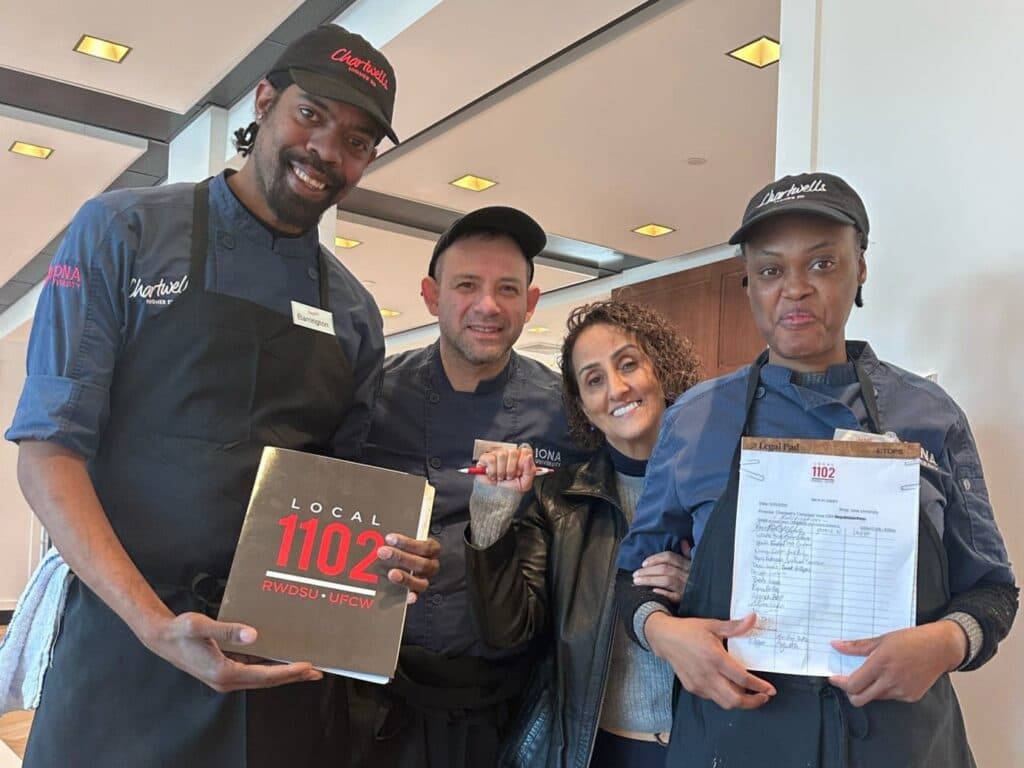
At Iona University’s LaPenta Student Union, the promise of faster grab-and-go service came with a labor warning: ordering kiosks and Amazon “Just Walk Out” technology could just as easily change who gets hours, who gets reassigned and who keeps stable work. Food service workers represented by RWDSU/UFCW Local 1102 decided to bargain over that reality before automation hardened into the new normal.
The result was a three-year contract ratified by workers employed by Chartwells Compass Group at the New Rochelle campus. RWDSU/UFCW said the deal delivered the highest wage increases in the unit’s history, fully maintained health and benefit coverage and increased the uniform allowance. More important for day-to-day operations, the agreement added AI protections aimed at keeping technology from becoming a management shortcut around seniority.
That matters on a restaurant floor where the effects of automation often show up less as a robot replacing a job than as a manager shaving a shift, shifting a station or changing the flow of work around a kiosk. The new language codifies seniority protections and is designed to stop arbitrary reassignments that could ripple across the campus operation. In practical terms, that could make it harder to sideline experienced staff when ordering moves to a screen, to rework schedules without warning, or to use new systems to quietly narrow the number of workers needed on a busy meal period.
The union said its push grew out of the opening of the renovated dining hall and student union at LaPenta on August 20, 2025. Iona said the 20,000-square-foot project expanded ordering kiosks and added Amazon “Just Walk Out” grab-and-go technology, making the staffing implications of the upgrade impossible to ignore. Jack Caffey, president of RWDSU/UFCW Local 1102, said, “AI has the potential to impact all of our jobs,” and said the local wanted to get ahead of the changes so members would not be hurt.
For restaurant and food-service workers, the contract is a useful marker because it treats AI as a workplace issue, not just a technology upgrade or a budget line. Collective bargaining can reach beyond pay and benefits to address job elimination, surveillance and algorithmic management, the kinds of controls that can follow workers from the host stand to the prep line to the dining hall register. Partnership on AI said in April 2026 that unions across sectors were already winning AI protections through bargaining, and the Center for American Progress has argued that unions can use contracts to limit job elimination, surveillance and algorithmic decision-making.
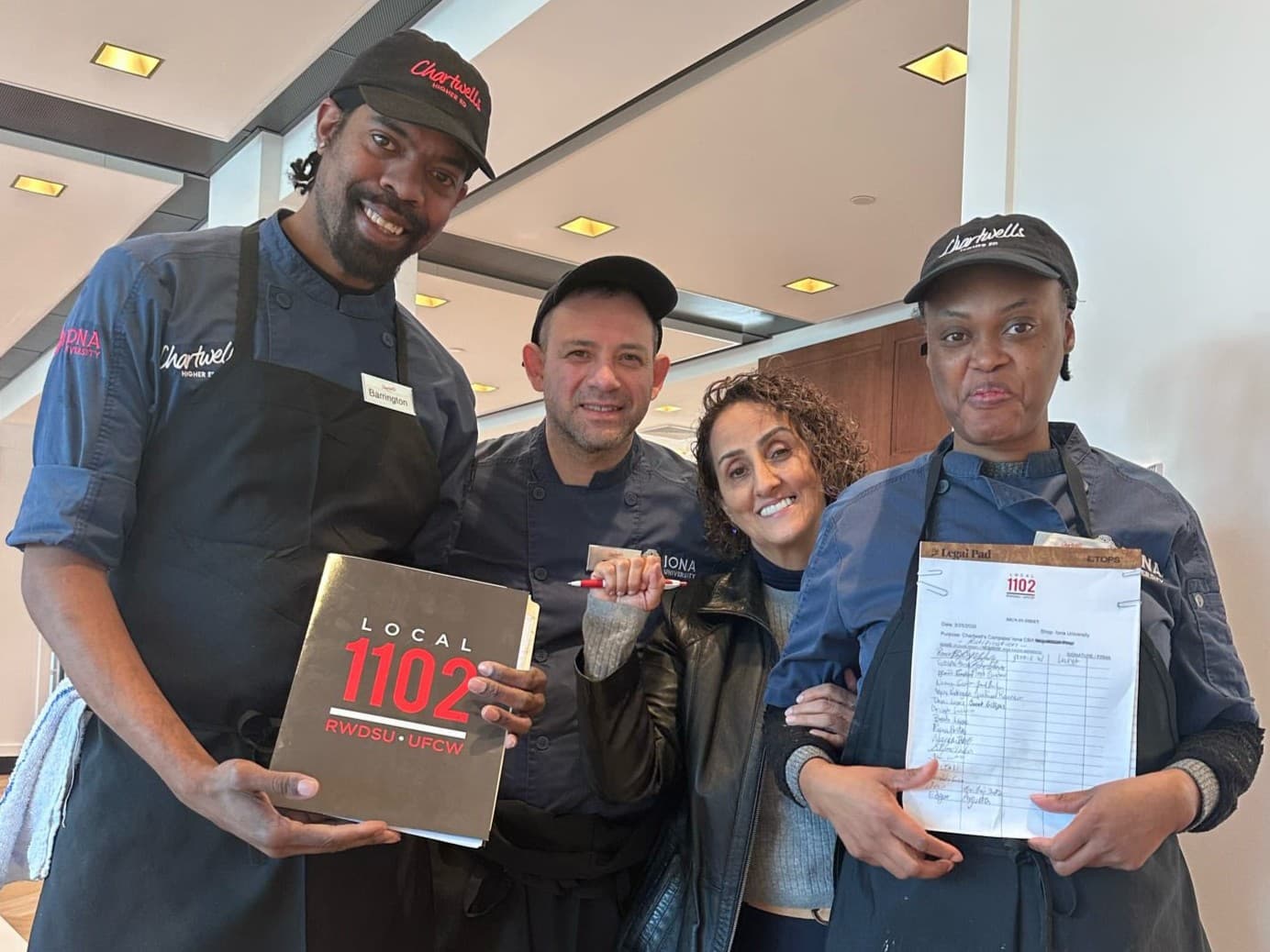
Local 1102, which says it was chartered in its present form in the late 1930s, brought that long labor history into a fight that is newly familiar in food service. The Iona deal suggests that the next round of restaurant and campus dining bargaining may not just be about wages and staffing ratios. It may also be about who controls the screens, the schedules and the headcount.
This article was produced by Prism’s automated news system from verified source data, official records, and press releases, then run through automated quality and moderation checks before publishing. The system is built and supervised by the people who set the standards it runs under. Read our full AI policy.
Know something we missed? Have a correction or additional information?
Submit a Tip