Krispy Kreme sales rise as turnaround shifts work to franchisees
Sales are up, but Krispy Kreme’s turnaround is really a work shift, moving delivery, logistics, and growth risk from corporate hands to franchisees.
A sales uptick that hides a bigger job redesign
Krispy Kreme’s latest quarter looks modest on the surface, with systemwide sales up 0.7% to $485.3 million. The bigger change for restaurant workers is not the revenue line, but who now carries the labor, the timing, and the risk behind it.
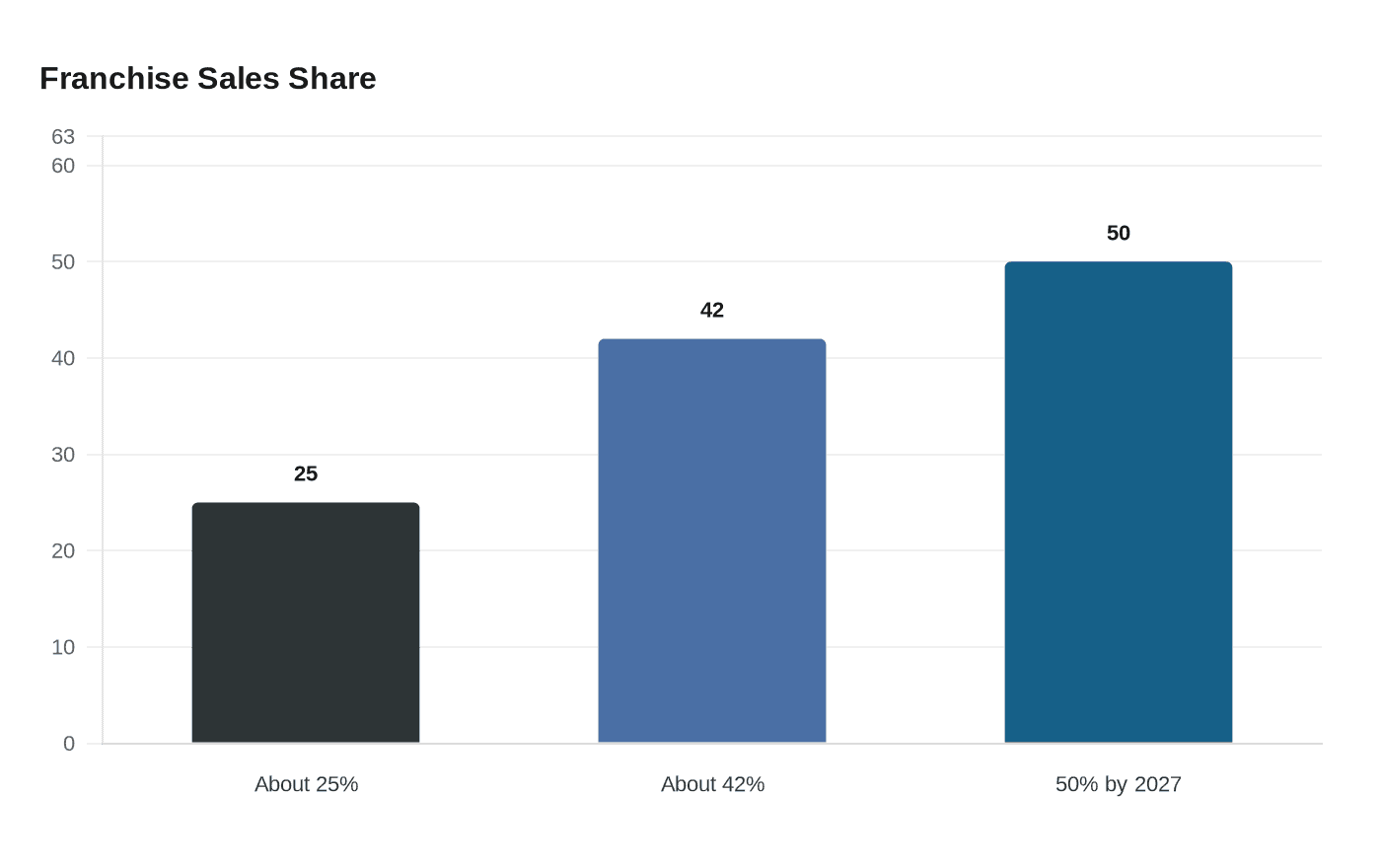
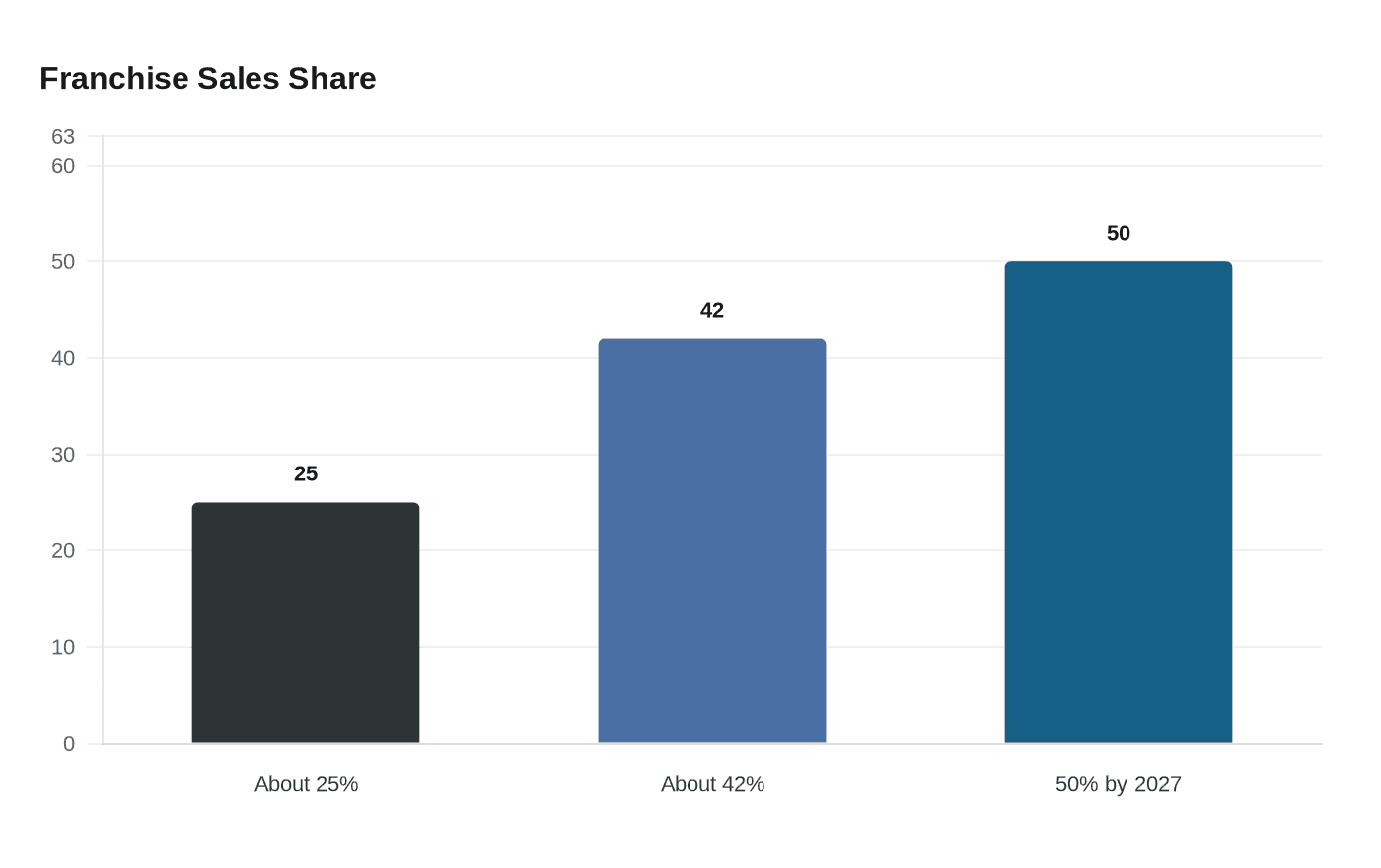
The company is leaning harder into refranchising, and that means more of the day-to-day operating burden is being pushed outward. Franchise-generated sales are headed from about 25% of systemwide sales toward 50% by 2027, and after March transactions the expected share has already climbed to about 42%. For people on the floor, that kind of shift usually means one thing: less centralized control, more local variation, and a sharper focus on whether each store can hit numbers without extra corporate support.
Where the work is moving
Krispy Kreme expects more than 100 openings in 2026, and nearly all of them are supposed to come through franchisees. That matters because each new unit is not just a new point of sale, it is a new staffing puzzle, a new delivery flow, and a new set of hands deciding how production gets scheduled and how product gets out the door.
The company says its current network utilization is about 25%, which tells the same story from another angle. Management believes the system has a lot of untapped capacity, so instead of building a more corporate-heavy footprint, it is trying to squeeze more output from existing assets and franchise partners. In restaurant terms, that often means the same kitchen and the same people are expected to carry more volume, more packaging, and more handoff precision without a proportional increase in corporate spending.
Delivery is no longer a side task
One of the most important changes came in April 2026, when Krispy Kreme said it completed outsourcing of its U.S. logistics. The company framed that move as a way to improve cost predictability and reduce operational risk while letting teams focus on making fresh doughnuts. For workers, though, outsourcing logistics changes the rhythm of the job in a very immediate way.
When delivery is handled outside the core company structure, dispatching, route planning, packaging standards, and handoff accuracy become more fragile. Store teams have to be ready for orders that arrive in waves, not in neat dining-room traffic patterns. That puts more pressure on line employees and shift leaders to stage product correctly, keep timing tight, and recover quickly when demand spikes or a driver is late.
It also changes labor allocation inside the store. If off-premise volume grows faster than in-store traffic, the people who used to focus on counters and customer service may find themselves pulled into packing, labeling, staging, and quality checks instead. That can mean less direct customer interaction for front-of-house staff and more production pressure for the back of house.
A network built for more off-premise volume
The company’s expansion pattern shows how quickly that model is spreading. In the first quarter of 2026, Krispy Kreme added 276 U.S. doors with strategic partners, following 200 doors added in the fourth quarter of 2025. The chain now says it serves more than 7,400 fresh doors nationwide.
Those numbers matter because they show how the brand is growing through distribution points as much as through traditional store openings. Every new door creates another place where employees have to coordinate freshness, transport, and timing, which is far more labor-sensitive than a simple sales increase suggests. For workers, this kind of growth can create opportunity, but it can also fragment the job, since one market may rely on one labor model while another leans on a different franchise partner with different staffing rules.
The March deals shifted both ownership and risk
The turnaround accelerated in March 2026 with two transactions that reshaped Krispy Kreme’s footprint. On March 23, the company completed a deal that increased WKS Restaurant Group’s ownership stake in the Western U.S. joint venture from 45% to 80%. On March 24, Krispy Kreme said Unison Capital acquired its Japan operations.
The company said the net cash proceeds from those transactions would be used for debt paydown. That is a classic capital-light move: bring in franchise and partner investment, reduce corporate exposure, and use the cash to clean up the balance sheet. For restaurant employees, these deals often mean the people closest to the work have more authority over staffing and local execution, but they also absorb more of the pressure when sales slow or labor costs rise.
Why the McDonald’s setback still matters
This turnaround did not emerge in a vacuum. In 2024, Krispy Kreme announced a phased national rollout with McDonald’s that was expected to reach participating restaurants by the end of 2026. The company later paused further expansion because of low demand and profitability concerns, and investor class action lawsuits followed.
That episode is the warning label on the current strategy. The McDonald’s partnership showed how quickly a distribution play can become a capital and labor problem if the economics are not right. When a product is pushed into a massive national channel, the work does not just expand, it changes shape. Production schedules tighten, delivery expectations rise, and the strain shows up in stores long before it shows up in a revenue chart.
What restaurant workers should watch next
Krispy Kreme’s sales gain shows that the turnaround is working in one narrow sense, but the job redesign is still the real story. More franchise ownership, outsourced logistics, and strategic partner growth can make the brand lighter on corporate capital, yet heavier on the people who have to execute every order correctly.
The main workplace questions now are practical ones:
- Who owns the delivery flow when volume jumps?
- Which stores get extra labor, and which ones are expected to do more with the same headcount?
- How much local flexibility do franchisees have to change schedules, staging, and packaging?
- When the model runs hot, who absorbs the operational risk if product is late, short, or misrouted?
For restaurant workers, that is the part of the turnaround that matters most. Sales can rise while the workload gets more fragmented, the pace gets tighter, and the people closest to the product are left managing the hardest parts of the business.
This article was produced by Prism’s automated news system from verified source data, official records, and press releases, then run through automated quality and moderation checks before publishing. The system is built and supervised by the people who set the standards it runs under. Read our full AI policy.
Did this article answer your question?