Mobile Training Helps Restaurants Cut Costs and Keep Workers
Mobile training is turning onboarding into a retention tool, cutting ramp-up time and retraining while helping restaurants hold onto costly hourly staff.
The first 30 days decide whether a new hire stays
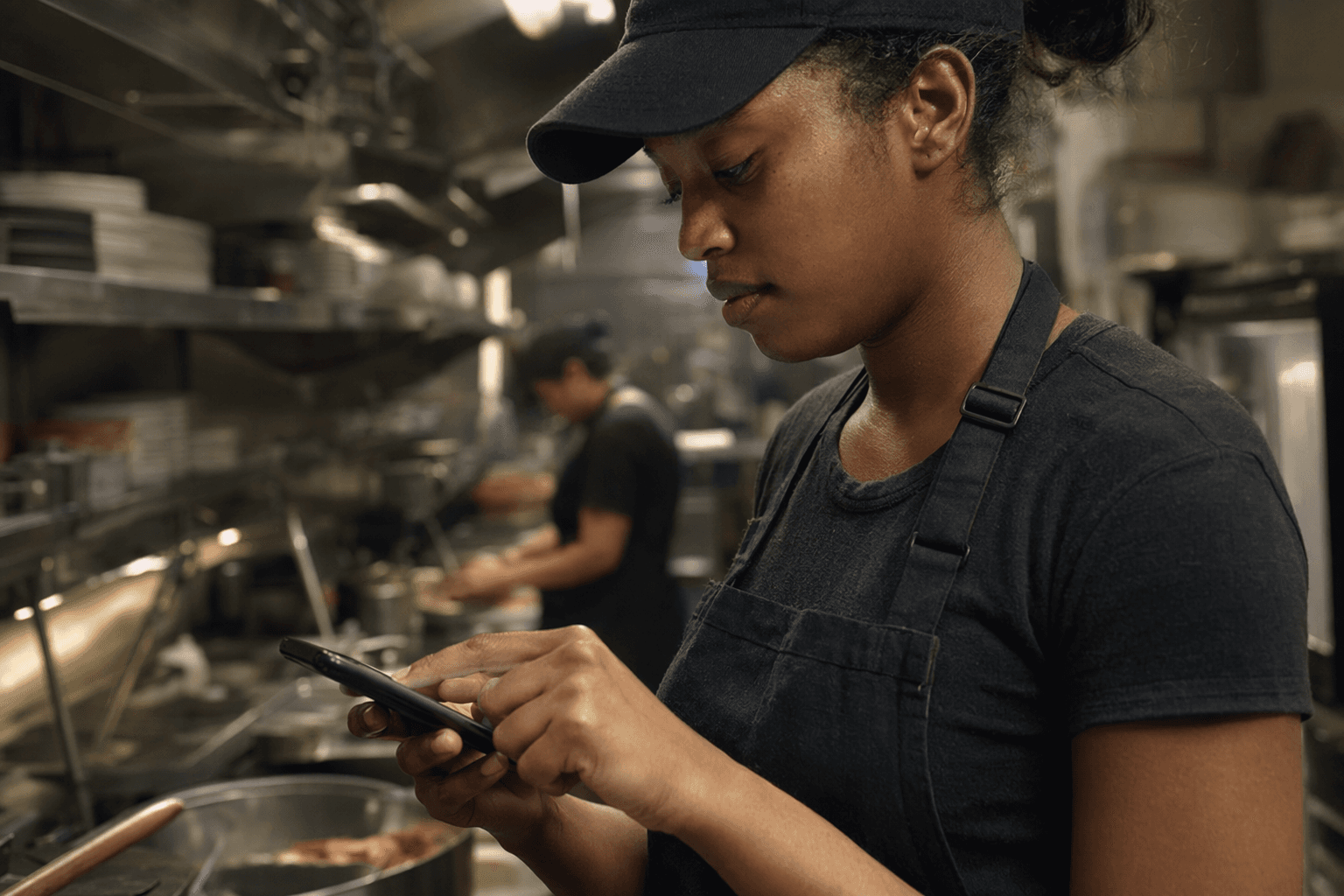
A new cook on a Friday night does not need another binder full of policies they will never reopen. They need something they can pull up on a phone between tickets, a quick refresher on prep standards before the rush hits, and a way to learn the job without waiting for a manager who is already juggling the line, the floor, and the next no-call, no-show.
That is the business case behind mobile training. In restaurants, the first month is where turnover gets expensive fast. If onboarding is clumsy, workers do not just move slowly, they get stressed, make more mistakes, and leave before they ever become dependable. If training is accessible on a phone, the job becomes easier to learn in the middle of real service, not just during a one-time orientation session that disappears into the back office.
Why the phone matters more than the binder
Restaurants have spent years talking about labor shortages as if the answer were only more recruiting. The better operators are treating training as part of the retention problem. A strong mobile-based program can shorten training time, lower onboarding costs, and make it easier to monitor performance because the work happens in short, repeatable bursts instead of one overloaded classroom-style session.
That matters on the floor. A host can check the floor plan before the lobby swells. A bartender can review a product change without stopping a manager mid-shift. A line cook can revisit a prep standard before service, then again after a rush, instead of trying to remember everything from a chaotic first day. For workers, that means less confusion and a clearer path from day-one tasks to real competence. For managers, it means fewer interruptions spent retraining the same basics over and over.
The larger shift is that technology is increasingly part of how restaurants respond to labor pressure, but the best systems use it to support people rather than replace them. That distinction matters to workers who hear “automation” and assume fewer jobs. In practice, digital training can make an existing team more stable by helping people get good at the work faster.
The cost of turnover is not abstract
Restaurants do not lose money on turnover in some distant, theoretical way. They lose it in manager hours, slow service, missed sales, and repeated training. The National Restaurant Association said the U.S. restaurant industry employed 15.7 million people in 2024 and was forecast to top $1.1 trillion in sales that year. In an industry that large, small operational leaks add up fast.
Black Box Intelligence put sharper numbers on the problem. Limited-service hourly turnover fell to 135% in the third quarter of 2024, down from a peak of 173% in the first quarter of 2022, but that is still a brutal churn rate. Management turnover in limited service was 55%, above the 2019 level of 45%. Black Box estimated hard replacement costs at $2,305 for hourly staff, $10,518 for non-general managers, and $16,770 for general managers.
Deloitte, citing Cornell University School of Hospitality Management research, estimated the average total cost of frontline turnover at $5,864 per employee. On a hypothetical 50-person limited-service restaurant with 135% turnover, Deloitte said that could mean about 67 departures and roughly $393,000 in annual turnover costs. That is not a human resources footnote. That is a margin problem.
Training is now a line item, not an afterthought
The evidence from operators points in the same direction: restaurants are spending more because they have to. CHART, the Council of Hotel and Restaurant Trainers, and Opus Training surveyed more than 100 hospitality learning and development leaders, mostly in multi-unit restaurants, for their 2024 report. Sixty-three percent said they had increased training investment in recent years.
That is not just because companies like spending money on software. Nearly one in five restaurant jobs are filled by first-time workers, which means many new hires need help with basics that seasoned employees may take for granted: where to stand, how to read the board, when to jump in, how to communicate during a rush, and how to handle the culture of tipping, pooling, and front-of-house versus back-of-house expectations. The CHART and Opus report also found that new-hire training budgets top $1,000 across roles, with average spend cited at about $1,242 for front-of-house roles and $1,229 for back-of-house roles.
That kind of spending changes the conversation. Training is no longer just a nice-to-have culture piece. It is a measurable operational investment that affects whether a restaurant keeps a server long enough to build regulars, whether a cook learns prep standards before they burn through product, and whether a manager spends the week coaching or constantly backfilling.

What structured onboarding actually delivers
The National Restaurant Association’s 2025 Workforce Technology report, based on interviews with leaders from 16 restaurant companies, said structured onboarding, employee engagement, and leadership training are key retention strategies. It also tied workplace stability to clear job expectations, mentorship, and career growth.
That is the part restaurants sometimes miss when they treat training as a compliance checklist. The point is not only to teach a new hire how to open the POS or portion fries correctly. It is to give them a sense that there is a path forward. Workers stay longer when they know what good looks like, who will coach them, and how they can move from tentative to trusted.
Mobile tools help because they let training happen in the flow of work. Instead of asking a manager to pause service for a full lesson, restaurants can deliver short learning bursts that are available anytime. That makes the first 30 days less dependent on one perfect orientation shift and more dependent on repetition, which is how most people actually learn in a restaurant.
The hiring side is moving mobile too
The same logic applies before a worker even clocks in. The National Restaurant Association said about 86% of restaurant candidates apply via mobile devices, which makes mobile-friendly hiring and onboarding less of a luxury and more of a practical fit. If candidates already use their phones to apply, they are more likely to use them to complete forms, review training, and keep learning after they are hired.
Chipotle Mexican Grill offers a concrete example of how that can change manager workloads. Its Ava Cado hiring chatbot reportedly cut manager time spent on hiring from 15 to 20 hours a week to about seven or eight. Chipotle’s Burrito Buddy program then pairs managers with new employees during training, which is the other half of the equation. The tech removes some administrative drag, but the human coaching still matters when a worker is learning pace, standards, and team rhythm.
That blended model is the direction the industry seems to be headed. Nation’s Restaurant News reported that about 37% of operators plan to adopt automated labor management, recruitment, and scheduling systems, while 28% expect to invest in AI-driven solutions. The important part is not whether the software sounds futuristic. It is whether the tools free managers to coach and keep workers instead of burying them in paperwork and repetitive retraining.
What operators and workers should watch for
The strongest programs share a few traits:
- They break training into short mobile modules that can be revisited during real shifts.
- They make expectations visible, so a new hire knows what “good” looks like.
- They pair technology with a human mentor, not a replacement for one.
- They treat onboarding as part of retention, not just hiring.
For employees, that can mean a less punishing first month and a better chance of becoming confident on the line, at the host stand, or behind the bar. For managers, it means fewer walkouts, faster ramp-up, and less time spent reteaching basics to the next wave of new faces.
In a business where labor costs are high and turnover is still punishing, the restaurants that win are the ones that turn training into a daily tool, not a forgotten binder.
This article was produced by Prism’s automated news system from verified source data, official records, and press releases, then run through automated quality and moderation checks before publishing. The system is built and supervised by the people who set the standards it runs under. Read our full AI policy.
Did this article answer your question?