OSHA heat guidance offers restaurant workers a recipe for staying safe
Hot kitchens can turn a normal dinner rush into a heat emergency fast. OSHA and NIOSH say the fix is simple in theory and hard in service: water, recovery breaks, training, and a plan that kicks in before a worker collapses.
The kitchen can become a heat trap fast
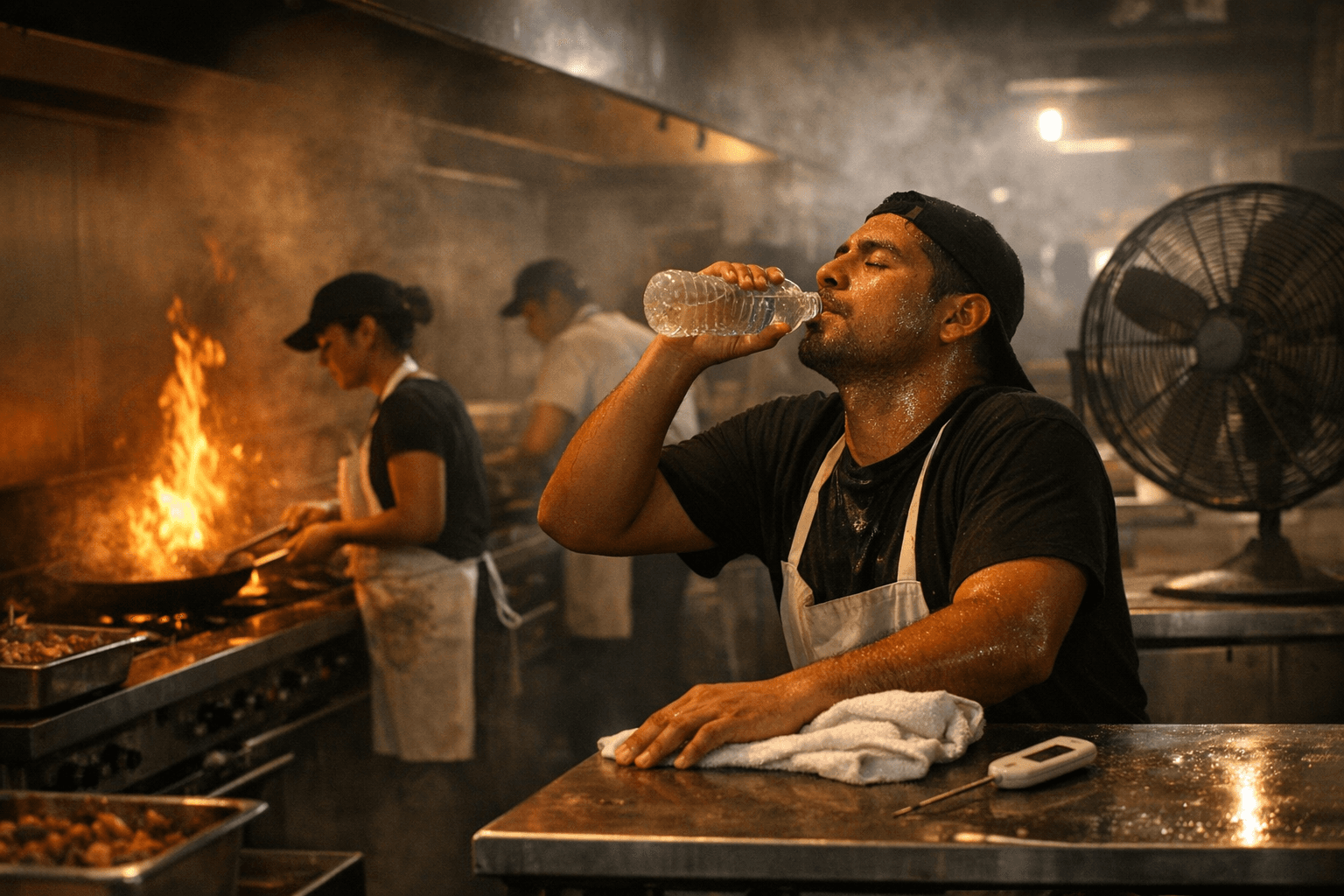
A line cook standing over a flat-top, a dishwasher in a humid pit, and a prep cook running pans through a cramped back line are not thinking about occupational heat stress until the dizziness starts. That is the problem OSHA’s heat guidance is trying to solve: heat illness is not just an outdoor construction issue, and restaurant kitchens can create the same kind of danger indoors when the service rush is hot, fast, and relentless.
The Centers for Disease Control and Prevention’s National Institute for Occupational Safety and Health says outdoor and indoor workers exposed to extreme heat or hot environments may experience occupational heat stress. In restaurants, that means the risk can build during peak service, in prep areas with poor air movement, and anywhere steam, grease, and speed make it hard to step away. Heat safety is not a summer-only issue either. NIOSH says prevention may be needed year-round, depending on the job and the environment.
What safe service looks like before anyone gets sick
The simplest prevention step is also the one workers skip most often when tickets are flying: drink water before, during, and after the shift. OSHA says workers should drink throughout the workday even when they do not feel thirsty, and use electrolyte drinks on longer jobs when sweating is heavy. In a restaurant, that means water cannot be treated like an afterthought stuffed near the mop sink. It has to be easy to reach on the line, in the dish area, and in prep.
OSHA also recommends cool-area or shade breaks that let the body recover, clothing that fits the heat when possible, and frequent checks on coworkers because people tolerate heat differently. That last point matters in restaurants, where a veteran line cook may grind through conditions that knock out a new hire in half the time. NIOSH adds that employers should use engineering and administrative controls to reduce heat stress, including increasing air velocity, reducing humidity and steam leaks, limiting time in the heat, and increasing recovery time in a cool area.
- Keep water within reach of the line, not across the kitchen.
- Build short recovery breaks into the schedule, especially during long rushes.
- Use fans, ventilation, and hood maintenance to move air and reduce trapped heat.
- Reduce steam leaks and humidity in dish and prep areas.
- Rotate tasks so one worker is not trapped at the hottest station all shift.
For restaurants, that translates into practical decisions:
Why new hires need extra protection
Restaurants lose time and money when new workers flame out in the heat, and NIOSH’s guidance makes clear why they are especially vulnerable. New and returning workers should be acclimatized over a 7- to 14-day period, with exposure to hot conditions increased gradually. In a kitchen, that means the first week on the line should not be treated like a full-speed test of endurance.
That matters in a business already fighting staffing shortages, burnout, and high turnover. A new dishwasher or line cook who is pushed straight into a brutal service can get sick, slow down the whole kitchen, and create avoidable risk for everyone around them. If the body has not had time to adapt, a hot shift can turn into a hospital visit long before anyone calls it a safety issue.
Know the warning signs before a kitchen emergency
Heat illness does not always begin with collapse. OSHA says it can show up as headache, nausea, weakness, dizziness, heavy sweating, hot or dry skin, thirst, cramps, or decreased urine output. In a restaurant, those signs can look like a cook who starts missing calls, a server who seems shaky on the floor, or a dishwasher who suddenly cannot keep pace and looks confused.
NIOSH identifies several heat-related illnesses, including heat stroke, heat exhaustion, rhabdomyolysis, heat syncope, heat cramps, and heat rash. The bigger point for managers is that heat stress can lead to more than discomfort. NIOSH says it can contribute to slips, falls, burns, and other injuries, which is exactly why a dizzy cook near a fryer or a tired server carrying a hot plate is not just having a bad minute.
When it becomes an emergency
OSHA’s emergency signs are the ones every restaurant shift lead should memorize: abnormal thinking, slurred speech, seizures, or loss of consciousness. If any of that happens, OSHA says to call 911, cool the worker with water or ice, move them to a cooler area, and stay with them until help arrives.
That response is especially important in kitchens, where people often try to tough it out until the rush ends. Heat illness does not wait for the end of service, and no plate is worth losing a worker to a preventable emergency. If someone is confused, slurring words, or passing out, that is not a break-time conversation. It is a medical emergency.
Why this is an operational issue, not just a safety memo
NIOSH’s history shows why heat safety has moved from a niche concern to a core workplace issue. Its 2016 Criteria for a Recommended Standard says occupational exposure to heat can result in injuries, disease, reduced productivity, and death. The agency also notes that its heat standard had last been updated in 1986 before that 2016 revision, and that concern about heat exposure grew in part during the Deepwater Horizon oil spill response in 2010.
For restaurants, the productivity piece matters as much as the safety piece. A overheated crew moves slower, makes more mistakes, burns more food, drops more plates, and loses more time to recovery. Heat stress can drag down ticket times and increase injury risk at the same time, which is why a smart operator treats hydration, ventilation, acclimatization, and supervisor training as part of the labor plan, not optional extras.
The clearest lesson in OSHA’s guidance is also the most practical one for food service: the kitchen does not have to feel unbearable before it becomes dangerous. If a team can spot the symptoms early, build in recovery time, and act fast when someone starts to fail, heat stops being an invisible threat and becomes a managed part of the shift.
This article was produced by Prism’s automated news system from verified source data, official records, and press releases, then run through automated quality and moderation checks before publishing. The system is built and supervised by the people who set the standards it runs under. Read our full AI policy.
Did this article answer your question?