Restaurant staffing seen as strategic investment, report says technology boosts ROI
Restaurants are treating staffing as a profit lever, not just a headcount problem. The report says onboarding, managers and technology pay off after the hire, when they cut chaos and keep people longer.
Staffing as a balance-sheet decision
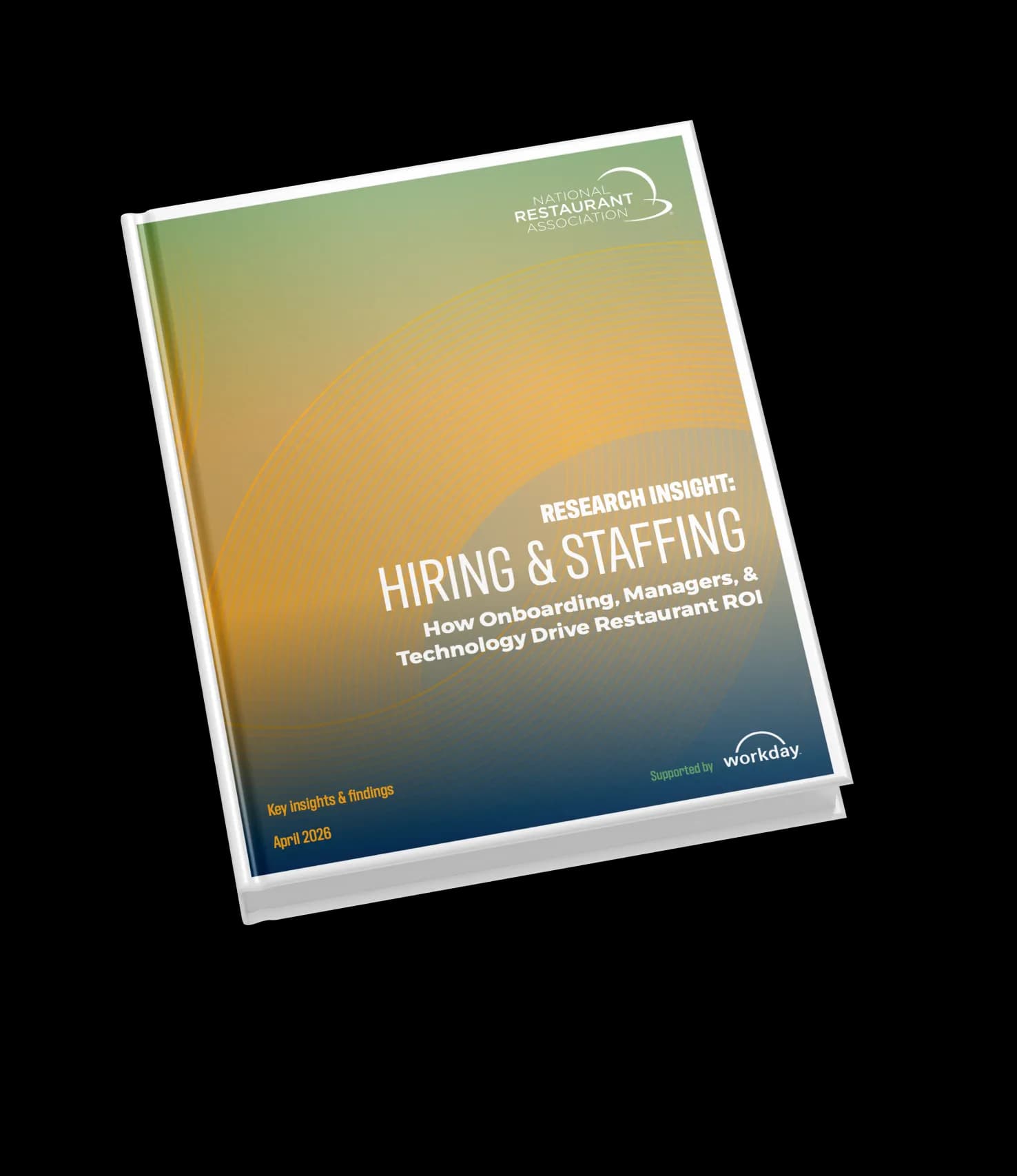
Being down one employee can cost a restaurant hundreds of dollars a shift, and that is the blunt reason the National Restaurant Association is pushing staffing as a strategic investment rather than a routine payroll line. The association’s April 2026 report, *Research Insight: Hiring & Staffing: How Onboarding, Managers, & Technology Drive Restaurant ROI*, argues that staffing decisions shape both financial performance and employee experience, which is a reminder that turnover is not just annoying, it is expensive.
The report is the second in a series and draws on operator and HR perspectives from Biaggi’s Ristorante Italiano and Maxby Hospitality, Captain D’s, Chipotle, Golden Corral Corporation, Lehigh Valley Restaurant Brands, Red Robin, The Saxton Group, Southern Rock Restaurants, Slatebridge Restaurants Group, JRI Hospitality and Taco John’s. Sponsored by Workday, it lands at a moment when restaurants are still hiring, still short-staffed in key roles, and still trying to get more out of every manager hour.
Why the payoff comes after the hire
The most important takeaway is not that restaurants need more bodies. It is that hiring only pays if employees stay long enough to become net positive. The report says technology delivers its greatest efficiency and value after hire, by improving onboarding, scheduling, training and manager effectiveness. That is a major shift from the old idea that software or hiring systems are mainly about filling requisitions faster.
For line cooks, servers, bartenders and hosts, that shows up in very practical ways. Better onboarding means fewer mistakes on the line, fewer missed steps during service, and less time spent asking where things go or who owns what section. Better scheduling means fewer brutal clopens, less last-minute scrambling, and a lower chance that a full dining room turns into a broken service because two people called out and nobody built a realistic floor plan.
The report’s message is especially relevant in tipped restaurants, where understaffing distorts the whole shift. Servers and bartenders can lose sales when they are stretched too thin to greet tables quickly, while back-of-house teams absorb the stress in the form of rushed prep, higher ticket times and more re-fires. In a business built on pace, a weak hiring process can hit guest experience, ticket flow and take-home pay at the same time.
Managers are the real bottleneck
The report makes a point many operators still resist: technology helps most when it frees managers to lead. Too many restaurant managers still spend their day buried in manual admin, patching schedules, chasing paperwork and fixing preventable communication errors instead of coaching staff, walking the floor and training new hires. The new insight is not that software replaces management, but that it gives managers more time to do the work that actually reduces turnover.
That matters because the quality of a restaurant job often comes down to whether the manager on duty can train properly and staff realistically. A strong manager can turn a busy shift into a stable one by setting expectations, spotting weak points early and making sure a new hire is not thrown into the weeds on day two. A weak manager can make even a well-paid job feel chaotic, and that is usually where good people start looking elsewhere.
The report also points to a basic operational truth: restaurants do not stabilize just by posting jobs. They stabilize when the people already on the schedule get enough support to stay, learn and improve. For operators, that means onboarding, scheduling discipline and manager development are not soft extras. They are the operating system.
The labor market is calmer, but the pressure is still there
The association says the labor market has stabilized since the Great Resignation, and improved applicant flow may now give operators more room to prioritize quality over speed. That sounds like a relief, but the report is clear that staffing remains a persistent challenge because of turnover and competition for skilled roles. In other words, the flood of desperate hiring has eased, but the business still depends on finding and keeping people who can actually do the work.
The turnover data tells the same story. Restaurant and lodging quits averaged 620,000 in 2025, down from 787,000 in 2022, when labor markets were historically tight. That drop suggests less panic hiring, but not a solved labor problem. It simply means operators can be choosier now, and the best-run restaurants will use that breathing room to raise standards, not lower them.
The broader industry outlook explains why so much attention is still on labor. The National Restaurant Association projects $1.55 trillion in restaurant and foodservice sales in 2026 and more than 100,000 added jobs. It also says 15.8 million restaurant and foodservice jobs are forecast for the year. That scale makes labor one of the industry’s biggest operational costs and one of its biggest growth constraints.
The money pressure behind every staffing choice
One reason staffing has become a management issue is that wages already take a big bite out of sales. In the association’s 2025 Restaurant Operations Data Abstract, salaries and wages including benefits represented a median 36.5% of sales in 2024 among fullservice restaurants, based on data from more than 900 operators. When labor is already that large a share of revenue, every scheduling mistake, training gap and turnover cycle hurts more.
That is where the report’s ROI framing becomes useful. Understaffing is not just a service problem. It is a drag on growth, service quality and sales. If a restaurant is routinely running short, it is paying for the same mistakes over and over: more overtime, more missed upsells, more burnt-out staff, more churn, and more manager time spent plugging holes instead of building a team.
For workers, the lesson is straightforward. The restaurants most likely to feel stable are the ones that treat training and supervision as investments, not chores. The place that can teach a new line cook properly, build a fair schedule and keep managers on the floor is also the place more likely to control burnout, protect guest experience and hold onto people long enough to matter.
What this means on the floor
For restaurant teams, the report points to a few practical changes that separate a chaotic operation from a durable one:
- Onboarding should be treated as part of the job, not paperwork before the job.
- Scheduling should reflect actual volume, not wishful thinking.
- Managers need time to coach, because coaching is what reduces repeat mistakes.
- Technology should cut admin work first, so leaders can spend more time on people.
- Retention should be measured as closely as hiring, because every replacement has a cost.
That is the real management-accountability story here. Restaurants are still hiring, but the winners are no longer the ones that fill seats fastest. They are the ones that use better systems, better managers and better onboarding to turn a new hire into a stable worker before the next shift blows up.
This article was produced by Prism’s automated news system from verified source data, official records, and press releases, then run through automated quality and moderation checks before publishing. The system is built and supervised by the people who set the standards it runs under. Read our full AI policy.
Did this article answer your question?