Restaurant Workers Should Track Shifts to Protect Pay Records
If payroll is wrong, your own notes may be the only proof that matters. In restaurants, tracking hours, breaks and tips can decide whether you get paid what you earned.

A manager can shave ten minutes off a punch, call it a harmless fix, and leave a server trying to prove what really happened three weeks later. In restaurants, where shifts change fast and work spills past the clock, your own notes on hours, breaks and tips can be the difference between a clean paycheck and a fight.
Why your own record matters
The U.S. Department of Labor says employers covered by the Fair Labor Standards Act must keep records of all wages paid and all hours worked for covered, nonexempt workers. That is the employer’s legal duty, but it is not the whole story. The Department also says workers should keep their own record of the employer’s name, address, phone number and hours worked.
That advice sounds simple until you are dealing with a double cut short by a dinner rush, a pre-shift side-work list that runs long, or a closing shift that ends after the last table finally pays out. Restaurant work is full of interruptions, and that is exactly why a separate record can matter later. If payroll says one thing and your memory says another, a notebook, app or photo log can make the difference between a disputed guess and a documented shift.
What to write down after every shift
The most useful records are not fancy. The DOL’s guidance focuses on accuracy, not software, and that means a plain record can be enough if it is consistent.
At minimum, write down:
- The date and your scheduled shift
- The time you actually started and stopped work
- Any clock-in or clock-out problems
- Meal breaks, skipped breaks and interrupted breaks
- Side work, prep, closing tasks and cleanup done before or after the clock
- Manager instructions that changed your hours
- Tip declarations, tip-outs and tip pool amounts
- Any time you were told to stay on the premises but off the clock
That last point matters because the DOL says hours worked includes all time an employee must be on duty or on the employer’s premises, or at any other prescribed place of work. In restaurant life, that can include waiting around for a delivery issue to clear, standing by for a last-minute table turn, or finishing prep before the doors open. If that time is required, it is not disposable just because the timekeeping system missed it.
Where disputes usually start
Pay fights in restaurants usually do not begin with a giant fraud scheme. They start with small changes that add up: a missed punch, a “fixed” clock-out time, a cut shift that was never fully explained, or a break that was technically scheduled but never actually taken. It is easy for a manager to say the edit was harmless or the missing minutes were an accident. It is much harder to challenge that story if you have no record of your own.
This is especially true in a business defined by constant motion. The DOL’s restaurant guidance says the FLSA applies to restaurant and fast-food establishments, meaning businesses primarily engaged in selling and serving prepared food and beverages for consumption on or off the premises. That covers the dining room, the drive-thru, the takeout counter, and all the messy places in between where time can disappear.
For line cooks, dish staff, hosts, bartenders and servers, the practical lesson is to treat your pay records the way you treat your cash drawer count or tip-out log: something worth checking every shift. A small mismatch in one week can become a larger problem when schedules shift, staffing is tight, or turnover means nobody remembers who changed what.
Tips, tip credit and the 30-dollar test
Tip records deserve special attention because restaurant pay is often built on a mix of direct wages and customer gratuities. The DOL says a tipped employee customarily and regularly receives more than $30 a month in tips. If an employer is claiming a tip credit, the employer must ensure the employee receives enough tips plus direct cash wages in each workweek to meet minimum wage and overtime requirements.
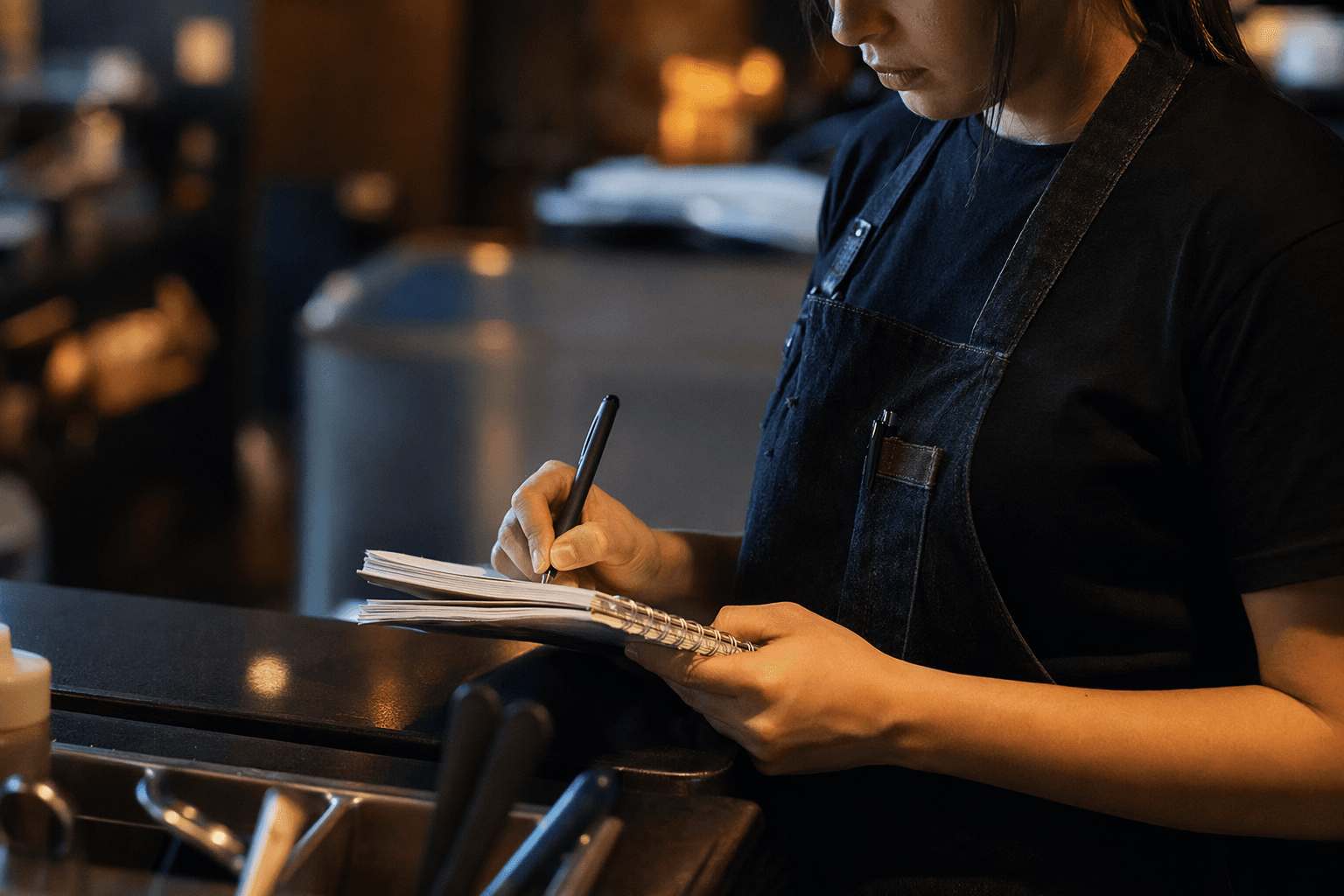
That means the math has to work every week, not just over a vague stretch of busy nights. If your tip-outs, pooled tips or declared tips do not line up with the hours you worked, that gap can become central in a wage dispute. Keep your own note of what you earned, what you handed over, and what the register or point-of-sale system said you declared.
The DOL also says managers and supervisors may not keep employees’ tips. That rule matters in places where supervisory staff hover close to the tip pool, touch the cash, or try to route gratuities through a house system. If a person is acting as management, those tips are not theirs to take.
Overtime and off-the-clock work are part of the same problem
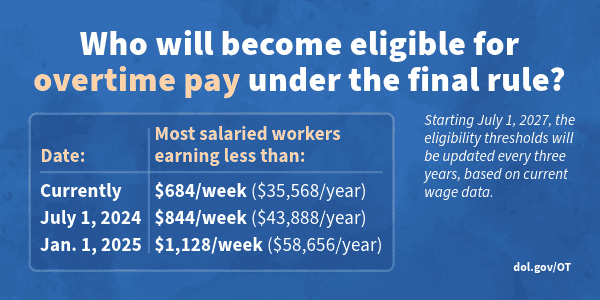
Restaurant payroll problems often show up fastest in overtime. The DOL says overtime generally has to be paid at one and one-half times the regular rate for hours worked over 40 in a workweek. If your extra hour on a Saturday or late clean-up on a Sunday never makes it into the system, that missing time can affect both regular wages and overtime pay.
Off-the-clock work is where the records become even more important. The Economic Policy Institute says wage theft can include off-the-clock work, meal-break violations, illegal deductions, tipped minimum wage violations and misclassification. The National Employment Law Project lists the same types of problems, including failure to pay minimum wage or overtime, off-the-clock work, meal break violations, illegal deductions, tipped minimum wage violations and employee misclassification.
Those categories are not abstract. They describe the daily friction of restaurant labor: opening duties before the time clock, cleaning after closing, prep work during “off” minutes, or an unofficial break that gets skipped because the line is slammed. If that work is required, it belongs in your record.
What managers should do before records become disputes
Clean payroll starts with clean timekeeping. Managers who run a restaurant well do not wait for a dispute to fix errors. They correct exceptions promptly, keep payroll practice consistent and make sure workers can see that clock edits are not being used as a casual way to lower labor costs.
The DOL also says employers must post the official wage and hour poster, which is a basic reminder that pay rules are not optional. In a place where workers are hourly, tipped or partly exempt, that poster is not wall decor. It is part of the legal framework that should govern every schedule change, every meal break and every tip calculation.
For employees, the best habit is to compare your own notes against your paystub as soon as possible. If the numbers do not match, the sooner you raise it, the easier it is to correct. If they do match, your record still gives you protection if the dispute comes later.
Why this matters beyond one paycheck
The bigger picture is not just a bookkeeping lesson. The Economic Policy Institute says more than $1.5 billion in stolen wages were recovered for workers between 2021 and 2023, which shows how often pay problems reach the level of formal recovery. In low-wage work, especially restaurants, wage theft is usually not dramatic in the moment. It is the slow loss of minutes, breaks, tips and overtime that adds up over time.
That is why the best protection is often the simplest one. Keep your own record. Write down the shift, the breaks, the tips and the weird edits. In a business where every minute can be monetized, the worker who documents the minute is in the stronger position when payroll does not add up.
This article was produced by Prism’s automated news system from verified source data, official records, and press releases, then run through automated quality and moderation checks before publishing. The system is built and supervised by the people who set the standards it runs under. Read our full AI policy.
Did this article answer your question?