Restaurants face strict teen worker hour and equipment limits
Teen hires can keep a summer kitchen moving, but one wrong shift or task can break the rules. Managers have to track school hours, closing times, and banned equipment.
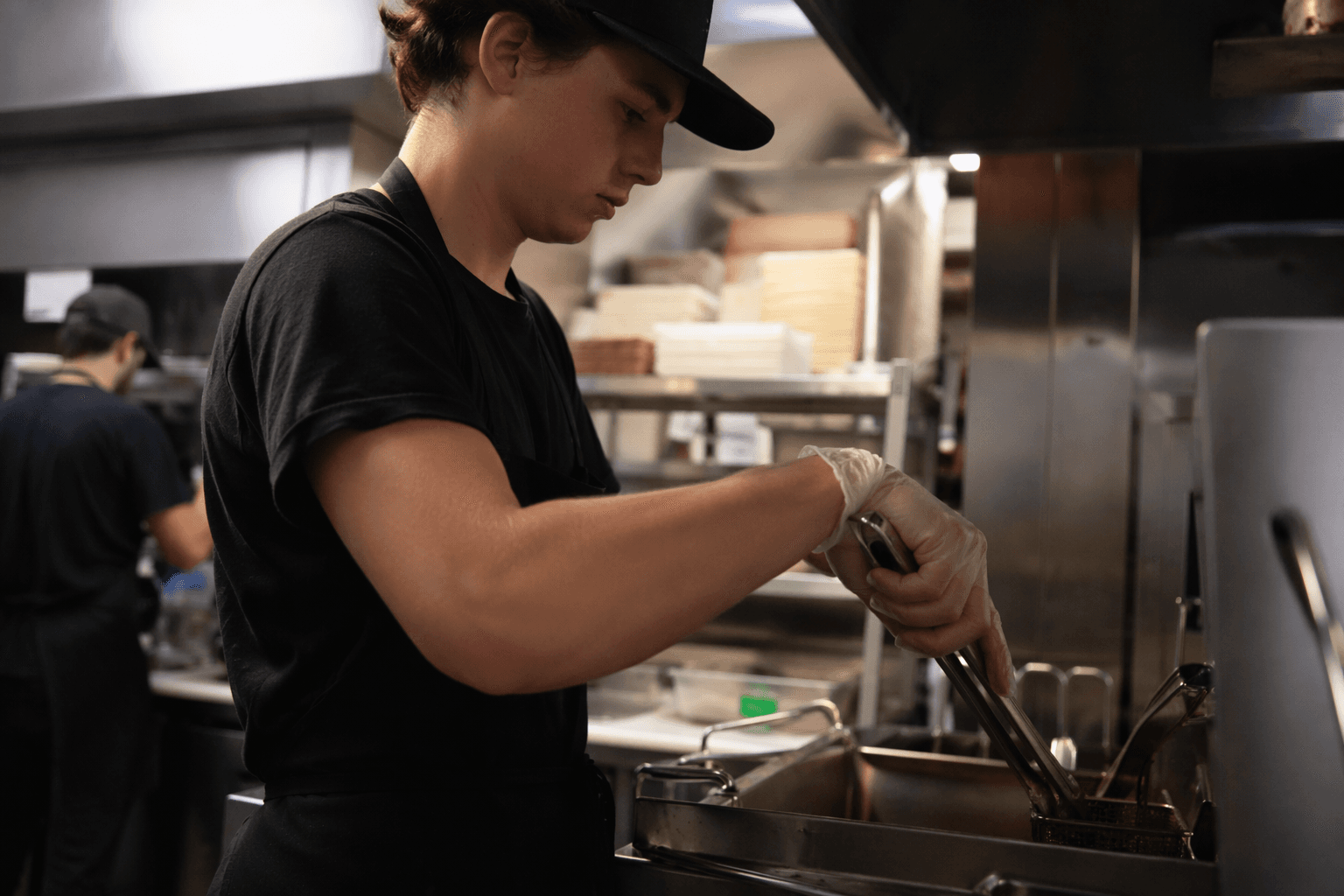
Teen workers can fill a lot of gaps in a restaurant’s summer schedule, but the federal rules are tighter than many managers realize. For 14- and 15-year-olds, the difference between a legal shift and a violation can come down to a school night, a late close, or a task at the wrong piece of equipment.
The hour limits that shape a teen schedule
The clearest line is time. Under federal rules, 14- and 15-year-olds may work no more than three hours on a school day, 18 hours in a school week, eight hours on a non-school day, or 40 hours in a non-school week. They generally may work only after 7 a.m. and until 7 p.m., but that evening limit stretches to 9 p.m. from June 1 through Labor Day.
That summer extension matters in restaurants because the busiest months are also when many operators lean hardest on teen labor. A host who can handle the dining room at 8:30 p.m. in July may still be off limits on the same clock time after Labor Day, when school is back and the federal limit returns to 7 p.m. School hours are measured by the local public school district where the minor lives while employed, so a schedule that looks harmless on the floor can still be illegal on paper if it cuts into that district’s school day.
What the job title does not tell you
Restaurant managers cannot rely on a title like host, busser, cashier, or dish team to decide whether a teen can be assigned a shift. The Department of Labor’s child labor rules focus on the worker’s age, the hours worked, whether school is in session, and the equipment or duties involved. That means a teen’s availability has to be checked before the schedule is built, not after the posted roster is already full.
The federal rules are meant to protect young workers’ health, well-being, and educational opportunities, but they also have a practical floor for pay. The Department of Labor says working youth are generally entitled to the same minimum wage and overtime protections as older adults. In an industry where front-of-house pay can depend on tips and back-of-house jobs often start at the wage floor, that matters. Teen workers are not a separate class of cheap labor just because they are filling summer shifts.
The equipment line is just as important as the clock
Once a worker turns 16, the federal hour limits no longer apply in the same way, but hazardous task restrictions still do. Under Department of Labor guidance for restaurants and quick-service establishments, 16- and 17-year-olds may work unlimited hours in non-hazardous jobs, but they still cannot operate certain dangerous equipment in food service.
That equipment includes meat slicers, meat saws, meat choppers, patty-forming machines, commercial mixers, and certain power-driven bakery machines. In a real kitchen, that means a teen can help in many parts of the operation, but not everywhere the ticket rail sends an adult line cook or prep cook. A manager who is short-staffed and tempted to pull a younger worker onto prep duty has to know that the wrong assignment can turn routine coverage into a child labor violation.
The driving rules are also tighter than many operators expect. Minors generally cannot drive on the job or serve as an outside helper on a public road, except in narrow circumstances for some 17-year-olds. For restaurants with off-site deliveries, catering runs, or parking-lot chores that seem informal in the moment, that restriction can become a problem fast.
Summer rush is when mistakes multiply
The season that creates the most teen hiring also creates the most compliance risk. A restaurant that is desperate to fill host stand gaps, dish shifts, or front-counter positions may think it can figure out the details later, but the Labor Department’s guidance points the other way: map the job first and the candidate second. In practice, that means confirming whether the work falls inside the hour limits, whether the teen can work past school-night deadlines, and whether the station involves prohibited equipment.
That kind of review is not just for corporate HR. A busy manager on the floor needs to know whether a younger worker can stay through the dinner rush, whether a closing shift crosses the federal time limit, and whether a “simple prep task” actually means working with restricted machinery. In a high-turnover business where staffing shortages make every pair of hands feel urgent, the fastest path is not always the lawful one.
State law can be stricter than federal law
Federal rules are only the starting point. The Department of Labor says that when a state child labor law is more restrictive than federal law, the stricter state rule applies. When a state law is less restrictive, the federal rule controls. That means a schedule that passes in one state may still be illegal in another, which is a serious problem for chains and multi-unit operators that try to standardize staffing across markets.
For managers, the safest approach is to build the schedule around the strictest rule that applies to that location. For workers, the takeaway is equally direct: if the hours or duties feel off, there is a good chance the problem is not just a workplace preference but a legal limit. Restaurants that ignore that reality are not just risking a citation; they are risking the school time and safety the law is designed to protect.
What compliant scheduling looks like in practice
A restaurant that wants to bring on minors has to make the rules part of daily operations, not a one-time onboarding checklist. The Department of Labor’s restaurant employment toolkit makes the point plainly: workers under 18 may only perform permitted tasks, and workers between 14 and 15 may only work specific hours.
- Confirm the worker’s age before assigning duties.
- Check whether school is in session and what the local public school district counts as school hours.
- Compare the shift against the 3-hour, 18-hour, 8-hour, and 40-hour limits for 14- and 15-year-olds.
- Watch the clock carefully between the 7 p.m. limit and the 9 p.m. summer exception.
- Keep minors away from prohibited equipment and driving duties.
- Review state law before posting the schedule, especially in multi-state operations.
A simple compliance routine helps:
The Labor Department says it has found child labor violations at fast-food locations nationwide, which is a reminder that these rules are not theoretical. In a business built on tight margins, rapid hiring, and constant turnover, teen labor can be a good fit only when managers treat compliance as part of the job, not a box to check after the rush starts.
This article was produced by Prism’s automated news system from verified source data, official records, and press releases, then run through automated quality and moderation checks before publishing. The system is built and supervised by the people who set the standards it runs under. Read our full AI policy.
Know something we missed? Have a correction or additional information?
Submit a Tip