Starbucks sales rebound as staffing investments boost service, earnings
Starbucks’ strongest sales in more than two years came as staffing, scheduling and faster cafe service pulled more customers back in.

Starbucks got its sales rebound by spending more on the people behind the counter. U.S. comparable store sales rose 7.1 percent in the quarter ended March 29, the chain’s strongest performance in more than two years, as Brian Niccol’s Back to Starbucks plan pushed the company to treat staffing, service and store execution as growth tools rather than overhead.
The results were broad-based. Global comparable sales rose 6.2 percent, net revenue increased 9 percent to $9.5 billion, and Starbucks reported non-GAAP earnings per share of 50 cents, up from 38 cents a year earlier. The company also raised its fiscal 2026 guidance for comparable store sales growth and non-GAAP EPS, signaling that management thinks the turnaround has more room to run. Niccol called the quarter the “turn” in Starbucks’ turnaround and said it was the first growth on both the top and bottom line in more than two years.
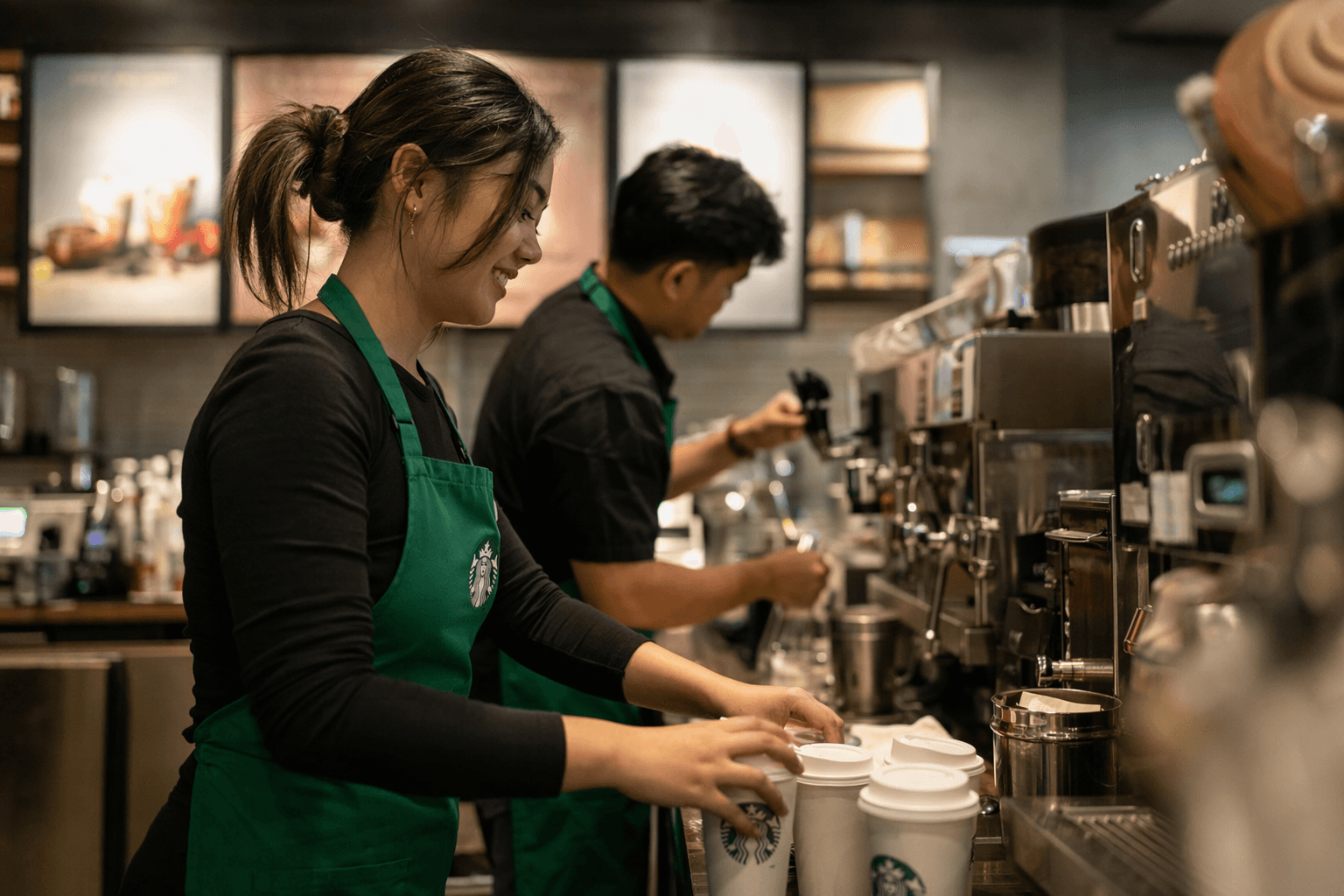
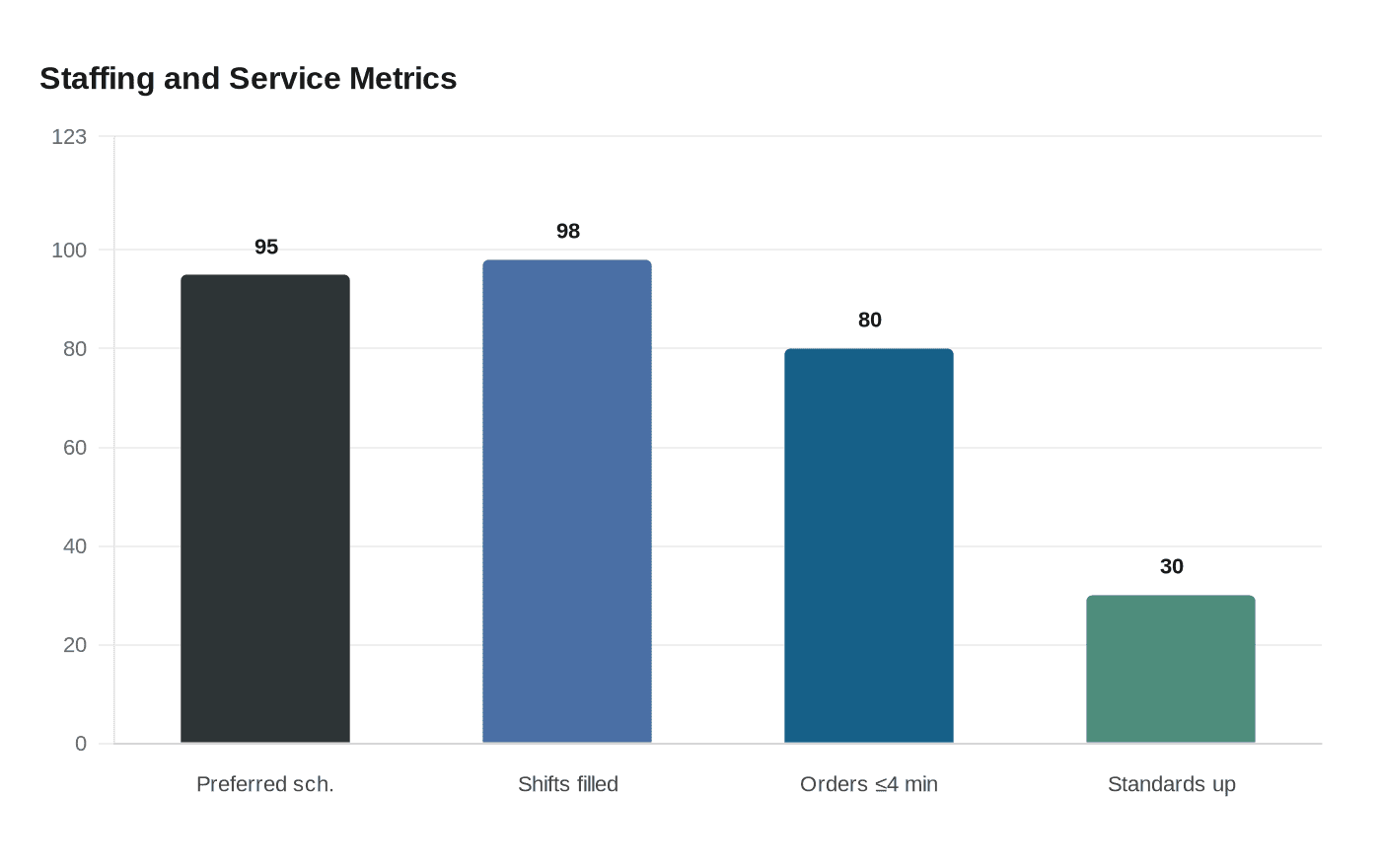
That recovery was built on the floor, not just in the finance deck. Starbucks said it has invested more than $500 million in partners since launching Back to Starbucks, with nearly 95 percent of partners getting their preferred schedules and 98 percent of available shifts filled. About 80 percent of U.S. company-operated coffeehouses delivered cafe orders in four minutes or less, a key sign that labor coverage is translating into shorter waits and less chaos at the handoff plane. The company also said the share of U.S. company-operated coffeehouses meeting its highest-performing standards has climbed by more than 30 percent.
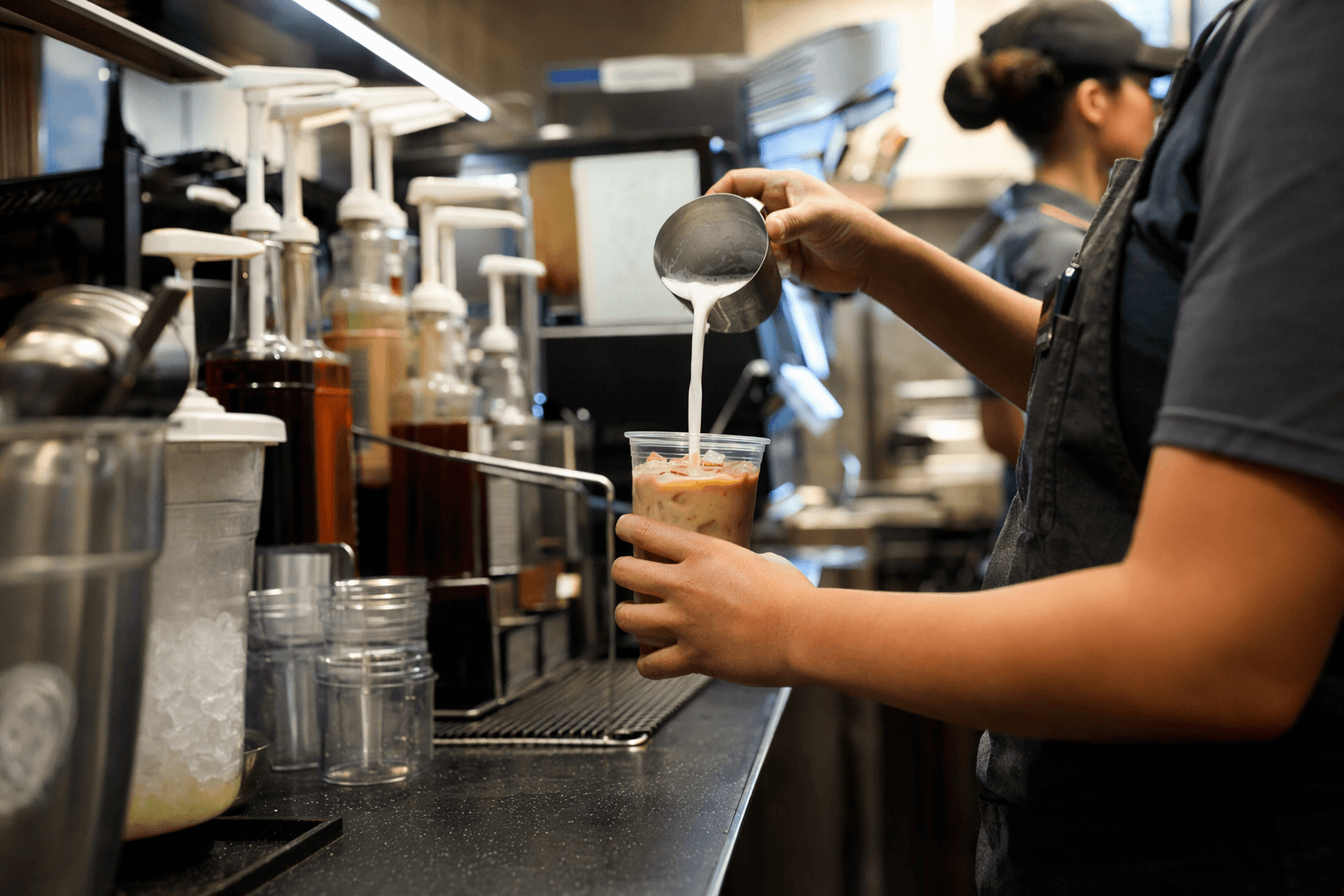
For baristas and shift supervisors, that strategy cuts both ways. Starbucks is still leaning on customization and complexity, and cold foam sales grew 40 percent, which means more drink builds, more sequencing pressure and more need for training that keeps tickets moving without flattening the customer experience. Starbucks said average barista hours are up and turnover is nearly half the industry average, metrics that matter in a business where burnout and churn can unravel a store long before sales show it.
The labor push is also showing up in pay design. On April 2, Starbucks announced quarterly rewards for baristas and shift supervisors worth up to $300 per quarter, or $1,200 a year, beginning in July with first payouts in the fall. The company said U.S. workers will move to weekly pay in August, and union-represented stores, about 5 percent of U.S. locations, would need collective bargaining before receiving the new bonuses. That leaves Starbucks trying to tie better service to better compensation while bargaining with Starbucks Workers United remains unresolved.
Starbucks opened 11 net new stores in the quarter and ended with 41,129 stores worldwide, including 16,944 in the U.S. and 7,991 in China. North America operating margin slipped to 9.9 percent from 11.6 percent a year earlier, a reminder that in this turnaround, better service is arriving with a real labor bill attached.
Know something we missed? Have a correction or additional information?
Submit a Tip