Starbucks union secures pay, healthcare protections after Seattle store closures
Seattle baristas won 8 weeks of pay and benefits, plus severance and healthcare coverage, after Starbucks closed five hometown stores. The deal also protects tip and vacation payouts.
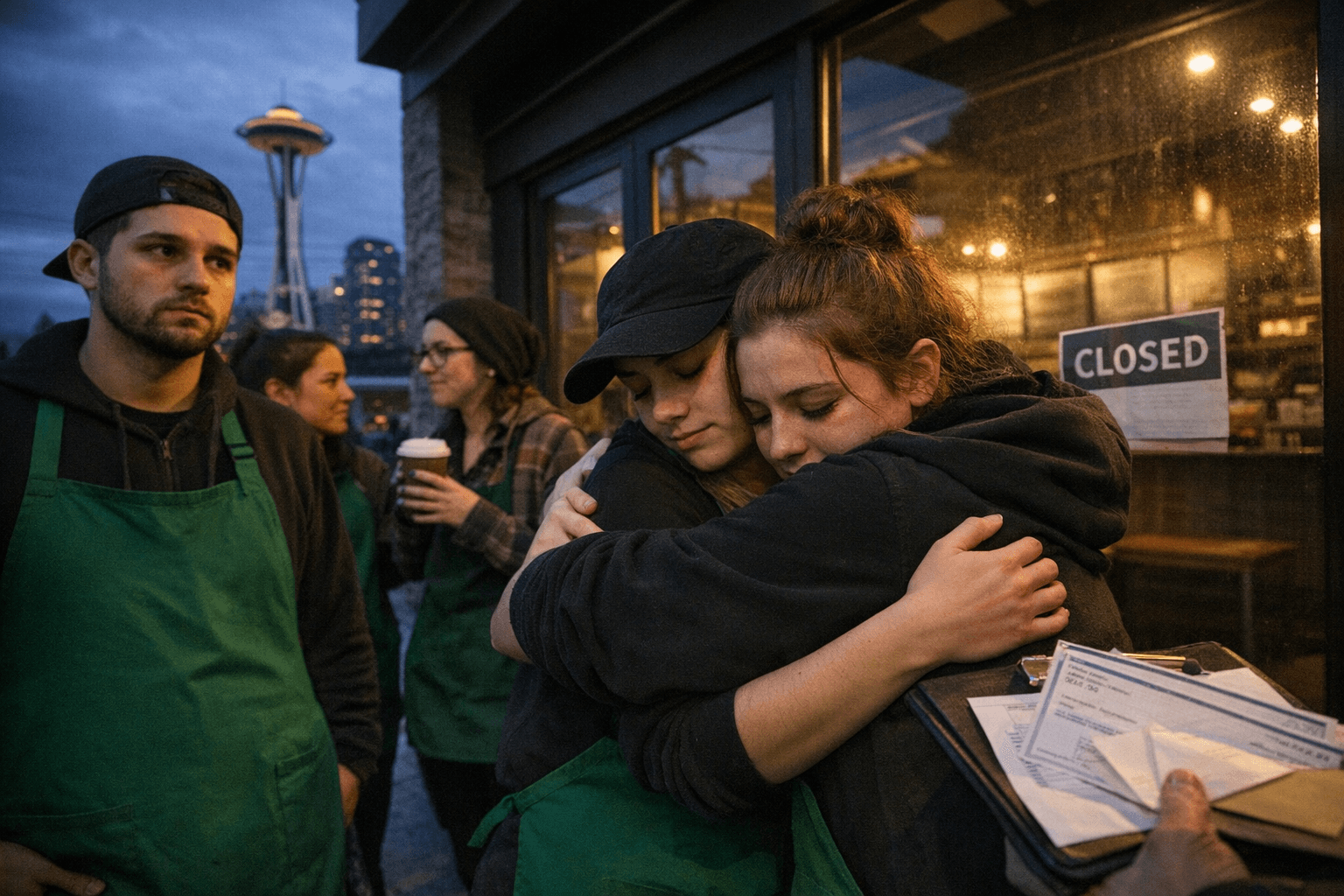
Seattle baristas turned five store closures into a set of enforceable protections that could matter far beyond Starbucks. After the company shuttered locations in its hometown, Starbucks Workers United said it won 8 weeks of pay and benefits for impacted partners, an added 40 to 84 hours of severance pay for baristas, and a lump-sum payment equal to three months of COBRA premiums so healthcare coverage runs through the end of August. The agreement also requires full payout of accrued tips and vacation time, and gives affected workers access to transfers and rehire under existing company policies.
The closures hit five Seattle locations: University District, First Hill, the Seattle Center Armory, Seattle Children’s Hospital and the Metropolitan Park East building. Four of the five stores were unionized. Starbucks said union status was not a factor and that the stores were selected based on financial performance and customer service. Employees received 30-day notices, and reports said about 69 workers were affected when the shutdowns were slated to take effect in early April.
The union had already moved to pressure the company before the locks came off the doors, filing an unfair labor practice charge with the National Labor Relations Board on March 3 and pushing for bargaining sessions with company representatives. That matters because closures are one of the moments when restaurant and café workers are most exposed, with income, health coverage and job continuity all at risk at once. By framing the process as effects bargaining, Starbucks Workers United forced the company to negotiate over what happens after the decision to close has already been made, not just whether the stores stay open.
For hourly workers in a chain built on transfers, the details are the real story. A barista who loses a store can still lose hours, benefits and tips overnight if there is no agreement in place. Here, the protections mean workers do not walk away empty-handed: there is pay, healthcare support, and a defined route to stay with the company if another location opens up. That is especially important in Starbucks’ hometown, where the company has kept up a steady restructuring push, closing more than 30 outlets in Washington state in 2025, cutting 1,100 corporate jobs, and shifting some jobs to a new Nashville operations center while keeping its headquarters in Seattle.
The Seattle closures also fit a broader pattern. Starbucks permanently closed both of its Seattle Reserve locations in September 2025, including the Capitol Hill Reserve Roastery, after saying some sites no longer matched its customer or financial goals. For workers, the lesson is blunt: when a chain pulls back, the question is not only how many stores shut, but whether labor has the leverage to make the exit less brutal for the people left holding the apron.
This article was produced by Prism’s automated news system from verified source data, official records, and press releases, then run through automated quality and moderation checks before publishing. The system is built and supervised by the people who set the standards it runs under. Read our full AI policy.
Did this article answer your question?