Alaska minimum wage hike will raise Taco Bell pay to $14 in July
A 30-hour Taco Bell week in Alaska will gross about $30 more when the minimum wage jumps to $14 on July 1.
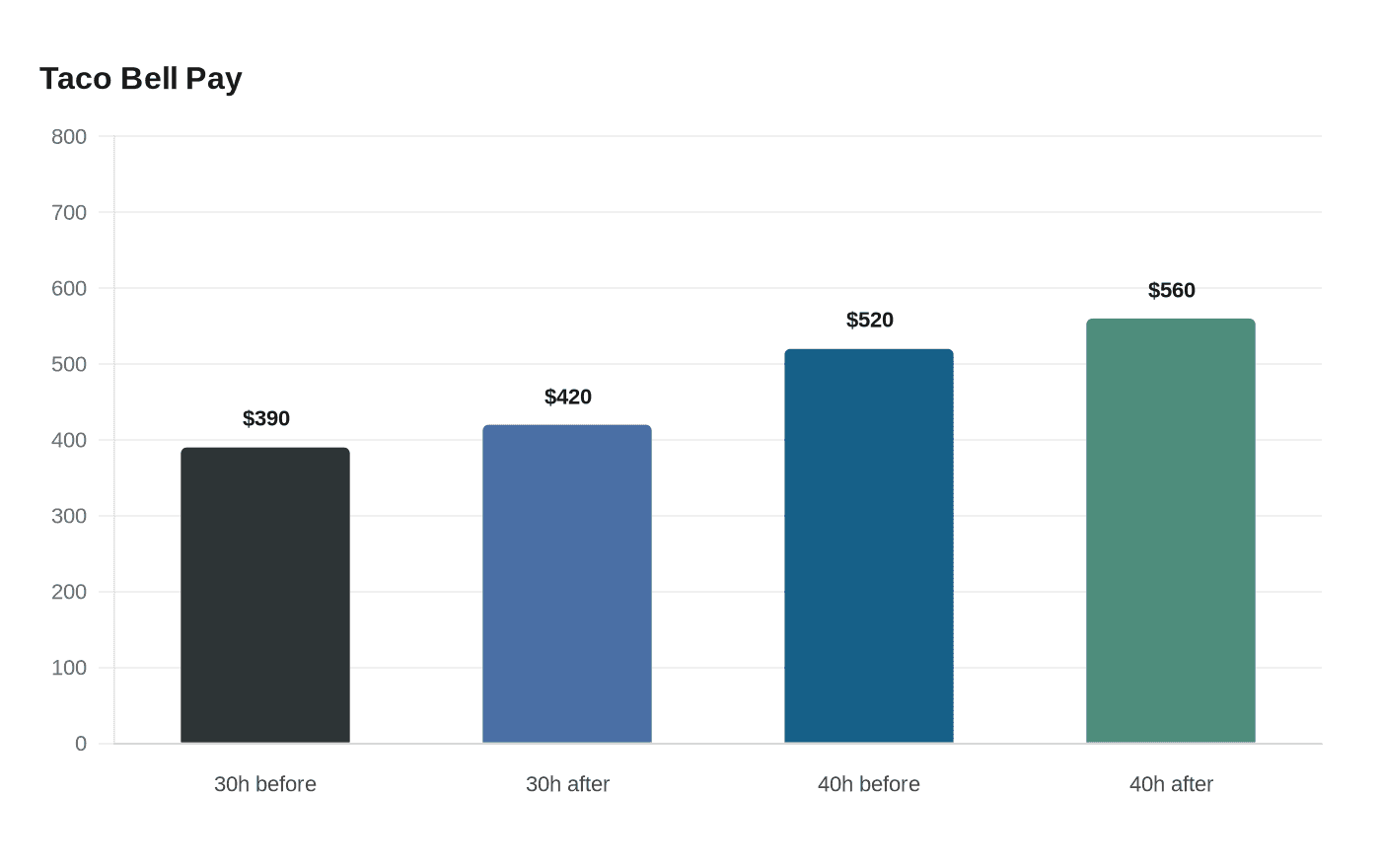
Alaska’s minimum wage jump will show up fast in Taco Bell paychecks: a crew member working 30 hours a week goes from about $390 before taxes to $420, and a 40-hour week rises from $520 to $560. For Taco Bell stores in Anchorage, Soldotna and Wasilla, that is not a policy headline. It is a payroll change that should hit before the first July pay period and start reshaping how managers cover shifts.
The law behind the bump is broad. Alaska says its minimum wage applies to all hours worked in a pay period, whether the employee is paid by time, piece, commission or another arrangement, and the minimum compensation due is all hours worked multiplied by the state wage unless a specific exemption applies. The floor moves from $13 to $14 on July 1, 2026, rises to $15 on July 1, 2027, and then returns to annual inflation adjustments on Jan. 1, 2028.
For store operations, the first pressure point is wage compression. If a shift lead, trainer or assistant manager is only a dollar or two above the crew floor, the store can flatten its pay ladder fast, and that is where operators may have to lift differentials to preserve the value of added responsibility. Some stores may also slow entry-level hiring or lean harder on scheduling to keep labor costs from climbing all at once. Alaska’s restaurant guidance makes clear this is part of a stepped schedule, not a one-time adjustment.
Ballot Measure 1, approved in Alaska’s November 2024 election, set the wage path in motion and also added paid sick leave protections for most covered workers, at one hour for every 30 hours worked. That matters for Taco Bell crews because the July paycheck is only part of the change. Workers should compare the first post-increase stub against the old rate, make sure any role-based premium still stands out from the new $14 floor, and check that every hourly rate in the store still clears the legal minimum. In a chain with Alaska locations across multiple towns, the real test is whether Taco Bell just meets the new floor or rebuilds the whole ladder behind it.
This article was produced by Prism’s automated news system from verified source data, official records, and press releases, then run through automated quality and moderation checks before publishing. The system is built and supervised by the people who set the standards it runs under. Read our full AI policy.
Know something we missed? Have a correction or additional information?
Submit a Tip