Chick-fil-A opens Miami ghost kitchen, signaling delivery-first shift for Taco Bell crews
Chick-fil-A’s Miami ghost kitchen puts more work into delivery, and Taco Bell crews should see the shift in staffing, accuracy, packaging and handoff speed.
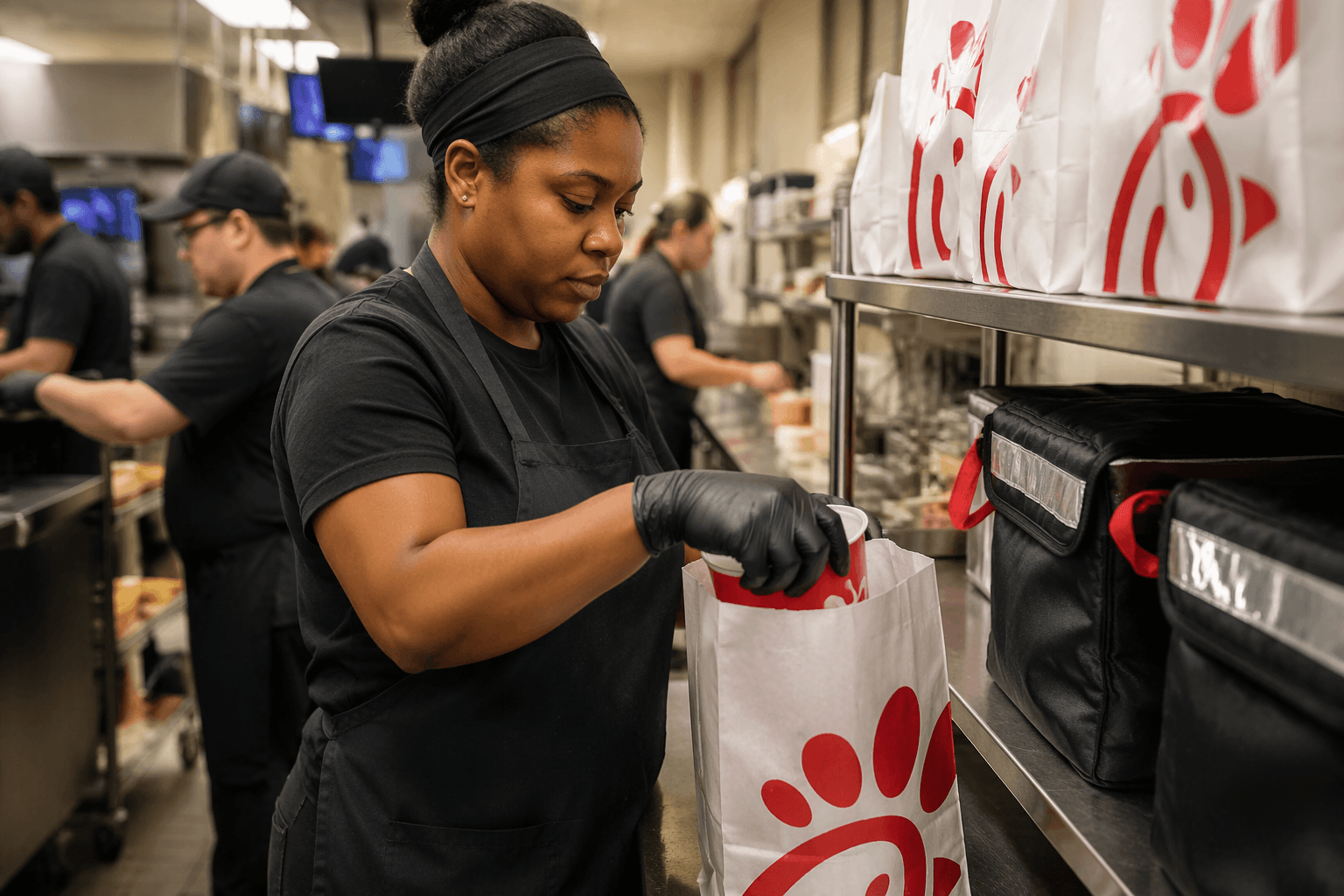
Chick-fil-A’s new Wynwood ghost kitchen in Miami is less about a flashy format than a plain operating change: food is being made for delivery first, with a smaller menu, third-party apps and a workflow built around handoff speed. The June 5 opening was Chick-fil-A’s first ghost kitchen in Florida and its sixth overall, and the company said the unit is expected to create about 30 jobs.
That matters for Taco Bell because the work inside a delivery-only or delivery-heavy kitchen looks different from a traditional front counter. The pressure moves from dining-room hospitality to digital order accuracy, packaging and timing, with every mistake magnified once a meal leaves the building. A simplified menu can make prep easier in one sense, but it also demands tighter coordination because every item is meant to travel well and arrive intact.
The Miami site operates with CloudKitchens, and it is focused primarily on third-party delivery. Local owner-operator Richard Overby, a Miami native who has worked in the Chick-fil-A system for five years, is tied to the project, underscoring how brands are testing formats that lean on neighborhood delivery demand rather than a full in-store guest experience. Chick-fil-A is still keeping core favorites on the menu, and Chick-N-Minis are available all day, showing that even a stripped-down kitchen can still carry brand-specific items that drive repeat orders.
For Taco Bell crews and managers, the larger signal is that off-premise work is not going away. Restaurant Business Online reported in 2024 that Starbucks, Taco Bell and Jack in the Box had all set up shop within CloudKitchens over the prior year, a sign that delivery demand kept the model alive after earlier skepticism. Taco Bell has already been moving in that direction with its own digital push: Yum! Brands says Taco Bell became the first QSR to launch a mobile app in U.S. restaurants for both drive-thru and dining orders, and its Go Mobile concept was built with more digital touchpoints than any other Taco Bell restaurant.
That shift changes what success looks like inside the store. Taco Bell’s newer digital-forward restaurant in El Paso opened in March 2023, and Yum! Brands said in December 2025 that Byte by Yum products were contributing to better customer satisfaction and digital sales. QSR’s 2024 annual report said Taco Bell had onboarded the Yum! Commerce Platform, an omnichannel engine expected to increase digital order capacity tenfold. In practice, that means staffing has to track order channels, not just lobby traffic, and the restaurant floor becomes a system for staging, checking and sending food cleanly from screen to customer.
This article was produced by Prism’s automated news system from verified source data, official records, and press releases, then run through automated quality and moderation checks before publishing. The system is built and supervised by the people who set the standards it runs under. Read our full AI policy.
Know something we missed? Have a correction or additional information?
Submit a Tip%2Fstory1%2F2712091%2Fcdae282a9f57fd1d1304b80820f661139187.jpg&w=1920&q=75)