Kiosks and AI Are Reshaping Taco Bell Crew Roles in 2026
Kiosks have crossed from novelty to necessity, and the shift is quietly rewriting what Taco Bell crew members are expected to do on every shift.
The industry line used to be that kiosks were optional upgrades. Operator interviews and vendor commentary now tell a different story: self-ordering kiosks, voice AI in drive-thrus, mobile order management, and computer-vision throughput tools have crossed from innovation to infrastructure at restaurants trying to protect margins without adding proportional headcount.
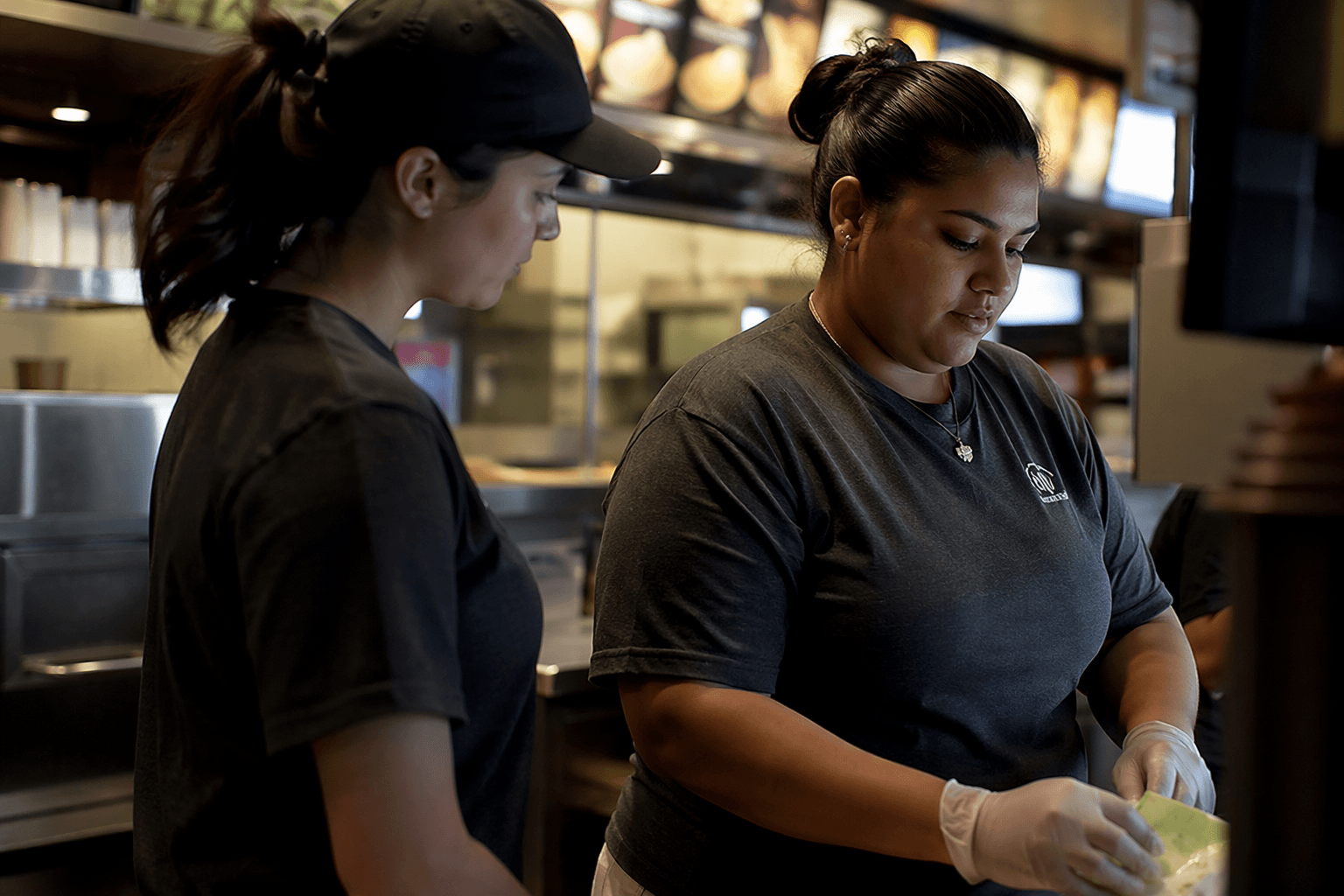
For Taco Bell crew, the shift is already visible in how orders enter the kitchen. When a kiosk, mobile app, or AI-driven drive-thru speaker handles order intake, the counter register no longer defines the pace of service. Assembly, fulfillment speed, and drive-thru staging become the production floor's primary variables.
Bruno Lo-Ré of Acrelec Group, a kiosk hardware and software vendor, described the design intent: the technology is meant to "give guests more control and confidence while ordering, while freeing crew members to focus on food preparation and hospitality." For training purposes, that sentence does a lot of work. A crew member whose default role was taking counter orders needs a different skill set than one whose shift is built around managing a queue of digital tickets flowing simultaneously from a kiosk, the Taco Bell app, and a voice AI at the speaker.
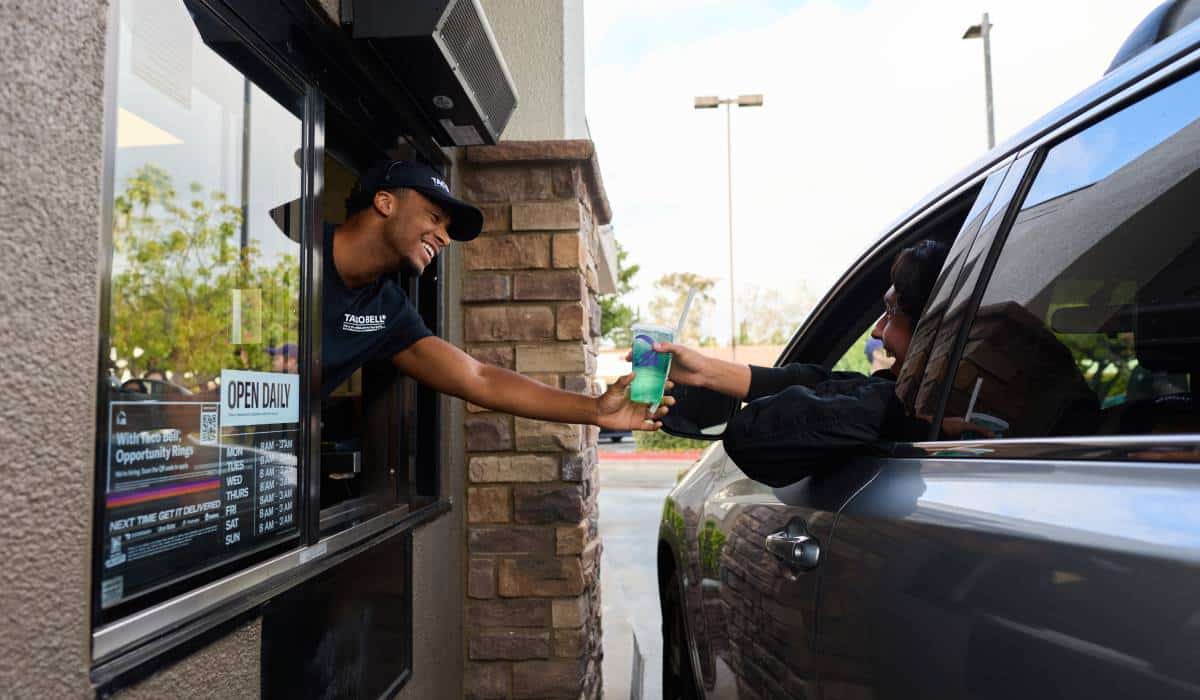
The drive-thru is where the stakes are highest. Multi-lane and express pickup formats, the kinds Taco Bell has trialed under its Defy concept, run on digital check-in and precise order fulfillment rather than traditional order-taking at a speaker box. When that digital layer breaks, whether a kiosk loses connectivity, a tablet drains its battery, or a printer runs out of paper, the entire service window slows. Operators treating these tools as essential rather than experimental means store teams need equally serious protocols for when the technology fails.
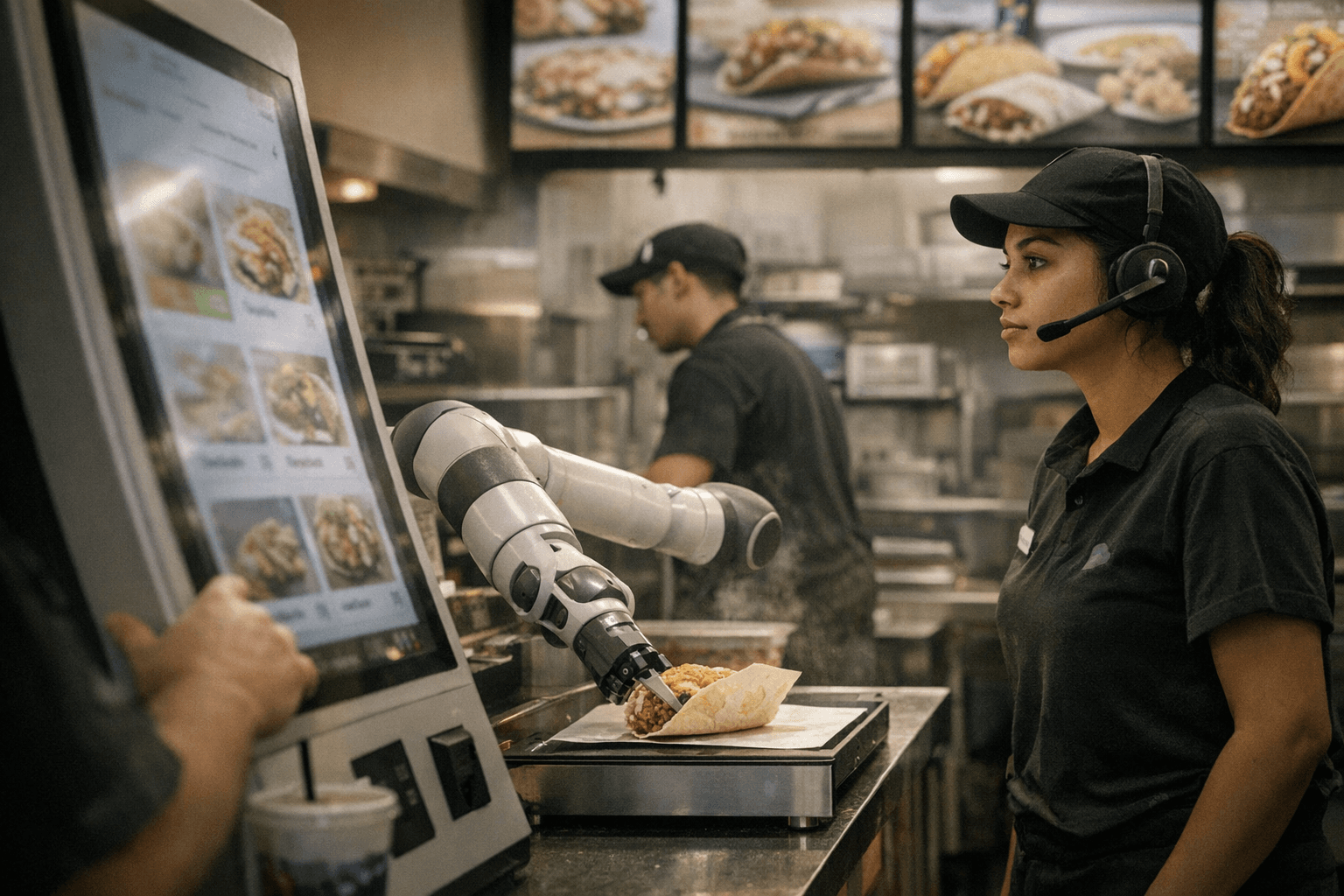
For shift leads and managers, the metrics have changed accordingly. AI order accuracy rates and time-to-car in multi-lane configurations now sit alongside traditional labor-cost numbers. Franchise HR teams updating job profiles for 2026 should note that technical fluency, including the ability to handle kiosk exceptions like order edits, allergy notes, and refunds, is increasingly part of the baseline for front-of-house roles.
The labor calculus behind all of this is explicit: these tools are meant to preserve throughput without proportionally increasing headcount. Cross-training crew on digital order exceptions, building tech health checks into opening and closing routines, and using available analytics to align staffing to peak digital demand periods are the practical translations of that strategy at the restaurant floor. Stores that build those habits now are the ones that won't be scrambling when the next format rolls out.
This article was produced by Prism’s automated news system from verified source data, official records, and press releases, then run through automated quality and moderation checks before publishing. The system is built and supervised by the people who set the standards it runs under. Read our full AI policy.
Know something we missed? Have a correction or additional information?
Submit a Tip