Oklahoma wage proposal could reshape Taco Bell staffing and pay plans
Oklahoma’s wage vote could lift pay to $15 by 2029, but Taco Bell crews should also watch hours, budgets, and menu pricing.
Oklahoma’s wage fight is really a Taco Bell payroll story
A minimum-wage vote in Oklahoma could change what lands in Taco Bell paychecks and on the labor sheet long before the first breakfast shift flips over. State Question 832 goes before voters in the June 16, 2026, primary, and its reach is bigger than one ballot box because it shows how fast wage rules can move from politics to scheduling, staffing, and pricing.
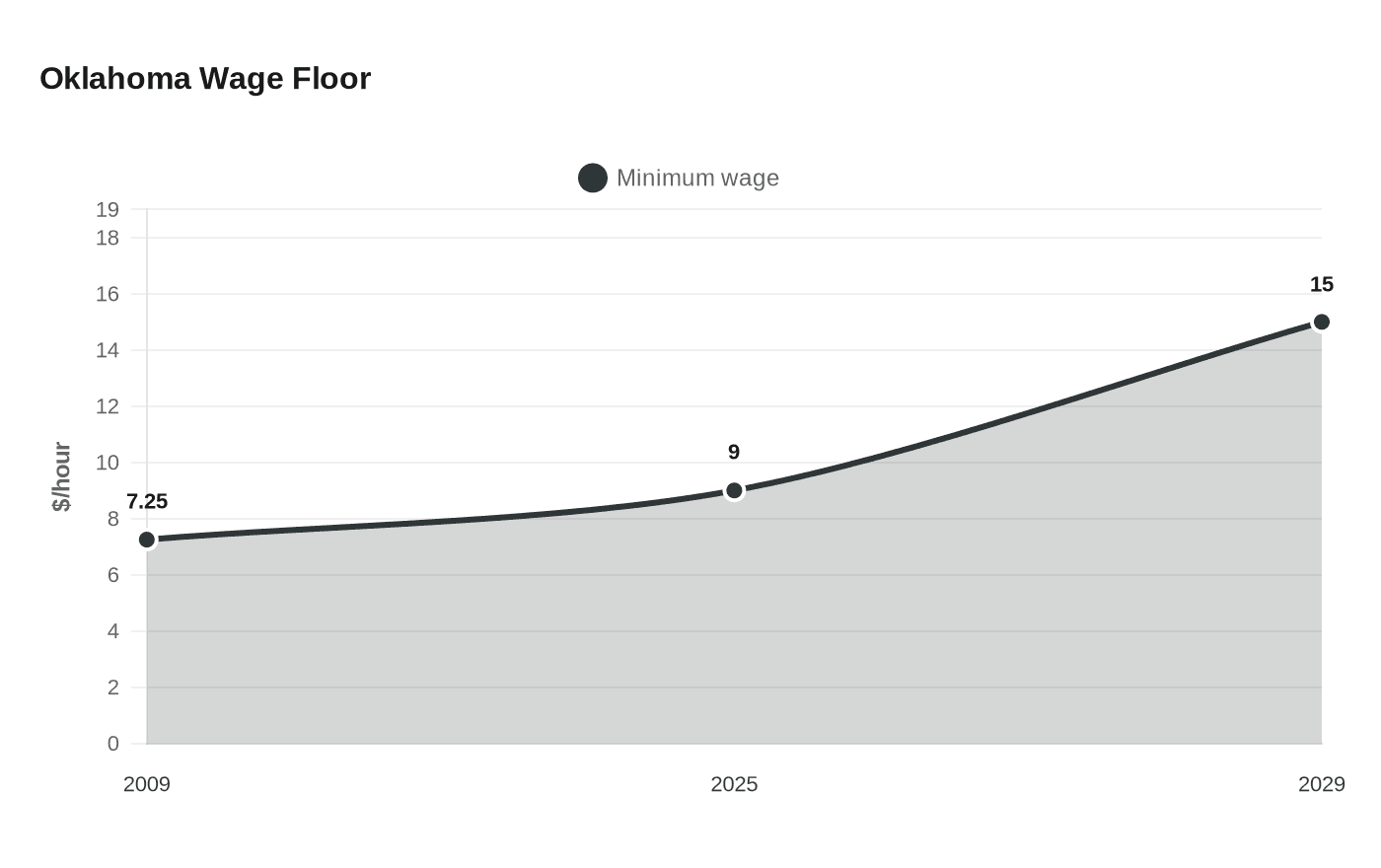
The proposal matters because Oklahoma’s current minimum wage is still $7.25 an hour, unchanged since 2009. Under the rewritten ballot title, employers would have to pay at least $9 an hour beginning in 2025, then add $1.50 each year until the rate reaches $15 in 2029, with future increases tied to the Consumer Price Index starting in 2030. The Economic Policy Institute says more than 350,000 Oklahoma workers would get a raise if the measure passes.
What the ballot would actually change
For Taco Bell workers, the clearest takeaway is simple: the state wage floor would no longer sit near the federal minimum. That would directly affect hourly crews in Oklahoma stores and indirectly shape how managers build labor plans, especially at restaurants that already run close to the edge on staffing.
The ballot language also reaches beyond the usual minimum-wage workforce. It would bring currently exempt groups under the law, including part-time employees, students, minors, farm and agricultural workers, domestic service workers, newspaper vendors and carriers, and feedstore employees. That matters because restaurants often depend on a mix of younger workers, part-time workers, and people juggling school or second jobs, all of whom can be affected when pay rules and hour rules shift together.
Oklahoma voters first qualified the initiative in 2024, but the vote was delayed until 2026. That long runway has given both sides time to frame the debate in the way restaurant workers know best: supporters call it a long-overdue raise, while opponents warn about pressure on operators and the risk of fewer hours.
Why Taco Bell teams should care even if they are not in Oklahoma
The Oklahoma fight is useful because it shows the path a wage proposal can follow before it ever lands in a store. For crew members, a higher minimum wage can mean a bigger paycheck, but it can also bring more attention to speed, productivity, and whether a shift is being staffed tightly. For shift managers, the problem is immediate: how do you protect service times and drive-through flow without letting labor costs jump too far?
For restaurant managers, the impact runs deeper. A wage hike can change hiring, retention, menu pricing, and the timing of promotions. In a Taco Bell system that depends on fast turns, late-night volume, and strict labor budgets, even a phased wage increase can force changes in how many people are on the floor, how quickly new hires are trained, and how aggressively a franchisee schedules peak hours.
That is why out-of-state teams should still pay attention. State wage policy is not standing still, and Oklahoma may become a model for the next round of wage battles elsewhere. If one state can move from a $7.25 floor to a $15 target with annual adjustments, other legislatures and ballot campaigns can borrow the same strategy.
How to track a wage proposal before it hits your store
If you want to know whether a wage measure will change your store, track the proposal the same way managers track a labor forecast.
1. Start with the exact ballot language.
The rewritten Oklahoma title is the roadmap here. It spells out the wage steps, the final target, and the 2030 CPI tie-in. A vague headline is not enough when payroll is on the line.
2. Check who is covered, not just the top-line number.
Exemptions can matter as much as the wage rate itself. If part-time workers, students, or minors are pulled into the standard minimum wage, a store’s labor model can shift faster than expected.
3. Map the wage increase to each job class.
Taco Bell stores rely on a mix of crew, shift leads, and managers. A new wage floor can compress pay bands, create retention pressure, and force a rework of promotion timing.
4. Watch the schedule before you watch the menu board.
Hour cuts, shorter shifts, and tighter staffing often show up before price changes do. If a proposal is going to affect the customer experience, it usually shows up first in the weekly schedule.
5. Ask whether the change hits franchisees differently than corporate stores.
Taco Bell’s franchise-vs.-corporate split matters because local operators feel labor changes in their own books. The same wage law can land differently depending on local sales, staffing depth, and how much cushion a store has.
Why restaurant payroll gets complicated fast
The National Restaurant Association says payroll accounting is especially complex because operators have to track multiple wage rates, tipped and nontipped workers, and minimum-wage shortfalls. Even though Taco Bell is not a full-service, tip-driven model, the larger point still applies: restaurant labor costs are never just one line item, and wage changes can ripple through every shift.
The National Restaurant Association’s 2026 State of the Restaurant Industry report says the business is still dealing with persistent cost pressures. That is exactly why groups like the Oklahoma Restaurant Association are arguing that SQ 832 would raise prices and force operators to reduce hours or jobs. On the other side, the Economic Policy Institute says minimum-wage indexing is a modest way to protect low-wage workers from losing ground as prices rise.
For Taco Bell managers, that tension is not abstract. It can show up in fewer closing hours, leaner midshifts, more pressure to cross-train crew, or slower approval for extra labor during busy periods. It can also reshape the timing of raises, because stores often need to lift starting pay just to keep current employees from flattening against the new floor.
The real test is what happens on the floor
A wage proposal becomes real when it reaches the line, the prep table, and the drive-through window. That is why Taco Bell teams should treat Oklahoma’s vote as a field guide, not just a statehouse story. The ballot may decide the wage floor, but the schedule, the staffing plan, and the price board are where workers feel it first.
If State Question 832 passes, the move from $7.25 to $15 will not happen overnight, but the pressure on pay, hours, and hiring will start immediately. That is the lesson for every Taco Bell crew and manager watching from outside Oklahoma too: once wage politics turns into payroll, the whole store has to adjust.
This article was produced by Prism’s automated news system from verified source data, official records, and press releases, then run through automated quality and moderation checks before publishing. The system is built and supervised by the people who set the standards it runs under. Read our full AI policy.
Did this article answer your question?