Taco Bell careers page highlights flexible schedules, growth, supportive culture
Taco Bell's careers page promises flexibility and growth, but the real test is whether schedules, coaching, and promotion paths hold up on the floor.
What the page is really saying
The quickest way to read Taco Bell’s restaurant-life page is as a reality check, not a glossy promise. The company says flexible schedules, growth opportunities, and a supportive team come with the job, and it tells applicants there is “nowhere to go but up” when they join the Taco Bell community.
That matters because Taco Bell is also selling a workplace identity, not just a shift. Its careers pages say employees can “be yourself” at work and describe the brand as more than just a job, but an experience. For crew members deciding whether a first fast-food job is worth the effort, that is useful only if the store culture matches the pitch on the page.
How to test the flexible-schedule claim
Flexible scheduling sounds simple until a busy store has a call-out, a short lunch rush, or a closing shift that runs late. The practical question is not whether Taco Bell uses the word flexible. It is whether a specific restaurant posts schedules early, handles shift swaps without drama, and gives workers enough notice when changes hit.
A good interview does not stop at “Is this position open?” It should get into what flexibility actually means at that location, how often schedules are posted, and whether the crew cross-trains or stays locked into the same station every week. If the page is accurate, workers should see that flexibility in the way managers fill shifts, move people between stations, and respond when someone needs time off.
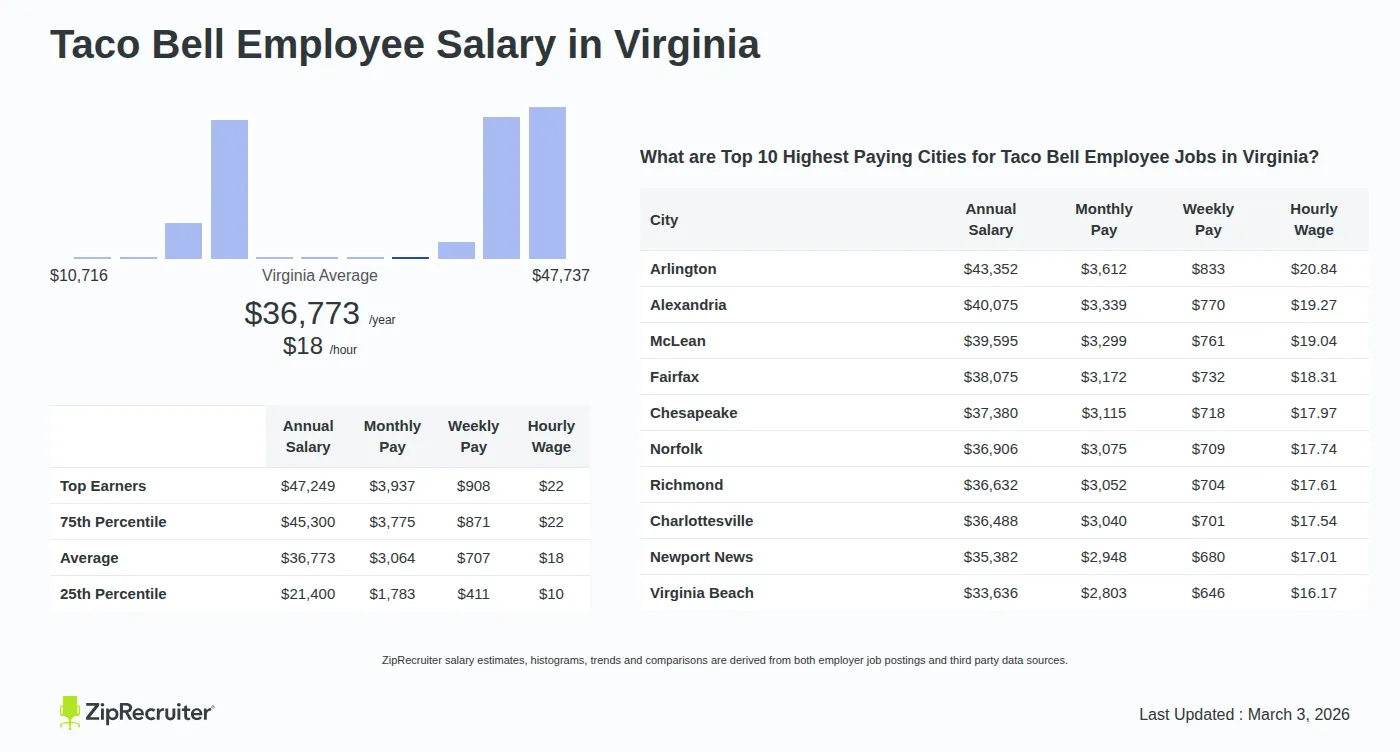
That is also where wage questions belong. The page does not answer the pay mechanics that matter most in hourly work, including how local wage changes affect starting pay, how raises are handled, or whether a worker has any say when a schedule changes. Those are the details that turn a recruiting slogan into a job that can actually work for your life.
Growth is the promise that carries the most weight
Taco Bell’s careers site does more than say people can move up. Its team-member page lays out a progression from Team Member to Shift Lead and beyond, which gives the brand a ladder instead of a vague sense of possibility. That matters for workers who want to know whether a restaurant job is a stepping stone or a dead end.
The company has also put hard numbers behind the message. In October 2025, Taco Bell said it had 250,000-plus U.S. team members and described that workforce as central to 20 consecutive quarters of industry-leading same-store sales growth. In 2025, it said team-member retention improved year-over-year by 17% in company-owned restaurants, while restaurant general manager vacancy fell by 27%.
Those figures do not prove every store is a good place to work, but they do show where the company wants the story to go. Taco Bell is tying growth to staffing, retention, and leadership pipeline, which means a store manager should be able to explain what promotion looks like, what skills are needed to move up, and how often internal candidates actually get the first shot.
What supportive culture looks like on the floor
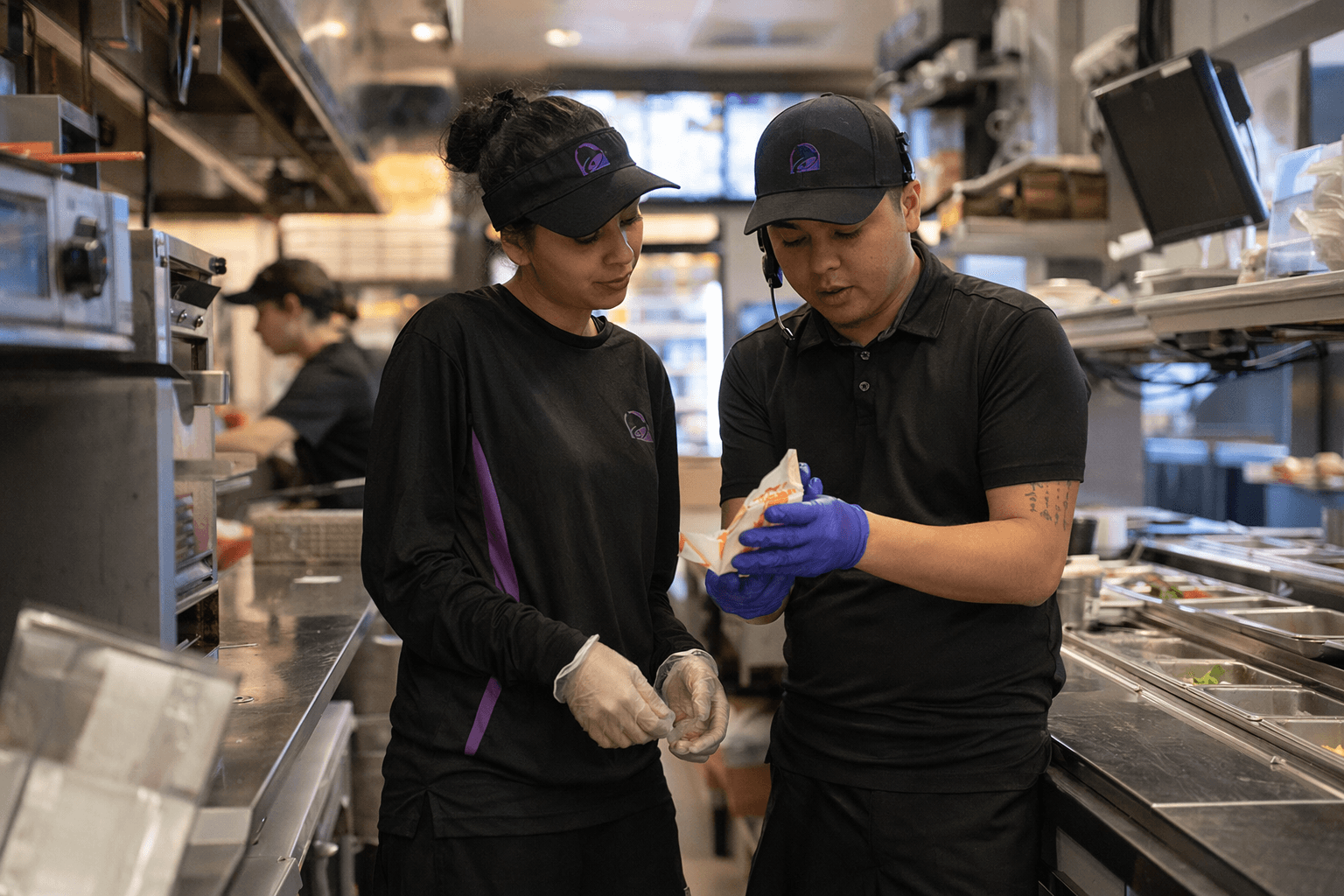
The phrase “supportive team” can mean almost anything in corporate messaging, so the real test is in the day-to-day rhythm of the store. A culture that lives up to Taco Bell’s page should show up in how managers coach new hires, how quickly they communicate changes, and whether workers feel comfortable asking questions before a rush or a closing shift.
For shift managers, the page should read like a management reminder. If the company is telling applicants the restaurant is a place for growth and support, then the store has to back that up with fair scheduling, clear expectations, and actual coaching. A crew member should be able to tell within a few weeks whether “supportive” means someone will help when the line stacks up, or whether it is just a word on a careers page.
The clearest sign of culture is often the smallest one: can you trade a shift without a fight, or does every change turn into a problem? Do managers tell people about changes early, or do they drop them at the last minute? Can a worker ask a question without feeling like they are slowing the whole store down? Those are the details that define restaurant life far more than a polished recruiting line.
Why the company’s broader investment matters
The restaurant-life page makes more sense when you put it next to Taco Bell’s wider people strategy. The brand says it is expanding leadership programs, education pathways, and benefits, and that puts some real backing behind the idea that store work can lead somewhere.
The Taco Bell Foundation’s Live Más Scholarship program gives that pipeline a more concrete shape. In 2025, the foundation said the program would award up to $14 million, including $4 million for Taco Bell team members. It also said it had awarded more than $64 million in Live Más Scholarships to over 3,000 recipients, including more than 1,000 Taco Bell team members.
The company has also extended paths beyond the restaurant itself. In 2023, Taco Bell said it widened access to Yum! Brands Reskilling Academy digital and technology apprenticeships for some restaurant team members. That program is described as a 12- to 15-month pathway with on-the-job experience and virtual skills training aimed at corporate roles, which is a stronger signal than a generic benefits list because it shows how a worker can move from the floor toward a different career track.
The brand story behind the pitch
Taco Bell’s growth narrative also comes from its history. Glen Bell opened the first location in Downey, California, in 1962, and that origin story still shapes how the company talks about opportunity and upward movement. The chain now operates 9,000-plus restaurants in 35-plus countries and territories under Yum! Brands, so the promise of mobility is tied to a much bigger system than one dining room or one drive-thru lane.
That scale is exactly why the careers page deserves a close read. A brand with 250,000-plus U.S. team members can afford to talk about advancement, education, and support, but workers should still test those claims at the store level. The page reveals the right questions to ask before you apply: how flexible is the schedule in practice, how real is the promotion path, and whether the culture on the floor matches the company’s own language about being yourself.
For applicants and current crew alike, the takeaway is straightforward. Taco Bell is presenting restaurant work as a place to learn, move up, and build a career. The next step is making sure the store you walk into can prove it before the first shift starts.
This article was produced by Prism’s automated news system from verified source data, official records, and press releases, then run through automated quality and moderation checks before publishing. The system is built and supervised by the people who set the standards it runs under. Read our full AI policy.
Did this article answer your question?