Taco Bell culture leans on execution over viral leadership moments
Yum's low-drama approach pushes Taco Bell workers toward speed, accuracy, and digital execution. The real test is not viral leadership, but whether stores can repeat strong performance every shift.

What a low-profile CEO really signals
When the head of Taco Bell, KFC, and Pizza Hut says he does not plan to go viral, the bigger message is not about personality. It is about management style: Yum appears to prize discipline, repeatability, and control over headline-chasing. For crew members and shift managers, that usually means the company wants wins to come from order accuracy, drive-thru speed, food safety, and tight coaching on every shift, not from one-off stunts that look good online and disappear the next day.
That approach fits a company that runs more than 61,000 restaurants in over 155 countries and territories through about 1,500 franchisees. In a system that large, a loose style at the top can create confusion fast. Yum’s model suggests the opposite: brand performance is supposed to come from clear playbooks, internal scorecards, and operational habits that can be repeated in thousands of kitchens, not from a leader building a personal following.
Why the culture lands hardest on the store floor
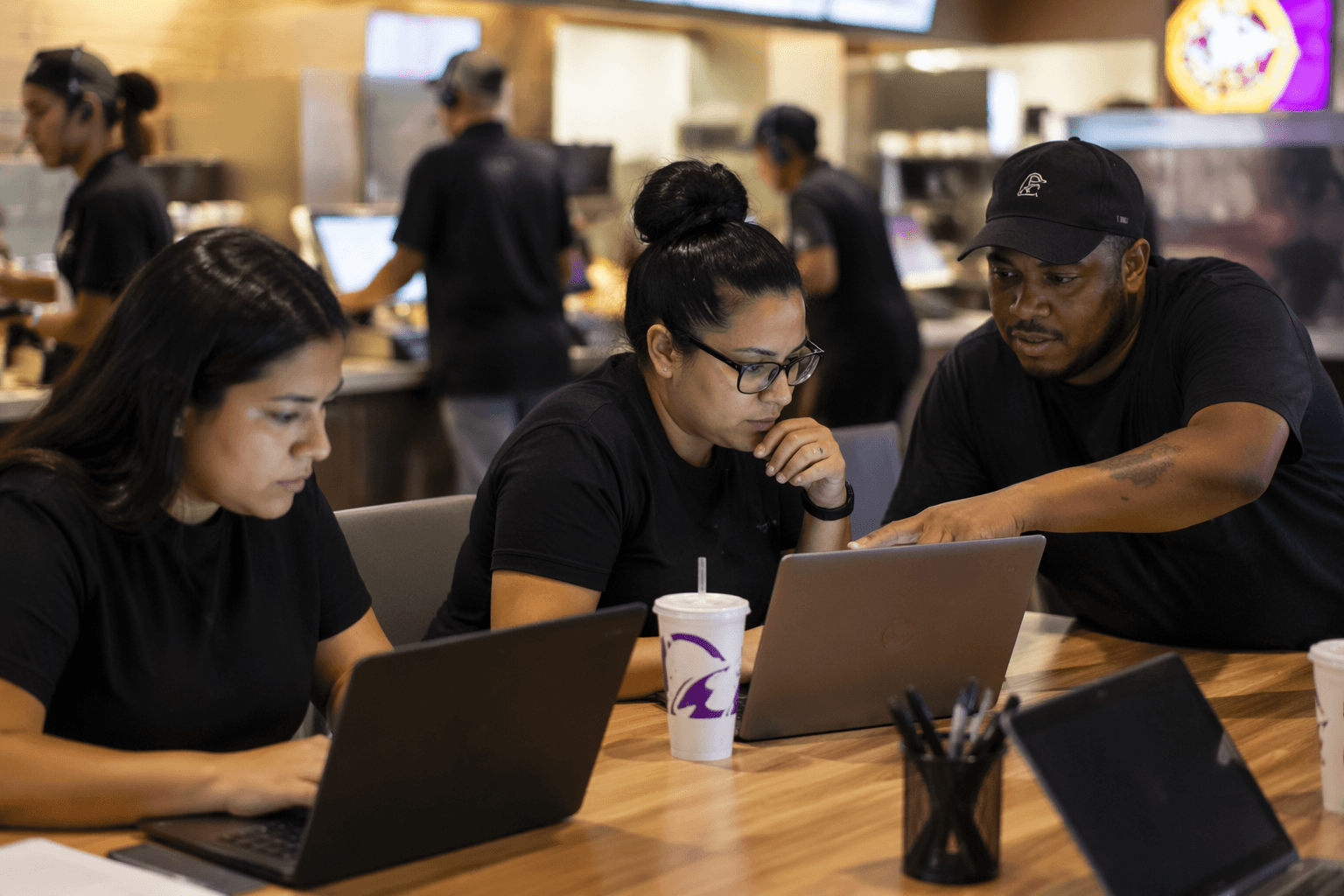
For Taco Bell workers, a discipline-first culture usually shows up in the basics people feel every day. Managers get judged on whether orders are moving, whether crews are coached well enough to keep service consistent, and whether digital and in-store workflows are holding up under pressure. When leadership emphasizes execution, there is less room for improvisation that drifts from the brand standard, even when a local team thinks it has a clever shortcut.
That can create pressure, but it also creates a path to standing out. In a company that values repeatable systems, the people who get noticed are often the ones who can train others, solve problems quickly, and keep standards steady across busy shifts. The work is not glamorous, but it is visible to the people who matter inside the company: field leaders, franchise operators, and brand teams watching the numbers.
The franchise side matters too. With about 1,500 franchisees in the mix, consistency is not just a store issue, it is a governance issue. Corporate sets the direction, but franchisees absorb much of the day-to-day labor pressure, staffing strain, and customer-facing execution. That tension makes a low-drama corporate style feel less like a branding choice and more like a management tool for keeping hundreds of local operators pointed in the same direction.
The company is built on systems, not just slogans
Yum’s own reporting makes clear that this is a highly systematized company, not a casual one. The company said it opened a new restaurant every two hours in 2024, generated more than $30 billion in digital sales, and got more than half of system sales through digital channels. It also said Taco Bell U.S., KFC U.S., and Pizza Hut U.S. were all operating on Byte by Yum!, with 25,000 Yum restaurants using at least one Byte by Yum! product.
That matters for workers because digital systems change how a restaurant runs from open to close. Order flow, labor planning, and guest timing are all tied more closely to software and standard procedures, which makes execution even more important when stores get slammed. Yum’s strategy is built around “Loved,” “Trusted,” and “Connected,” and those pillars are really shorthand for what the company expects from stores: strong consumer experience, consistency, efficiency, teamwork, and technology.
Sean Tresvant shows that Yum still likes cultural moments, when they serve the system
The story is not as simple as a company that dislikes attention. In September 2025, Yum promoted Sean Tresvant to serve as both Taco Bell CEO and Yum chief consumer officer. Yum said Tresvant had delivered positive same-store sales growth every quarter of his tenure and credited him with cultural moments such as the viral return of the Mexican Pizza, Taco Bell Consumer Day, and Live Más LIVE.
That combination is revealing. Yum is not rejecting consumer buzz outright; it is choosing buzz that supports the business. Tresvant’s elevation suggests the company values leaders who can connect with consumers, but only when that connection is tied to sales growth, relevance, and operational follow-through. For Taco Bell employees, that means local creativity is not banned, but it has to fit the brand system and produce results that can be repeated.
The leadership shuffle around Chris Turner reinforces that point. Yum said Turner would become CEO on October 1, 2025, and the broader restructuring elevated digital, consumer, and finance leadership. The company also said Collider would report to Tresvant, another sign that consumer-facing work is being organized as part of an enterprise strategy, not treated as a side project.
The numbers explain why discipline matters so much
The pressure behind this style is visible in the performance data. Yum said Taco Bell U.S. delivered 5% same-store sales growth in the fourth quarter of 2024. The company also said its 2024 digital sales rose 15%, and digital mix topped 50%. Those are the kinds of results that make executives double down on process, because the growth engines are already tied to systems that need to keep working at scale.
Food Business News reported that Taco Bell and KFC were Yum’s principal growth drivers, while Pizza Hut continued to struggle. It also said Yum reaffirmed a long-term growth algorithm of 5% unit growth, 7% system sales growth, and 8% core operating profit growth. That is a pretty clear message to store leaders: growth is expected to be durable, measurable, and operationally clean, not dependent on flash.
For crews and managers, that translates into tighter expectations around throughput, labor, and consistency. When digital sales are more than half of the mix, and the company is pushing growth across a vast franchise system, even small errors can ripple through the brand. The restaurant floor becomes the place where strategy gets judged in real time.
What Taco Bell workers should read into the strategy
The practical takeaway is that Yum seems to believe the strongest marketing comes from reliable execution. A CEO who does not plan to go viral is signaling that the company wants stores to do the talking through speed, consistency, and guest satisfaction. That can feel relentless for workers, especially in a business built on digital growth and menu innovation, but it also rewards people who can keep a team calm, trained, and focused.
At Taco Bell, the real brand-building is happening in the drive-thru, on the line, and in the hands of the managers who keep shifts moving. In a company this large, low-drama leadership is not a lack of ambition. It is a bet that disciplined operations will outlast any moment of online fame.
This article was produced by Prism’s automated news system from verified source data, official records, and press releases, then run through automated quality and moderation checks before publishing. The system is built and supervised by the people who set the standards it runs under. Read our full AI policy.
Did this article answer your question?