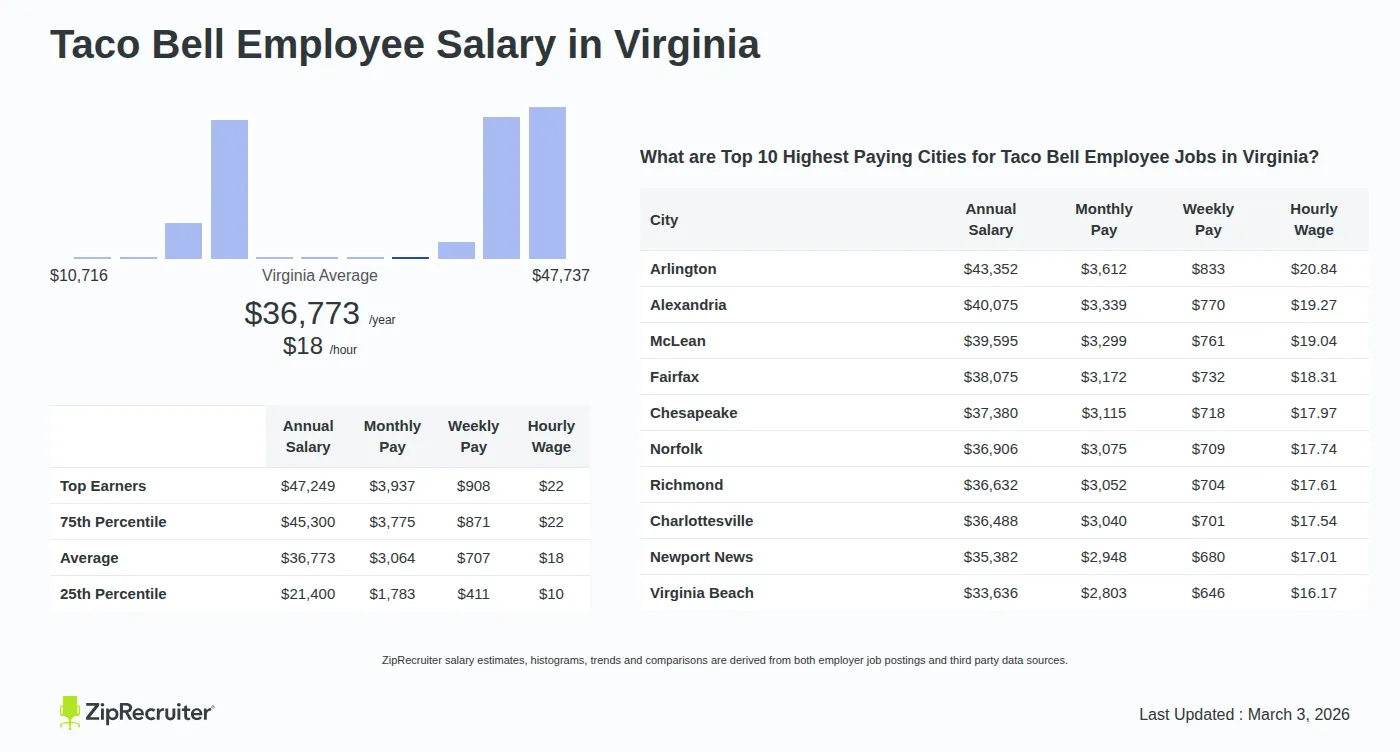
Taco Bell managers urged to make promotions transparent, consistent, documented
The EEOC's latest promotion case shows Taco Bell managers need a paper trail for every step up, from shift lead to assistant manager.

The EEOC’s case against The New York Times is a restaurant-management warning in disguise: if you cannot explain why one crew member moved up and another did not, your promotion system is exposed. For Taco Bell workers, that matters because a title change from Team Member to Shift Lead, Assistant Manager, or General Manager can affect pay, schedule control, training access, and who gets treated like leadership on the floor.
Why this case belongs on a Taco Bell manager’s desk
The agency says The New York Times failed to promote a white male employee because of race and sex, and the complaint says the paper’s 2021 “Call to Action” and other publications pushed goals to increase non-white and female leadership representation. The EEOC also alleges that the employee was left out of final interviews for a Deputy Real Estate Editor role in early 2025, that every finalist who advanced was not a white male, and that the company ultimately hired a non-white female outside candidate with little or no real estate-journalism experience.
The case was filed in the Southern District of New York under charge number 520-2025-06545 after the EEOC says it issued a reasonable-cause determination and tried conciliation first. The legal backdrop is Title VII of the Civil Rights Act of 1964, which bars discrimination in promotions based on race and sex, and EEOC guidance says DEI-related employment actions can still violate the law if protected characteristics are driving the decision in whole or in part.
For Taco Bell leaders, the lesson is not about newspapers. It is about the basic management problem of being able to defend a promotion when somebody asks, “Why them and not me?”
What that means on a fast-food shift
In restaurants, promotions often happen quickly. A crew member covers extra shifts, learns to open or close, handles cash, trains new hires, and suddenly becomes the obvious choice for shift lead or assistant manager because the store needs help now. That flexibility is useful in a business where labor is tight and minimum-wage debates keep pressure on hourly pay, but it can also create confusion when decisions live in a manager’s memory instead of in a record.
When a store relies on informal conversations, personality, or availability alone, employees can read the move as favoritism even when no illegal bias was intended. That risk only grows when the job ladder is visible, because Taco Bell’s careers page describes a path from Team Member to Shift Lead, Assistant Manager, and General Manager, and those steps can be the fastest route to better pay and more stable scheduling in a restaurant where every dollar matters.
The franchise structure adds another layer. Taco Bell says these opportunities exist at both corporate-owned and franchised restaurants, but it also says franchisees and licensees are independent employers responsible for their own employment practices. In plain English, the store where you work may follow Taco Bell branding and career language, but the people making your promotion decisions may be a separate employer with its own records, its own managers, and its own legal exposure.
What managers should document before they promote anyone
A promotion file should not be complicated, but it should be consistent. If a store is choosing between crew members for shift lead, trainer, or assistant manager, leaders should be able to point to the same criteria for every candidate and show how each person measured up.
At minimum, managers should keep notes on:
- the skills required for the next step, such as opening and closing, cash handling, coaching newer crew, food-safety responsibility, and guest recovery
- performance notes from coaching conversations, including dates, examples, and follow-up steps
- attendance, reliability, and schedule flexibility, if those are actual job requirements used for everyone
- completion of training, certifications, and any leadership development courses
- interview questions and scoring, so the process does not depend on whoever happened to be in the room that day
- the job-related reason one employee was chosen over another, written down before memories blur
- any development plan given to the employees who were not selected, so they know what to improve next time
That paper trail matters because the EEOC case against The New York Times turned in part on what the company said it wanted from leadership and how the employee who was passed over fit, or did not fit, those stated goals. A Taco Bell manager does not need a corporate legal memo to avoid that trap. A clear checklist, a few notes after each coaching session, and a documented interview process go a long way.
The bigger rule is simple: do not let assumptions make the decision for you. Race, sex, age, background, or stereotypes about who “looks like a manager” should never be part of the file. If the reason is job performance, leadership readiness, or coverage needs, write that down in a way another manager could understand six months later.
Why Taco Bell’s own workforce messaging raises the stakes
Taco Bell has spent years selling more than tacos. Its restaurant-life and careers materials emphasize leadership development, training, and a ladder that can move workers into shift lead, assistant manager, and general manager roles. The company also highlights Equity, Inclusion & Belonging efforts, a Corporate Guiding Coalition, Taco Bell Business School, and leadership development courses, all of which tell workers that growth is supposed to be part of the culture.
The Taco Bell Foundation pushes the same message from another angle. The foundation says it was formed in 1992, awarded $23 million in Community Grants in 2024, and gave $10 million in Live Más Scholarships to more than 1,000 students that same year. That is a big public bet on opportunity, but it also means the restaurant side has to make sure day-to-day promotion decisions match the promise on the website and in the break room.
The warning is sharper because Taco Bell has already faced EEOC scrutiny in Michigan. In March 2025, the agency sued six entities operating Taco Bell restaurants there, alleging a senior area manager sexually harassed female employees, including teenagers, on a near-daily basis and that a local assistant manager was fired the same day she reported the misconduct. When harassment, retaliation, and promotion decisions all sit in the same store ecosystem, documentation is not paperwork for its own sake. It is the difference between a process that can be explained and one that can be challenged from every angle.
For Taco Bell workers, the bottom line is that the path up should not depend on rumor or a manager’s gut feeling. For Taco Bell leaders, the fix is equally plain: make the criteria visible, keep the notes, and promote the person whose record can stand up to scrutiny.
This article was produced by Prism’s automated news system from verified source data, official records, and press releases, then run through automated quality and moderation checks before publishing. The system is built and supervised by the people who set the standards it runs under. Read our full AI policy.
Did this article answer your question?