Taco Bell’s AI and beverage push mirrors 2026 restaurant trends
Taco Bell is betting on AI and drinks at once, and that means tighter shifts, more upselling pressure, and more complex stations for crews.

The next Taco Bell shift is likely to be more digital, more drink-heavy, and more measured
Taco Bell’s newest playbook is not just about selling more food. It is about building a restaurant that can push beverages harder, run on more automation, and squeeze more efficiency out of every order. For crew members and managers, that means the work is shifting from simply making tacos fast to managing a menu that is more complex, more upsell-driven, and more tightly tracked from the register to the prep line.
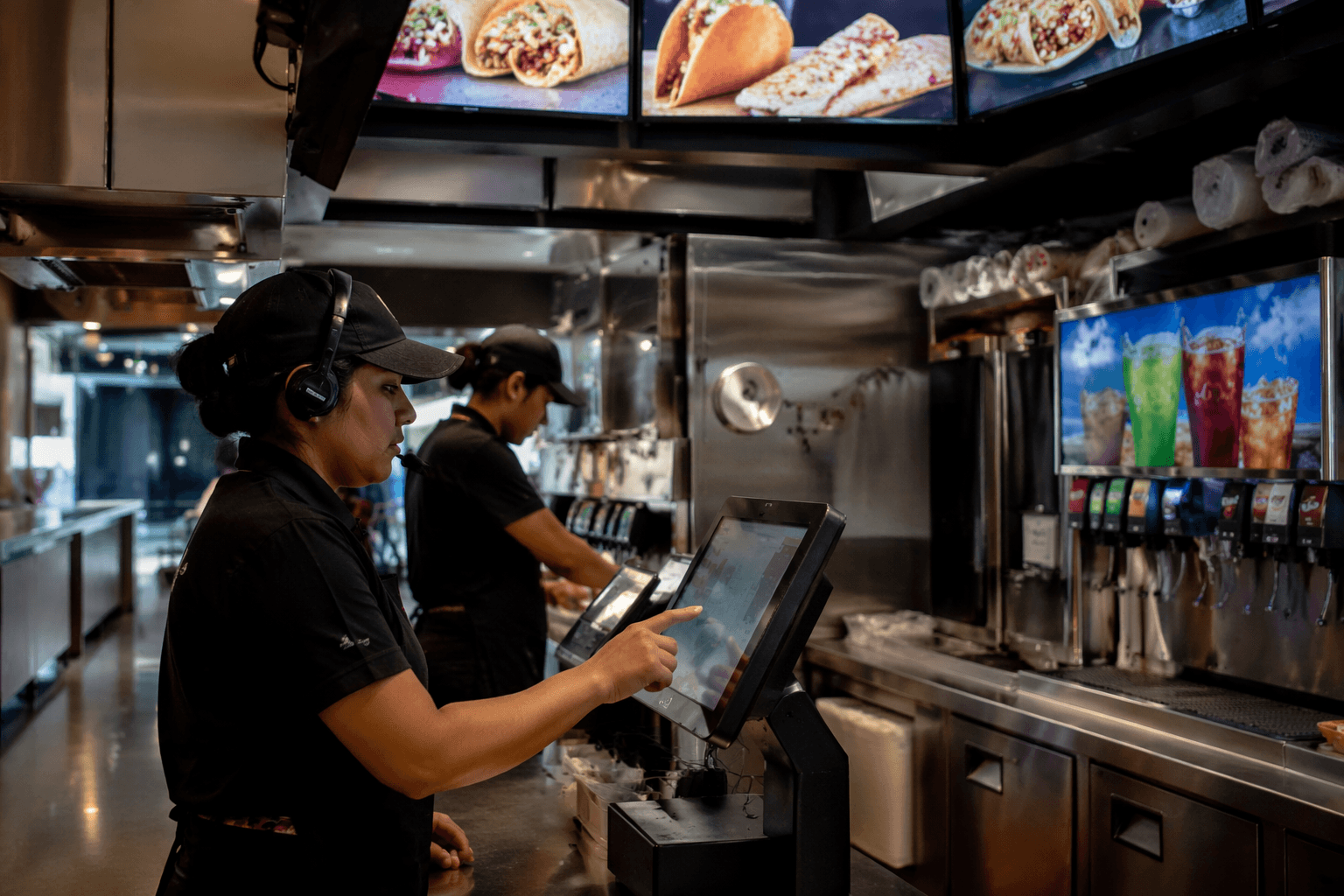
That broader shift is already visible in the two restaurant trends dominating 2026: AI and beverages. A recent Nation’s Restaurant News roundup tied those themes together by pointing to McDonald’s beverage upgrade alongside the industry’s growing investment in automation and digital tools. Taco Bell is one of the clearest examples of where that momentum leads, because it is pushing in both directions at once.
AI is coming for the parts of the shift that are easiest to standardize
Yum! Brands announced Byte by Yum! on Feb. 6, 2025, as a proprietary AI-driven SaaS platform for KFC, Taco Bell, Pizza Hut and Habit Burger & Grill. Yum describes the platform as one that unifies restaurant operations, eliminates inefficiencies and maximizes profitability. For Taco Bell workers, that sounds abstract until you break it down into the jobs that AI usually touches first: order-taking, labor planning, menu board presentation and the prompts that steer upselling.
The practical effect is simple. When a system is built to predict demand and tighten operations, managers are likely to see more guidance from corporate systems about when to staff up, when to cut hours, and which items deserve more digital attention. That can make shifts feel more controlled, but it also raises the bar for consistency. If a restaurant is using AI to reduce mistakes and improve throughput, a slow handoff, a missing modifier or a poorly timed suggestive sell stands out more clearly.
That matters in a business where pay, scheduling and workload are already constant points of tension. AI does not remove the need for experienced people at the counter or in the kitchen. It changes which parts of the job get measured most closely, and it can shift pressure downward onto the crew members who still have to make the system work in real time.
Beverages are becoming Taco Bell’s second business, not just an add-on
The drink push is just as important as the AI push, and probably easier for employees to feel immediately. Taco Bell’s current beverage lineup already goes far beyond basic fountain soda, with dirty sodas, dirty lemonade, Agua Refrescas and Rockstar Energy Refrescas now part of the mix. That is a lot more choice than the traditional fast-food beverage wall, and it creates more room for customization, more questions at the register and more chances to upsell.
The chain has made that direction explicit through Live Más Café. Taco Bell launched the concept in San Diego in 2024 with franchisee Diversified Restaurant Group, turning beverages into a true test case rather than a side experiment. In 2025, Taco Bell said it planned to open 30 more Live Más Café locations by the end of that year, with expansion expected in Southern California, Dallas and Houston. That is not a one-off pilot. It is a real operating model being layered into existing restaurants.
Taco Bell executives have said they want beverages to be “as iconic as its food,” and the company is targeting $5 billion in beverage sales by 2030. That is a big number, and it explains why drinks are no longer just a support category. They are now a core traffic and revenue strategy. For crew members, that means more emphasis on speed at the drink station, better product knowledge, and a higher likelihood that beverage attachment becomes part of the job scorecard.
What changes on the line, at the register and in the back room
The biggest shift for Taco Bell workers will not be one single automation tool or one new drink. It will be the way several changes stack on top of each other. More beverage options mean more ingredients, more prep, more cold storage decisions and more chances for guests to ask for substitutions or extra customization. Add AI systems that push labor and menu decisions toward efficiency, and the day-to-day work starts to look more tightly choreographed.
Here is where the pressure is likely to land first:
- Order-taking becomes more upsell-driven. Beverage add-ons, limited-time drinks and custom builds are easier to promote when digital systems prompt the sale.
- Back-of-house prep gets more segmented. Live Más Café-style drinks can require different handling than a standard fountain pour, which can slow down stations that are not trained or staffed well.
- Labor planning gets more precise. Byte by Yum! is designed to eliminate inefficiencies, which usually means more attention to staffing levels, peak windows and task allocation.
- Menu boards and digital channels matter more. If beverages are a growth engine, they need visual real estate and clear positioning, especially when guests are deciding between a standard meal and a higher-margin drink.
For shift managers, the hard part is not learning that these changes are coming. It is building a crew that can absorb them without losing speed. Beverage innovation only works if the restaurant can still move cars, keep drive-thru orders accurate and avoid bottlenecks at the pickup window.
The franchise angle matters because execution will vary by store
The Live Más Café rollout also highlights how much Taco Bell’s future will depend on the split between corporate strategy and franchise execution. The San Diego launch happened with Diversified Restaurant Group, which means the concept is being tested in a real operating environment, not just in a corporate lab. That is important for workers because the actual pace of change can differ from one restaurant to the next depending on ownership, staffing and local demand.
That franchise-corporate mix is likely to shape how quickly AI tools and beverage stations show up in daily work. Some stores will get new training, new equipment and tighter beverage routines sooner than others. Others may feel the pressure to upsell and standardize before they have the support to do it smoothly. For managers, that gap is where execution risk lives.
Why this is bigger than one menu trend
Taco Bell’s 2026 Live Más Live event, held as Live Más LIVE: A Night at The Palladium and streamed on Peacock in March 2026, unveiled more than 20 menu innovations. That matters because it shows the company is not treating beverage expansion and AI as isolated projects. It is building a pipeline of experimentation across food, dessert and drinks while also investing in tools meant to make the whole operation run cleaner.
That is the real takeaway for Taco Bell workers and operators: the job is becoming less about repeating a fixed script and more about adapting to a system that keeps changing. The crew members who will matter most are the ones who can keep service fast, read guest intent quickly, and make the new beverage and digital layers feel effortless, even when they are not.
This article was produced by Prism’s automated news system from verified source data, official records, and press releases, then run through automated quality and moderation checks before publishing. The system is built and supervised by the people who set the standards it runs under. Read our full AI policy.
Did this article answer your question?