Taco Bell’s test kitchen shows how menu changes reach stores
Taco Bell’s test kitchen is where menu ideas become store work, from extra prep steps to training and rollout pressure on the line.
How a menu idea turns into store work
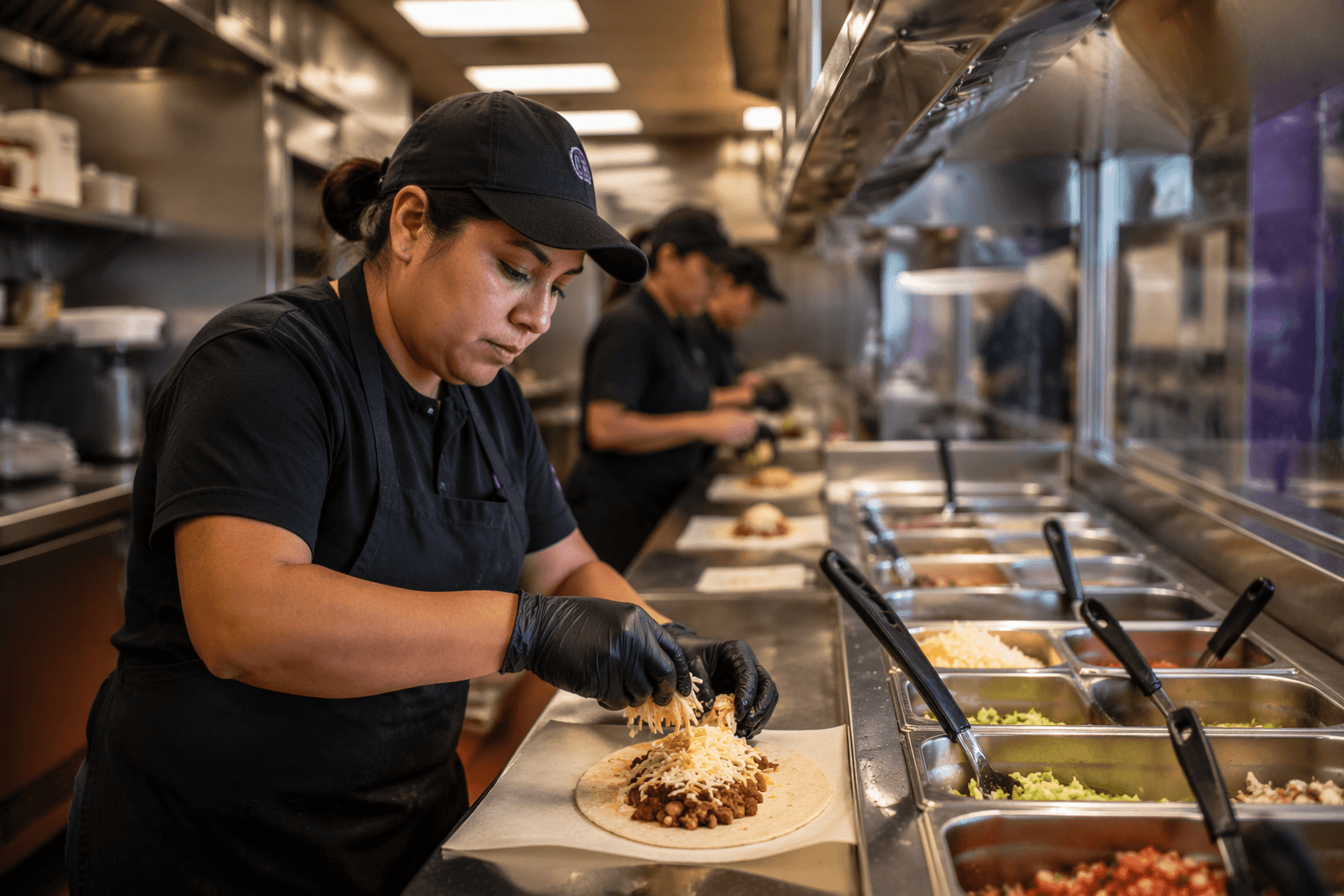
Taco Bell’s secret test kitchen is less about novelty than operations. The company’s Food Innovation Team, based at headquarters in Irvine, California, is the group that dreams up new items, from long-running icons like the Mexican Pizza to newer ideas such as Crispy Chicken Nuggets. For crew members and managers, that matters because a new menu item does not simply appear on the board. It has to move through ideation, testing, operational planning, and rollout, and each step changes what happens in the kitchen, on the line, and in the drive-thru.
That is the real story behind the test kitchen: the work starts long before customers see the item, but the consequences show up in the restaurant first. New food means more SKUs to remember, more prep steps to follow, packaging choices to learn, and more questions from guests who have already seen the item online. If the concept is not translated cleanly into a repeatable process, the pressure lands on shift leads, trainers, and the people trying to keep service moving.
What Taco Bell’s Food Innovation Team actually does
Taco Bell has described its Food Innovation Team as the group that literally dreams up new creations. At Live Más LIVE 2025, the company pulled back the curtain on the Test Kitchen and the team behind it, with Chief Food Innovation Officer Liz Matthews describing the work as creating a reimagined dining experience. That language may sound polished, but the operational reality is simple: somebody has to turn a food idea into a product that can be made the same way every time, in thousands of restaurants, by crews with different staffing levels and different kitchen constraints.
That cross-functional work is what makes the test kitchen so important to stores. A recipe can look straightforward in a video or a launch post, but by the time it reaches the floor it has to fit existing equipment, prep routines, and labor patterns. If a new item needs extra assembly steps or new ingredients that move slowly through the line, that affects speed of service immediately. Managers feel it first, because they have to train to the change before the guest demand fully lands.
Why one launch matters to the whole shift
Cheesy Street Chalupas are a good example of how the process unfolds. Taco Bell first tested the item in Indianapolis in October 2023 before rolling it out nationwide on July 18, 2024. That test window mattered because it gave the company time to see whether the item worked outside the kitchen, where labor, timing, and guest demand collide. A successful concept still has to survive the restaurant floor, where every new item competes with the rest of the menu for attention, prep space, and crew bandwidth.
For workers, that kind of launch usually means a temporary learning curve that is easy to underestimate from the customer side. A product like the Cheesy Street Chalupa is not just another order ticket. It can mean new prep routines, new storage habits, and a new rhythm at the assembly station as teams try to protect speed of service while keeping builds consistent. The fact that Taco Bell tested it in one city before taking it nationwide shows how much operational strain the company tries to detect before the item reaches every store.
The nugget rollout showed how fast demand can hit
Crispy Chicken Nuggets followed a similar path, but with a different pressure point. Taco Bell tested them in two cities before the nationwide launch on December 19, 2024, and the company later said they sold out nationwide in less than a week. That kind of response is exactly why test kitchen work matters to store teams: a product can go from experimental to overloaded almost instantly, and the restaurant has to keep up.
When a launch moves that quickly, the burden shifts from product development to execution. The menu item may create brand buzz and traffic, which Taco Bell has said is part of its strategy, but the stores still have to absorb the consequence: more guest demand, more questions at the counter, and more pressure on shifts already balancing speed, accuracy, and staffing. A sold-out item can be good for marketing. It is also a reminder that launches can create operational whiplash if the rollout is not matched to the realities of labor and prep.
What the company is really betting on
Taco Bell has said its 2024 to 2025 strategy centers on using menu innovation to drive traffic, brand buzz, and frequency. In 2025, the company said it planned to launch twice as much innovation as it did in 2024. That tells you where the chain thinks growth will come from: not just from price or promotion, but from a constant pipeline of new food that keeps customers coming back.
For restaurant teams, that strategy has a direct downside as well as a business upside. More innovation means more training updates, more launch materials, and more chances for confusion if stores are asked to do too much at once. It also means managers need to be fluent translators. They have to turn a concept from the test kitchen into a line process the crew can execute during a dinner rush, not just during a controlled test.
What this means for crew, shift leads, and managers
The biggest lesson from Taco Bell’s test kitchen is that menu innovation is an operations story first. It is easy to talk about creativity, but inside the restaurant the real work is discipline: learning the build, staging ingredients correctly, adapting labor to the launch, and making sure the guest gets the same product every time. That is especially true for both corporate and franchise stores, where the same national rollout can land differently depending on staffing levels, training depth, and how much room the kitchen has to absorb one more item.
This is also why the test kitchen can matter for career growth. The people behind it have to think across operations, marketing, product development, and guest experience, not just food. For employees who want to move up, it is a clear sign that Taco Bell values more than speed on the floor. It needs people who can take a concept and translate it into a process that works under pressure.
At Taco Bell, the secret kitchen is not just where the next item gets invented. It is where the company decides how much extra work will land in stores, how fast crews need to learn it, and how much pressure a new idea can put on the line before the first guest ever orders it.
This article was produced by Prism’s automated news system from verified source data, official records, and press releases, then run through automated quality and moderation checks before publishing. The system is built and supervised by the people who set the standards it runs under. Read our full AI policy.
Know something we missed? Have a correction or additional information?
Submit a Tip%2Fstory1%2F2712091%2Fcdae282a9f57fd1d1304b80820f661139187.jpg&w=1920&q=75)