Yum! Brands highlights Taco Bell jobs as path to management and ownership
Taco Bell is pitching restaurant work as a ladder, with six-week and five-month programs that can lead to management, mentoring and, for a few, franchise ownership.
Yum! is trying to turn a fast-food job into a business ladder
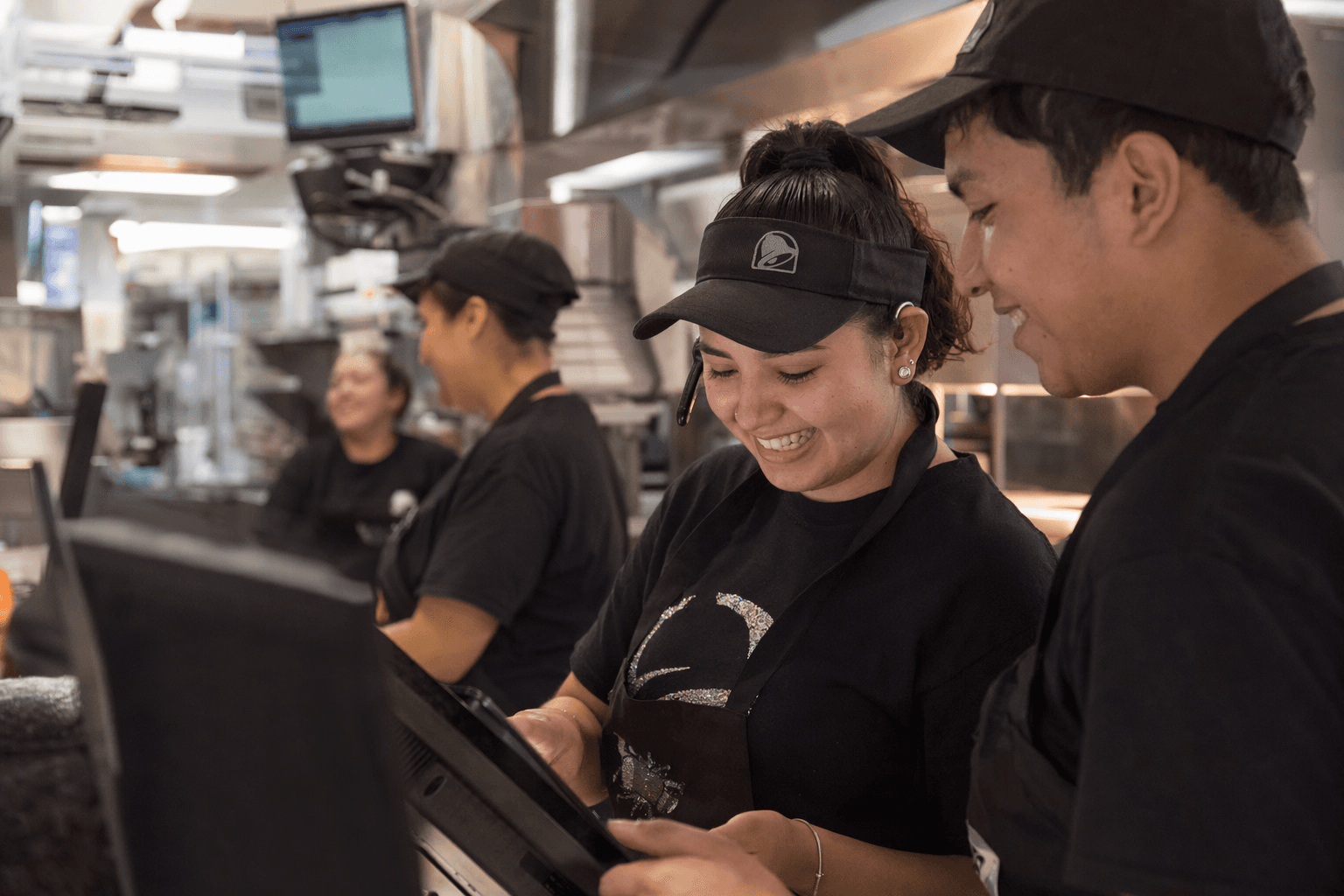
At Taco Bell, the most interesting promise is not the branding around opportunity. It is the pathway: a six-week franchise bootcamp for top performers, a five-month MBA fellowship for a small group of aspiring operators, and a corporate message that restaurant work can lead to management, ownership and, for a few people, generational wealth.
Yum! Brands folds that pitch into its wider Unlocking Opportunity Initiative, which the company says was announced in 2020 as a $100 million, five-year commitment tied to culture, opportunity and belonging, education, and entrepreneurship. Yum! also places the effort inside its Recipe for Good framework and says it builds on 25 years of investing in a people-first culture. By 2022, the company said it had already allocated more than $50 million in grants to nearly 30 programs, including at least $6 million aimed at Louisville, Kentucky, its hometown. The scale is impressive. The worker question is more basic: what does it actually do for someone on the floor?
What the pathway actually looks like
For Taco Bell crew members and shift leaders, the clearest on-ramp is Taco Bell Business School. The program launched in January 2022 with the University of Louisville and is designed as a six-week business bootcamp for top-performing restaurant leaders. Yum! says the curriculum covers the fundamentals of franchise ownership, including financing, growth and development, marketing, and HR.
That matters because it shifts the conversation away from vague development talk and toward skills that can change a résumé. If you are running shifts, handling customer recovery, keeping food moving, or trying to hold a schedule together on a packed weekend, those are not just survival skills. In Taco Bell’s framing, they are the raw material for leadership.
Yum! says the broader initiative is meant to help front-line restaurant teams and communities around the world, and it says thousands of people start at KFC, Pizza Hut, Taco Bell or The Habit Burger Grill, build work and life skills, and later move into restaurant management or even multi-restaurant ownership. That is the central pitch: restaurant labor is not supposed to be a dead end. It is supposed to be a launch point.
Who qualifies, and how selective is it
This is not an open-door benefit for every hourly worker. Taco Bell Business School is aimed at top-performing restaurant leaders, and the company describes it as a pilot program built to elevate leaders as entrepreneurs while helping diversify the franchise system. If you are already showing management potential, that gives you a more direct shot at the pathway. If you are still early in the job, the program is more of a signpost than an immediate opportunity.
The Yum! Franchise Accelerator is even more selective. Launched in 2022 with the University of Louisville and Howard University, it is an MBA-level fellowship aimed at underrepresented people of color and women interested in franchising. Ten second-year MBA students were selected, and only two were told they would have the opportunity to become future franchise owners.
That structure says a lot about how Yum! wants the pipeline to work. It is not trying to hand out ownership to everyone. It is trying to identify a small set of candidates, train them hard, and feed them into a franchise system that still needs more diverse operators.
What workers can expect to get out of it
The near-term payoff is concrete, but limited. Taco Bell Business School gives participants accredited education and training, plus access to franchisee expertise through Yum!’s education network. The Franchise Accelerator goes further: students get scholarships, mentorship, hands-on training, in-restaurant experience, a trip to Yum!’s Louisville Restaurant Support Center, and curated franchising experiences during the semester. It ends with a pitch competition, and the two grand prize winners receive seed money, additional training, mentorship, and an opportunity to become future Yum! franchisees.
For a Taco Bell worker, that distinction matters. This is not instant ownership, and it is not a wage increase by itself. The tangible payoff is access, credentials, and a visible route into leadership. The company is saying that the people already doing the work should also be the people most likely to run the business.
That is where the story gets more practical than corporate purpose language usually does. In a business where hourly pay, minimum-wage pressure and promotion ladders matter every day, the value of a program like this depends on whether it produces real movement. Unlike tipped-service jobs, Taco Bell’s career story rises or falls on wages, scheduling, training and promotion, not gratuities. If the pathway works, it gives workers a way out of the usual fast-food churn.
Why the franchise angle matters so much
Yum! is unusually well positioned to make this argument because the system is huge. The company says it franchises or operates more than 63,000 restaurants in 155 countries and territories under KFC, Taco Bell, Pizza Hut and The Habit Burger Grill. It also says it opens a new restaurant about every two hours. That scale makes the franchise ladder strategically important, because the company needs a steady supply of operators, managers and field leaders.
It also explains why Taco Bell keeps linking restaurant work to ownership rather than just advancement inside one store. In a franchise-heavy business, the real wealth can sit on the ownership side of the table. For workers, that creates a fork in the road: stay in hourly labor, move into management, or try to enter the ownership track through education and mentorship.
The skepticism is warranted. Programs like these can open doors, but they do not erase the hard realities of fast-food work, including uneven franchise standards and the gap between a corporate promise and what a specific store manager will support. Still, Taco Bell is putting a measurable offer on the table. The company is saying that shift leadership, operational discipline and restaurant know-how are not disposable skills. They are credentials for the next rung up.
What to watch next
The key test is not whether Taco Bell can talk about entrepreneurship. It is whether the pathway produces visible outcomes workers can use. Promotions, management opportunities, franchise education, mentoring and, in a few cases, ownership are the markers that matter.
That is why the most important details are the least flashy: six weeks for Taco Bell Business School, five months for the Franchise Accelerator, two future franchise owners out of ten MBA fellows, and a company-wide commitment to build opportunity into the business rather than bolt it on after the fact. If those rungs hold, Taco Bell work becomes something more than a stopgap. If they do not, it is just another polished version of an old fast-food story.
This article was produced by Prism’s automated news system from verified source data, official records, and press releases, then run through automated quality and moderation checks before publishing. The system is built and supervised by the people who set the standards it runs under. Read our full AI policy.
Did this article answer your question?