Target offers paid family leave, holidays and adoption reimbursement
Target’s leave package is more than PTO: eligible team members can use vacation, sick time, paid holidays and up to four weeks of paid family leave, plus adoption and surrogacy reimbursement.
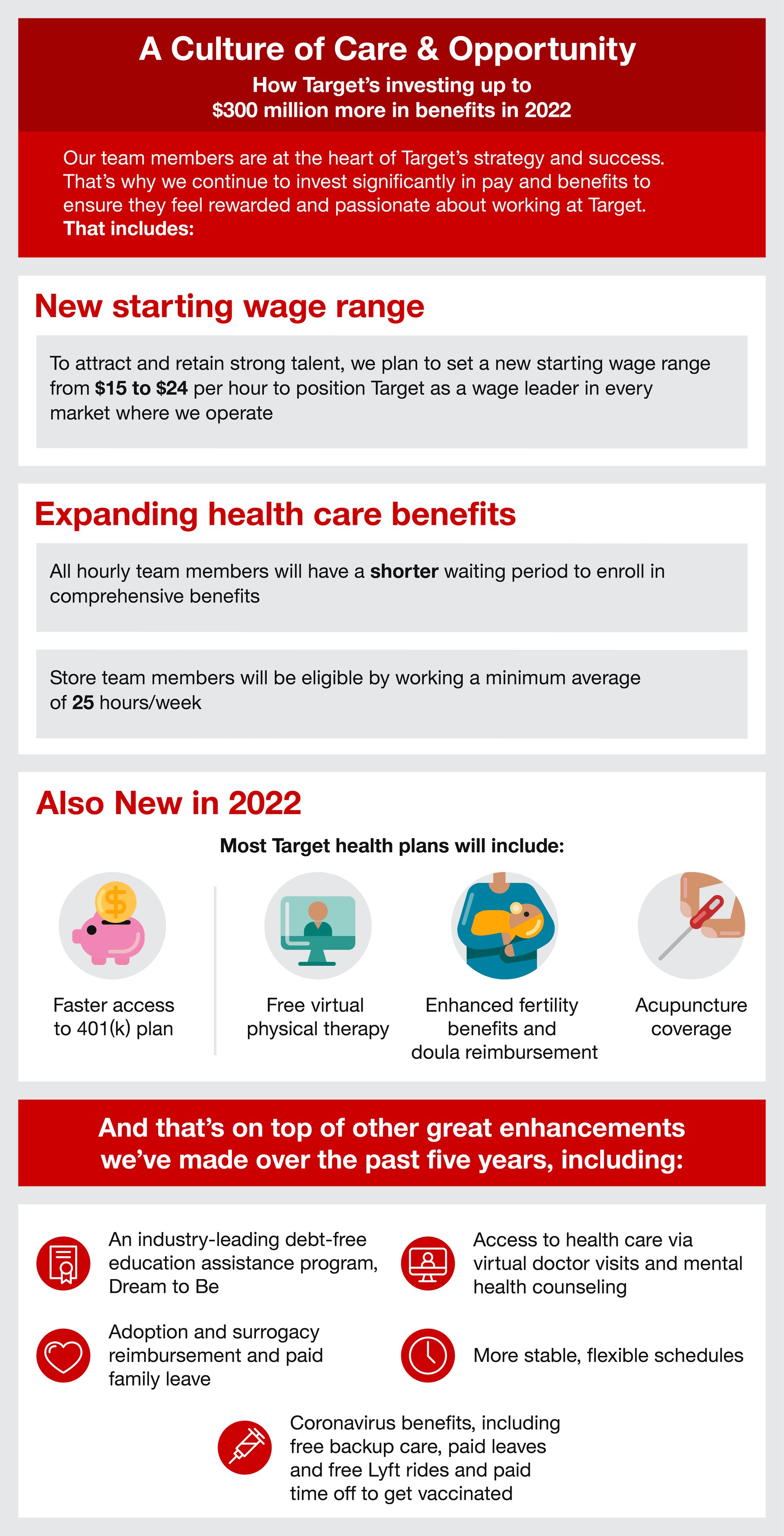
When a Target team member needs time away, the question is not just whether the absence is paid. It is which bucket applies, how much time it covers and what else sits beside it. Target’s benefits package combines vacation, paid national holidays, sick time, family leave and family-building support, with most offerings available starting day one.
The core time-off buckets
For eligible team members, Target says the starting point is a standard mix of vacation time, paid national holidays, sick time and family leave. That matters because each bucket solves a different problem. Vacation is for planned time away and recovery. Sick time covers illness and the kind of life disruptions that do not wait for a schedule to clear.
Paid national holidays are a separate piece of the package, which is useful in a business that runs on constant coverage and narrow staffing margins. In retail, those paid days off are not just a perk on paper. They are part of how a company signals whether it expects people to absorb every calendar squeeze without relief.
What family leave is designed to cover
Target says eligible team members can receive up to four weeks of paid family leave at 100 percent pay replacement. The company also says paid family leave is available when welcoming a new child by birth, adoption, surrogacy or foster placement. That is an important distinction for workers trying to plan around a major life event: this leave is not just for biological parents, and it is separate from the medical leave received following birth.
For a new parent, that split matters. Medical leave handles the physical recovery after childbirth, while family leave gives time to adjust to the arrival of a child without an immediate hit to income. For team leads and executive team leaders, the distinction matters just as much because it changes how coverage gets built on the floor, in the back room and at the service desk.
Adoption and surrogacy support sit in a different bucket
Target also reimburses up to $10,000 per child for eligible adoption expenses and up to $10,000 per attempt for eligible surrogacy expenses. That is not the same thing as paid leave, but in practice the two benefits work together. Leave gives time; reimbursement lowers the financial burden of building a family.
The structure is a reminder that workers often need both wage protection and expense support at the same moment. A new child can mean paperwork, travel, legal fees and schedule changes all at once. Target’s approach tries to soften that pileup by treating family formation as a benefits issue, not just a personal one.
Day one access changes the value of the package
Target’s updated pay-and-benefits fact sheet says most pay and benefits offerings are available to team members starting day one. That is the kind of detail that changes how a candidate reads the offer. A benefit that starts after a long waiting period feels different from one that is available as soon as someone is onboarded and on the schedule.
Target also says seasonal team members receive benefits from day one, including early pay access, a 10 percent discount and access to 24/7 virtual healthcare and mental health support. That is especially notable in a business where holiday staffing can be intense and temporary workers often get treated as short-term labor rather than part of the workforce.
The company’s benefits materials frame this as part of a broader “care, grow and win together” culture. In practice, that means Target is packaging time off, health support and family benefits as part of the employee relationship rather than as separate perks to discover later.
Pay context helps explain why the leave story matters
Target says its frontline hourly wage range is $15 to $24 depending on role and location, and that its average hourly wage for frontline team members is above $18.50. The company also says its team member discount celebrated its 50th anniversary in 2025. Taken together, those details show how Target is trying to connect compensation, perks and retention into one pitch.
That broader package matters because leave is easier to use when workers feel the rest of the job is stable. A decent hourly rate, predictable benefits and family support can make the difference between staying put and starting over somewhere else. For a retailer that depends on routine, that stability is not abstract. It is operational.
How Target has built this approach over time
The current benefits story did not appear out of nowhere. In February 2022, Target announced expanded access to health care coverage for hourly team members and highlighted family-focused investments including adoption and surrogacy reimbursement and paid family leave. In June 2020, the company said it would permanently raise its starting wage to $15 per hour and introduce free virtual healthcare visits for all team members.
Then in September 2021, Target said it would provide five million more hours to existing team members for the holiday season and expand scheduling flexibility through a mobile scheduling app. That sequence shows a pattern: pay, scheduling and leave are being managed as one system. The company has repeatedly used benefits to reduce the friction that pushes people out of retail.
What to verify with HR before you use a leave benefit
Even with a clear benefits package, eligibility still matters. New hires should check the requirements tied to position, average hours worked and length of service before assuming a benefit applies. The same is true for team members trying to sort out whether a situation belongs in sick time, vacation, family leave or a separate medical leave.
Before taking action, confirm:
- Which leave bucket applies to your situation
- Whether you meet the eligibility rules for your role and hours
- Whether the time is paid at full pay, partial pay or not paid
- What documentation is needed for adoption or surrogacy reimbursement
- How medical leave interacts with paid family leave after childbirth
- How your schedule will be covered if you are a team lead or ETL
For workers, the most useful takeaway is simple: Target’s leave package is built to handle everyday illness, planned rest and major family milestones in different ways. For managers, that means the real job is not just approving time off. It is knowing which benefit fits, planning coverage early and making sure the policy works the way the company says it does.
This article was produced by Prism’s automated news system from verified source data, official records, and press releases, then run through automated quality and moderation checks before publishing. The system is built and supervised by the people who set the standards it runs under. Read our full AI policy.
Know something we missed? Have a correction or additional information?
Submit a Tip